
Yellow Onion vs Sweet Onion: Which is Best for Sautéing, Caramelization, and Texture Stability?
Sautéing Performance and Flavor Intensity
The choice between yellow and sweet onions significantly impacts the depth of a dish. Yellow onions are the culinary workhorse, containing a high sulfur content that translates into a pungent aroma when raw but transforms into a rich, complex sweetness when heat is applied. Their structural integrity and balanced sugar levels make them ideal for long sautéing processes.
- Yellow Onion: High sulfur leads to a robust, savory "umami" profile once caramelized.
- Sweet Onion: Higher water and sugar content results in a milder flavor, though they brown more quickly and can become mushy if overcooked.
While sweet onions offer a delicate touch, yellow onions provide the intense aromatic base required for most foundations. Home cooks love reaching for yellow onions when preparing a slow-cooked beef stew to ensure the base develops a deep, mahogany glaze and concentrated savory finish.
Heat Tolerance and Caramelization Results
Understanding how yellow and sweet onions react to heat is essential for achieving the perfect flavor profile. Yellow onions are the culinary gold standard for long-duration cooking due to their high sulfur content. This chemical makeup allows them to withstand high heat and prolonged cooking times, eventually breaking down into a complex, savory-sweet jam.
- Yellow Onions: Boast superior heat tolerance; they maintain structural integrity during the slow caramelization process.
- Sweet Onions: Contain more sugar and water, causing them to brown quickly, though they often turn mushy if cooked too long.
While sweet onions offer a quick sugary fix, yellow onions provide the deep, foundational umami required for gourmet dishes. Home cooks prefer using yellow onions when slow-roasting a beef brisket, ensuring the onions transform into a thick, mahogany glaze rather than dissolving completely into the pan juices.
Texture Stability in Simmered Dishes
Structural integrity is the primary differentiator when choosing between yellow and sweet onions for long-cooking applications. Yellow onions are characterized by a higher sulfur content and lower moisture levels, which act as a framework to help the vegetable cells retain their shape. Conversely, sweet onions possess a significantly higher water content and thinner cell walls, making them prone to disintegrating when exposed to prolonged heat.
- Yellow Onions: Exceptional fiber retention; stays intact in stews, braises, and slow-cooker recipes.
- Sweet Onions: High solubility; tends to "melt" into liquid, losing all physical definition.
Home cooks prefer using robust yellow onions in a slow-cooked beef bourguignon to ensure every spoonful contains distinct, tender pieces rather than a translucent puree.
Raw State Flavor Profile and Pungency
The fundamental distinction between yellow and sweet onions is rooted in their sulfur content and water concentration. Yellow onions are the standard culinary workhorse, containing high levels of sulfur that produce a sharp, pungent aroma and a stinging bite when consumed raw. This chemical makeup is also what triggers tears during slicing.
In contrast, sweet onions-such as Vidalia or Walla Walla-are grown in low-sulfur soil and boast a higher water content. This results in a much milder, succulent profile where the natural sugars are more perceptible. While they lack the aggressive "heat" of yellow varieties, they offer a crisp, refreshing texture.
- Yellow Onion: Intense, acidic, and complex; leaves a strong aftertaste.
- Sweet Onion: Gentle, sugary, and watery; minimal eye irritation.
You might choose a crisp sweet onion to pile high atop a juicy backyard burger or a fresh deli sub when you want that satisfying crunch without the lingering pungency of a traditional onion.
Storage Longevity and Preservation Needs
When comparing shelf life, yellow onions are the clear winners. Their high sulfur content and multiple layers of thick, papery skin act as natural preservatives. When kept in a cool, dark, and well-ventilated space, yellow onions can remain shelf-stable for three to six months. They thrive in dry environments where airflow prevents moisture buildup.
In contrast, sweet onions possess a higher water and sugar content with significantly thinner skins, making them highly perishable. They typically last only two to four weeks and often require specialized care to prevent molding or bruising.
- Yellow Onions: Store in a mesh bag in a cool pantry; avoid plastic.
- Sweet Onions: Wrap individually in paper towels and store in the refrigerator crisper drawer.
Most home cooks prefer buying yellow onions in bulk for reliable long-term pantry staples, while saving delicate sweet onions for immediate use in a crisp, refreshing summer slaw.
Nutritional Density and Dietary Profiles
While both yellow and sweet onions are low-calorie vegetables rich in Vitamin C and fiber, their chemical profiles offer distinct dietary advantages. Yellow onions are often considered the nutritional powerhouses of the allium family, containing significantly higher concentrations of quercetin-a potent antioxidant-and organosulfur compounds. These elements are linked to heart health and anti-inflammatory benefits.
Sweet onions, such as Vidalias, possess a higher water and sugar content but lower pyruvic acid levels, which accounts for their lack of "bite." From a dietary perspective, the following differences stand out:
- Yellow Onions: Higher sulfur levels for metabolic support and intense flavor development.
- Sweet Onions: Higher moisture content and lower pungency, making them easier on sensitive stomachs.
You might prefer a sliced sweet onion when building a fresh summer sandwich to enjoy a crisp, sugary crunch without the lingering pungency of a standard cooking onion.
Water Content and Moisture Release
The primary physical distinction between yellow and sweet onions lies in their cellular hydration. Sweet onions, such as Vidalia or Walla Walla varieties, possess a significantly higher water content than standard yellow onions. This high moisture level contributes to their signature crispness and mild flavor, but it dramatically alters how they behave under heat.
| Onion Type | Water Content | Cooking Behavior |
|---|---|---|
| Yellow Onion | Lower | Holds shape; sugars concentrate for deep browning. |
| Sweet Onion | Higher | Releases liquid quickly; softens into a jam-like texture. |
Because sweet onions release liquid rapidly, they can inadvertently dilute a sauce or turn "mushy" during long braises. In contrast, the lower moisture in yellow onions allows for superior caramelization without the excess steam. Home cooks often reach for a pungent yellow onion when building a slow-cooked stew base, while fans of outdoor grilling prefer a thick, juicy slice of sweet onion to provide a watery, refreshing crunch atop a hot burger.
Aromatic Impact and Kitchen Environment
The sensory experience of prepping onions is dictated by their chemical composition, specifically sulfur content. Yellow onions are high in pyruvic acid, which converts into volatile gases when sliced, leading to significant eye irritation and a heavy, pungent aroma that permeates the kitchen. Conversely, sweet onions have a higher water content and lower sulfur levels, making them much gentler on the eyes and the surrounding air.
- Yellow Onions: Create a deep, savory fragrance that lingers on hands and surfaces for hours.
- Sweet Onions: Produce a faint, mild scent that dissipates quickly after the meal is prepared.
While the bold scent of a yellow onion is the hallmark of a slow-cooked stew, the milder profile of the sweet variety is often preferred for open-concept living spaces. You might reach for a sweet onion when preparing a quick raw garnish for a dinner party to ensure your guests enjoy the flavor without the overwhelming atmosphere of a stinging, tear-filled kitchen.
Versatility in Common Cooking Methods
Yellow onions are the kitchen's primary workhorse, known for a high sulfur content that transforms into a complex, savory sweetness during long cooking processes. Sweet onions, such as Vidalia or Walla Walla varieties, have higher sugar and water content but less sulfur, meaning they lack the pungent backbone required for intense heat.
| Cooking Method | Yellow Onion | Sweet Onion |
|---|---|---|
| Caramelizing | Excellent; develops deep umami. | Good; browns fast but lacks depth. |
| Sautéing | Best for foundations like mirepoix. | Ideal for quick, light wilting. |
| Deep Frying | Standard for pungent rings. | Prized for "blooming" appetizers. |
You will likely reach for the yellow onion when building the base of a hearty beef stew, but you'll prefer the mild, crisp bite of a sweet onion as a raw topping for your backyard barbecue burgers.
Household Cost and Market Availability
When comparing yellow and sweet onions, the most significant differences lie in your grocery budget and seasonal timing. Yellow onions are the global standard for affordability, usually sold in bulk mesh bags and available throughout the year. Their low moisture content and thick skins allow for long-term storage, which keeps market prices consistently low.
- Yellow Onions: Highly affordable, sold in multi-pound bags, and stocked year-round.
- Sweet Onions: Higher price point, often sold individually, and limited by seasonal harvests.
Sweet onions, such as Vidalias or Walla Wallas, command a premium price because they are highly perishable. Their higher sugar and water content mean they bruise easily and have a much shorter shelf life than their pungent counterparts. Most home cooks prefer grabbing a budget-friendly bulk bag of yellow onions for their weekly meal prep while saving the more expensive sweet varieties for a fresh, raw crunch on a summer steak sandwich.
Yellow Onion vs Sweet Onion source and external links
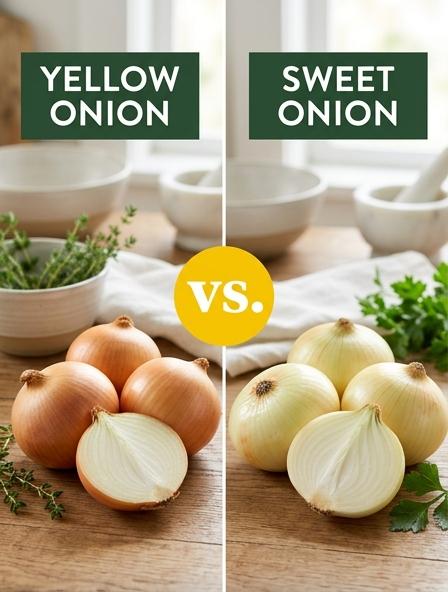
- The Yellow Onion is a versatile kitchen staple known for its complex flavor and high sulfur content that mellows into a deep sweetness when cooked.
- Characterized by their high sugar and low sulfur content, the Sweet Onion is mild enough to be eaten raw in salads or sandwiches.