
Yellow Noodles vs White Rice : The Differences in Nutritional Value, Glycemic Impact, and Culinary Versatility.
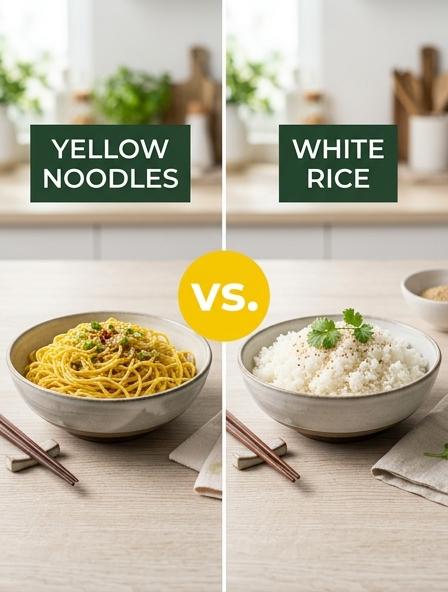
Nutritional Comparison of Alkaline Strands and Refined Grains
Choosing between yellow noodles and white rice involves weighing texture against specific dietary requirements. White rice is a gluten-free refined grain that provides easily digestible carbohydrates with negligible sodium. In contrast, yellow noodles are wheat-based and processed with alkaline salts, which give them a springy texture and yellow hue but significantly increase the sodium content.
| Attribute | Yellow Noodles | White Rice |
|---|---|---|
| Main Base | Wheat Flour | Polished Grain |
| Sodium Level | Moderate to High | Very Low |
| Dietary Profile | Contains Gluten | Gluten-Free |
Fitness enthusiasts often prefer white rice as a clean, hypoallergenic fuel for post-workout recovery, while foodies typically favor the chewy, alkaline-rich strands of yellow noodles to soak up the savory fats in a rich bowl of curry laksa or ramen.
Glycemic Impact and Energy Stability for Daily Meal Planning
Choosing between yellow noodles and white rice significantly affects metabolic health and daily productivity. White rice is a high-glycemic staple that triggers rapid blood glucose spikes, often followed by a lethargic energy crash. In contrast, many yellow noodle varieties-particularly those made with alkaline water or egg-exhibit a moderate glycemic index (GI), facilitating a more controlled insulin response and sustained satiety.
| Carbohydrate Source | Glycemic Index (GI) | Energy Profile |
|---|---|---|
| White Rice | High | Immediate spike; quick crash |
| Yellow Noodles | Moderate | Gradual release; prolonged focus |
For a busy professional facing a long afternoon of back-to-back meetings, opting for a bowl of chicken yellow noodles over a large portion of white rice can prevent the "food coma" effect and maintain steady mental clarity until dinner.
Cooking Performance and Texture Retention in Family Dishes
The choice between yellow noodles and white rice significantly impacts the structural integrity of a meal. Yellow noodles, often made with alkaline water, possess a high protein content that ensures a firm, springy texture. They are exceptionally resilient, maintaining their "bite" even when subjected to high-heat stir-frying or prolonged soaking in hot broths.
- Yellow Noodles: High elasticity and resistance to overcooking; ideal for saucy dishes.
- White Rice: High starch absorption; provides a soft, neutral base that can become mushy if over-hydrated.
While white rice is the ultimate sponge for rich gravies, yellow noodles offer superior texture retention for leftovers and meal prepping. This durability makes them a favorite for busy households where consistency is key. You might choose yellow noodles for a late-night seafood stir-fry because you want those savory strands to stay chewy and distinct under the weight of a heavy soy-based sauce.
Caloric Density and Weight Management for Home Cooking
Understanding the caloric density of staples is essential for effective weight management. White rice typically contains approximately 130 calories per 100g when steamed, making it a high-volume carbohydrate that helps with satiety. Conversely, yellow noodles are often denser, averaging 140 to 160 calories per 100g, primarily due to the addition of oil or eggs during processing.
- White Rice: Naturally gluten-free and low in fat, providing a clean energy source for portion-controlled meals.
- Yellow Noodles: Offer slightly more protein but carry higher sodium and fat content, which can impact caloric surplus.
For home cooks, managing weight involves balancing these macronutrients against total daily activity levels. Choosing the right base can significantly influence your metabolic goals without sacrificing flavor. You might find that switching from oily noodles to a measured portion of steamed white rice helps you stay within your calorie deficit while still enjoying a hearty, filling dinner.
Satiety and Hunger Suppression of Starchy Staples
When comparing yellow noodles and white rice, the difference in satiety lies in their macronutrient structure and glycemic response. White rice is a refined carbohydrate that the body digests quickly, often leading to a rapid rise and fall in blood sugar, which triggers hunger sooner. In contrast, yellow noodles are typically made from wheat flour and may contain egg, providing a denser protein-fiber matrix that slows digestion.
- Glycemic Index: White rice generally has a higher GI, causing faster insulin spikes and subsequent hunger.
- Protein Content: The gluten and egg proteins in yellow noodles enhance appetite suppression.
- Texture: The chewy consistency of noodles requires more mastication, which is linked to increased fullness signaling.
Many office workers choose a hearty bowl of yellow curry noodles over a side of white rice to ensure they remain focused and full throughout a demanding four-hour afternoon meeting.
Digestive Comfort and Gut Health Impact of Processed Flour vs Grains
The choice between yellow noodles and white rice significantly affects gastrointestinal well-being. Yellow noodles are crafted from highly processed wheat flour and alkaline salts, which can trigger bloating or inflammation in individuals sensitive to gluten or synthetic additives. Conversely, white rice is a naturally gluten-free grain that is easily assimilated by the body, providing a "low-residue" energy source that minimizes digestive strain.
- Yellow Noodles: Higher gluten content and alkaline agents may slow gastric emptying.
- White Rice: Hypoallergenic and gentle on the stomach lining, making it ideal for sensitive guts.
While noodles offer a distinct chewy texture, white rice is the preferred choice for those prioritizing digestive ease. Imagine someone recovering from a heavy workout or a stomach upset; they typically reach for a steaming bowl of white rice to ensure quick, cramp-free energy rather than a heavy plate of oily noodles.
Sodium Levels and Chemical Additives in Packaged Bases
When evaluating the health profile of yellow noodles versus white rice, the presence of sodium and processing agents is a critical factor. White rice is typically a single-ingredient whole food, containing negligible sodium and zero additives. In contrast, yellow noodles often require chemical intervention to achieve their distinct springy texture and vibrant hue.
- Alkaline Salts: Yellow noodles use "Kansui" (sodium carbonate), which raises sodium levels significantly compared to plain rice.
- Preservatives: Packaged noodles often contain stabilizers and acidity regulators to extend shelf life.
- Artificial Coloring: Many commercial varieties use Tartrazine (Yellow 5) rather than natural turmeric.
While white rice offers a clean, additive-free carbohydrate source, yellow noodles carry a hidden load of salts that can impact blood pressure. Fitness enthusiasts often opt for steamed white rice as a post-workout base to keep their sodium intake controlled while fueling up for the next session.
Preparation Speed and Kitchen Efficiency for Busy Households
When time is of the essence, the choice between yellow noodles and white rice depends on your cooking window. Yellow noodles, often sold pre-steamed or alkaline-treated, offer the fastest turnaround. Conversely, white rice requires rinsing and a consistent 15-to-20-minute absorption period to achieve the correct texture.
- Yellow Noodles: 1-3 minutes (requires quick blanching or direct stir-frying).
- White Rice: 15-20 minutes (requires simmering or an electric rice cooker).
Yellow noodles are the ultimate "convenience carb" because they transition from the fridge to the plate in minutes, requiring only a quick scald in boiling water. While rice is a reliable "set and forget" staple, it lacks the instantaneous readiness needed for high-heat, rapid-fire meals. You can come home exhausted after a long workday and have a steaming bowl of ginger-soy yellow noodles ready before a rice cooker would even finish its initial soaking cycle.
Flavor Absorption and Ingredient Pairing in Stir Fried Recipes
The choice between yellow noodles and white rice dictates how a dish carries flavor. Yellow noodles, often prepared with alkaline salts, possess a porous texture and a distinct savory undertone. This structure allows them to deeply absorb viscous sauces, such as oyster or hoisin, making them ideal for "wet" stir-fries. Conversely, white rice serves as a neutral, starchy canvas. Rather than absorbing liquids into the core, rice grains are coated by aromatics and oils, preserving a clean palate that highlights individual ingredients.
- Yellow Noodles: Best for bold, heavy sauces and chewy textures like bok choy or flank steak.
- White Rice: Ideal for high-heat, dry stir-fries where the aroma of toasted garlic and ginger takes center stage.
You might find yourself craving the dense, sauce-soaked richness of a classic Chow Mein on a cold evening, or preferring the light, airy finish of a golden egg fried rice when you want the delicate flavors of seafood to stand out.
Economic Value and Storage Life for Household Budgeting
When analyzing household expenses, white rice consistently offers superior economic value compared to yellow noodles. As a dry staple, rice can be purchased in bulk, significantly lowering the price per serving and providing a stable foundation for long-term food security. In contrast, yellow noodles-especially fresh varieties-have a limited shelf life due to their moisture content and alkaline ingredients, often requiring refrigeration and quicker consumption to avoid spoilage.
| Factor | White Rice | Yellow Noodles |
|---|---|---|
| Shelf Life | 2+ Years (Dry) | 3–10 Days (Fresh) |
| Bulk Savings | High | Low |
For strategic budgeting, rice serves as the reliable pantry anchor, while noodles are typically purchased as a specialized ingredient for immediate use. You might find that stocking up on a large bag of jasmine rice covers your monthly base carbs, while grabbing a fresh pack of yellow noodles is perfect for a spontaneous, savory Hokkien mee dinner.
Yellow Noodles vs White Rice source and external links
- Yellow noodles are a versatile Asian staple typically made from wheat flour and alkaline minerals, which provide their signature golden hue and elastic texture. Find more information about Yellow Noodles here.
- White rice is a primary food source for a large portion of the global population, known for its mild flavor and soft consistency after the bran and germ are removed. Discover the history of White Rice online.