
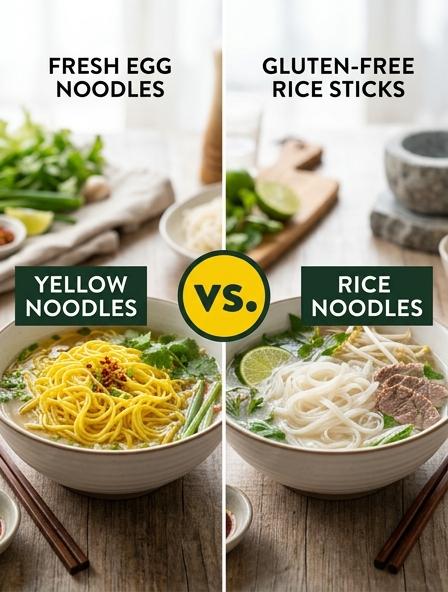
Yellow Noodles vs Rice Noodles : Comparing Nutrition, Texture, and Culinary Performance Differences.
Caloric Density and Daily Nutritional Values
Understanding the nutritional profiles of yellow noodles versus rice noodles is essential for dietary planning. Yellow noodles, typically crafted from wheat flour and eggs, are more calorie-dense, averaging 150–200 calories per 100g. They provide higher protein levels and essential B-vitamins. Conversely, rice noodles are lighter, containing approximately 100–110 calories per 100g. While lower in fat, rice noodles are predominantly carbohydrates and offer minimal protein.
| Nutrient (per 100g) | Yellow Noodles | Rice Noodles |
|---|---|---|
| Calories | ~175 kcal | ~109 kcal |
| Protein | ~6g | ~1g |
You might choose dense yellow noodles to fuel a high-intensity workout day, whereas you likely prefer light rice noodles when preparing a refreshing, gluten-free summer roll for a quick lunch.
Texture Integrity During High Heat Cooking
The structural response to intense heat significantly differentiates yellow noodles from rice noodles. Yellow noodles, typically crafted from wheat and reinforced with alkaline salts, possess a robust gluten network. This chemical composition provides the elasticity and tensile strength needed to endure vigorous stir-frying without snapping or disintegrating. In contrast, rice noodles are gluten-free and inherently more delicate; they require precise timing and gentle handling to prevent them from becoming mushy or fragmented when exposed to extreme temperatures.
- Yellow Noodles: High durability and "springy" mouthfeel; ideal for heavy tossing.
- Rice Noodles: High flavor absorbency but prone to clumping if overcooked in a hot wok.
Street food vendors typically prefer thick yellow noodles for high-flame wok cooking to ensure the dish maintains a satisfying, firm bite amidst the intense "wok hei" sear.
Gluten Composition and Digestive Impact
The fundamental distinction between yellow and rice noodles lies in their protein structure. Yellow noodles are typically made from wheat flour and eggs, making them rich in gluten. While gluten provides the characteristic elastic texture and "bite," it can lead to bloating or digestive discomfort for those with sensitivities. In contrast, rice noodles are made from rice flour and water, rendering them naturally gluten-free and significantly easier for the body to break down.
| Feature | Yellow Noodles | Rice Noodles |
|---|---|---|
| Base Flour | Wheat (contains gluten) | Rice (gluten-free) |
| Texture | Chewy and elastic | Soft and slippery |
| Digestive Feel | Heavy/Filling | Light/Easy |
You might choose light rice vermicelli for a refreshing salad when you want to avoid a "food coma," while others prefer the hearty, chewy satisfaction of yellow alkaline noodles in a rich, savory stir-fry.
Liquid Absorption and Effect on Broth Consistency
The interaction between noodles and liquid fundamentally alters a dish's final texture. Yellow noodles, typically made from wheat and egg, feature a dense protein structure that resists immediate disintegration. They absorb broth slowly, maintaining an "al dente" bite even in hot soups. Conversely, rice noodles are highly porous and starchy, acting like sponges that rapidly soak up flavors while simultaneously releasing surface starch into the liquid.
- Yellow Noodles: Provide a resilient chew and help keep broths clear for longer periods.
- Rice Noodles: Can lead to a thicker, cloudier broth consistency if left to sit, as they soften quickly.
Home cooks often prefer hearty yellow noodles for slow-eaten, oil-based curries where maintaining a firm texture against heavy sauces is essential for a satisfying meal.
Preparation Speed and Boiling Requirements
When comparing yellow noodles and rice noodles, preparation methods differ based on their starch composition and moisture content. Yellow noodles, often containing wheat and alkaline salts, typically require active boiling to develop their signature "snap" and remove excess surface starch.
- Yellow Noodles: Fresh versions are ready in just 1 to 2 minutes, while dried alkaline noodles take about 4 to 6 minutes of vigorous boiling.
- Rice Noodles: Thin varieties like vermicelli often require only soaking in hot water for 3 to 5 minutes, whereas thicker dried rice sticks need a short boil followed by a cold-water rinse.
Rice noodles are generally perceived as more convenient because they do not always require a pot of rolling water, though yellow noodles offer unmatched speed when purchased fresh. You might choose quick-soaking rice vermicelli for a lightning-fast cold salad on a busy weeknight, whereas you would likely prefer fresh yellow noodles for a traditional, high-heat stir-fry that requires an immediate, snappy texture.
Visual Appeal and Color Contrast in Dishes
The aesthetic impact of a meal often depends on the base color of the starch. Yellow noodles, typically enriched with egg or alkaline minerals, provide a bold, golden hue that creates a striking visual contrast against dark soy-based sauces and vibrant green vegetables. In contrast, rice noodles offer a clean, pearlescent white or translucent finish, acting as a neutral canvas that allows the colors of fresh herbs, red chilies, and proteins to take center stage.
- Yellow Noodles: Provide a rich, warm tone suitable for hearty, rustic plating.
- Rice Noodles: Offer a light, airy, and sophisticated look for delicate soups and salads.
You might choose the bright yellow of lo mein to make a stir-fry look more indulgent and saturated, or opt for the snowy white of rice vermicelli to highlight the freshness of mint and shrimp in a traditional spring roll.
Shelf Life and Fridge Storage Stability
Understanding the storage needs of yellow noodles versus rice noodles is essential for maintaining food quality. Fresh yellow noodles, which typically contain alkaline salts or egg, are relatively stable and can maintain their elastic texture in the refrigerator for 3 to 5 days. Conversely, fresh rice noodles are highly susceptible to starch retrogradation; when chilled, they quickly become hard and brittle, often losing their appeal within 48 hours.
| Noodle Type | Typical Fridge Life |
|---|---|
| Fresh Yellow Noodles | 3–5 Days |
| Fresh Rice Noodles | 1–2 Days |
| Dried Rice Noodles | 12+ Months (Pantry) |
Home cooks often prefer keeping dried rice sticks as a reliable pantry staple, while saving the purchase of fresh Hokkien yellow noodles for the specific night they plan to toss a high-heat ginger and garlic stir-fry.
Firmness and Elasticity Comparison
The structural difference between yellow noodles and rice noodles is primarily defined by their protein content and ingredients. Yellow noodles, made from wheat flour and alkaline water, possess high elasticity and a signature "springy" bite. The presence of gluten and lye water creates a resilient, chewy texture that maintains its shape during rigorous cooking. In contrast, rice noodles are gluten-free and far more delicate. They offer a silky, tender mouthfeel that lacks the "snap" of wheat varieties, prioritizing a smooth texture that absorbs flavors readily but can break if overcooked.
- Yellow Noodles: High elasticity, firm "al dente" bite, and structural resilience.
- Rice Noodles: Soft, slick consistency with low elasticity and a tender finish.
Professional chefs prefer the firm bounce of yellow noodles for high-heat lo mein stir-fries, while many diners crave the way soft rice noodles effortlessly soak up savory broths in a steaming bowl of traditional Vietnamese Pho.
Flavor Absorption and Seasoning Integration
The choice between yellow noodles and rice noodles significantly impacts how a dish carries flavor. Yellow noodles, crafted from wheat and alkaline water, feature a porous texture that actively "drinks" up heavy sauces and oils. Their inherent mineral profile acts as a natural flavor enhancer for savory seasonings. In contrast, rice noodles are smoother and less absorbent; they serve as a neutral base that allows light aromatics to coat the surface without the noodle becoming over-saturated or losing its structure.
- Yellow Noodles: High affinity for thick gravies, curries, and intense soy-based glazes.
- Rice Noodles: Ideal for delicate broths, lime-based dressings, or aromatic herb-infused oils.
Imagine a chef tossing yellow noodles in a blazing wok with dark soy sauce; the strands quickly soak up the umami liquid, turning a deep mahogany that diners love for its concentrated, flavor-packed bite.
Sodium Content and Micronutrient Profiles
When comparing yellow noodles and rice noodles, the most significant nutritional difference lies in their sodium levels and mineral density. Yellow noodles, typically made from wheat and eggs, often utilize alkaline salts (kansui) and added sodium to achieve their characteristic springy texture and yellow hue. In contrast, rice noodles are naturally lower in sodium, consisting primarily of rice flour and water, making them a preferred choice for heart-healthy diets.
- Yellow Noodles: Higher in sodium and protein; often fortified with B-vitamins and iron.
- Rice Noodles: Low in sodium and gluten-free, though generally lower in micronutrients unless using brown rice varieties.
You might choose chewy yellow noodles for a rich, savory stir-fry when you want a boost of iron, or opt for delicate rice noodles in a light broth to keep your daily salt intake at a minimum.
Yellow Noodles vs Rice Noodles source and external links
- Commonly made from wheat flour and egg, yellow noodles are a staple in Asian cuisine known for their springy texture and distinct golden hue.
- Popular in gluten-free cooking, rice noodles are primarily composed of rice flour and water and serve as a fundamental ingredient in dishes like Pho and Pad Thai.