
Yellow Noodles vs Brown Rice : Are They The Same? Glucose Response, Fiber Content, and Weight Management
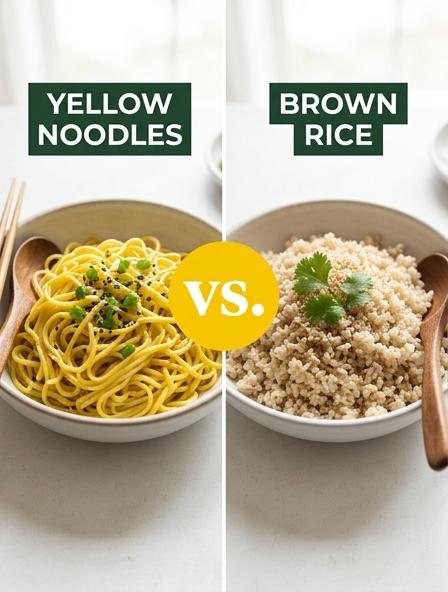
Daily Blood Sugar Impact and Glucose Response
The metabolic impact of yellow noodles versus brown rice depends largely on their Glycemic Index (GI) and fiber density. Yellow noodles, typically crafted from refined wheat, are rapidly broken down into simple sugars, causing sharp glucose spikes and subsequent insulin surges. In contrast, brown rice is a whole grain that retains its nutrient-dense bran and germ.
- Yellow Noodles: High GI; leads to rapid energy fluctuations and increased hunger.
- Brown Rice: Medium-to-low GI; provides steady glucose release and prolonged satiety.
The fiber in brown rice slows carbohydrate digestion, helping to maintain stable energy levels and prevent the metabolic stress associated with refined starches. Many health-conscious diners prefer swapping their traditional lo mein for a brown rice base to avoid the common post-meal "food coma" during a busy afternoon at the office.
Dietary Fiber Content and Digestive Health
The primary distinction between brown rice and yellow noodles lies in their fiber density and impact on gastrointestinal health. Brown rice is a whole grain, meaning it retains the bran and germ layers that are naturally rich in insoluble fiber. Yellow noodles are typically manufactured from refined wheat flour, a process that strips away most dietary fiber to achieve a smooth, springy texture.
| Benefit | Brown Rice | Yellow Noodles |
|---|---|---|
| Fiber Type | High Insoluble Fiber | Low / Refined Starch |
| Digestive Rate | Slow (Sustained Energy) | Rapid (Quick Glucose) |
Fiber is essential for maintaining regular bowel movements and supporting a healthy gut microbiome. Because brown rice digests more slowly, it provides prolonged satiety and prevents the rapid insulin spikes often caused by low-fiber processed noodles. You might choose a warm bowl of brown rice over noodles during a busy work week to ensure you stay full and focused until your next meal.
Preparation Time and Ease of Cooking
When comparing preparation efficiency, yellow noodles offer a significant advantage over brown rice in terms of speed. Most fresh or dried yellow noodles require only 1 to 3 minutes of blanching, as they are often partially pre-cooked during manufacturing. In contrast, brown rice is a whole grain that retains its fibrous bran and germ layers, necessitating a simmering time of 30 to 50 minutes to achieve a palatable texture.
- Yellow Noodles: Near-instant preparation; ideal for high-heat stir-frys or quick soups.
- Brown Rice: Requires advanced planning and precise water-to-grain ratios for optimal fluffiness.
You might find yourself reaching for quick-boiling yellow noodles during a busy weeknight rush, whereas brown rice is the preferred choice for those who enjoy the ritual of slow-cooked meal prepping for a healthy week ahead.
Fullness Duration and Weight Management Support
When comparing yellow noodles and brown rice for weight management, the primary difference lies in dietary fiber and the glycemic index (GI). Brown rice is a complex carbohydrate that retains its nutrient-dense bran and germ layers, leading to a slower digestion process and prolonged satiety.
- Brown Rice: High fiber content promotes a lasting feeling of fullness and stabilizes blood sugar levels.
- Yellow Noodles: Typically made from refined wheat flour, these offer quick energy but often lead to hunger spikes shortly after consumption.
Choosing whole grains over refined starches supports metabolic health by preventing insulin spikes and reducing overall calorie intake throughout the day. You might opt for a brown rice base during a busy workday to maintain steady focus and avoid mid-afternoon cravings, while enjoying yellow noodles as an occasional treat for a quick-digestible comfort meal.
Essential Vitamins and Mineral Concentration
When comparing the micronutrient density of yellow noodles versus brown rice, brown rice consistently offers a superior nutritional profile. As an unrefined whole grain, brown rice retains its bran and germ layers, which are naturally rich in magnesium, phosphorus, and essential B-complex vitamins. Conversely, yellow noodles are primarily crafted from refined wheat flour; although sometimes fortified, they generally lack the diverse organic mineral spectrum found in unprocessed grains.
- Brown Rice: High concentrations of Manganese, Magnesium, and Selenium for metabolic health.
- Yellow Noodles: Contains higher Sodium levels with modest amounts of Iron and Thiamine.
Fitness enthusiasts frequently choose a brown rice base for their meal prep to ensure they receive a steady supply of muscle-supporting minerals rather than the quick-burning carbohydrates found in traditional noodle dishes.
Mouthfeel and Textural Contrast in Recipes
Choosing between yellow noodles and brown rice fundamentally alters the sensory profile of a meal. Yellow noodles, often prepared with alkaline water, offer a springy, elastic mouthfeel and a slippery surface that allows them to glide against the palate. In contrast, brown rice provides a rustic, toothsome texture; its intact bran layer ensures a firm, grainy resistance that remains distinct even when saturated with sauces.
| Attribute | Yellow Noodles | Brown Rice |
|---|---|---|
| Primary Texture | Springy and Supple | Chewy and Nutty |
| Sauce Interaction | Coats and Absorbs | Nests and Complements |
Many foodies prefer the silky, slurping experience of yellow noodles in a rich curry laksa, while health-conscious diners often opt for the substantial, "popping" bite of brown rice in a vibrant Mediterranean grain bowl.
Total Calorie Count and Energy Density
When comparing yellow noodles and brown rice, the primary difference lies in their composition and processing. Yellow noodles are typically more calorie-dense due to their refined wheat base and added alkaline salts, whereas brown rice is a whole grain that retains its natural fiber and bran.
| Food Item (100g Cooked) | Average Calories |
|---|---|
| Yellow Noodles | 140 - 160 kcal |
| Brown Rice | 110 - 125 kcal |
Because yellow noodles have a higher energy density, they provide more calories in smaller portions but often lack the lasting satiety found in whole grains. Brown rice's complex carbohydrates ensure a slower release of energy, making it a more efficient fuel source for those monitoring their caloric intake. You might choose brown rice to stay full during a long afternoon at the office, while opting for yellow noodles when you crave a quick, comforting energy source after a strenuous workout.
Culinary Versatility in Family Meal Planning
Choosing between yellow noodles and brown rice often depends on your weekly schedule and desired flavor profile. Yellow noodles offer a springy texture and quick cooking time, making them a favorite for fast-paced weeknight dinners. They are highly absorbent, soaking up savory broths and soy-based sauces effortlessly. In contrast, brown rice serves as a hearty, fiber-rich foundation that maintains its structure, making it superior for batch cooking and meal prepping.
- Yellow Noodles: Best for high-heat stir-frys, lo mein, and quick Asian-style soups.
- Brown Rice: Ideal for Mediterranean grain bowls, side dishes for stews, and healthy fried rice variants.
While brown rice provides a nutty depth for slow-cooked curries, many families love the convenience of tossing yellow noodles into a wok with crisp vegetables for a kid-friendly meal that is ready in under fifteen minutes.
Processing Methods and Natural Nutrient Retention
The nutritional profile of yellow noodles versus brown rice is primarily determined by how they are processed. Yellow noodles are made from refined wheat flour combined with alkaline salts, which creates their characteristic texture but removes the grain's nutrient-rich outer layers. This heavy milling results in a loss of natural fiber, vitamins, and minerals.
Conversely, brown rice is a whole grain that undergoes minimal processing. Only the inedible outer husk is removed, leaving the bran and germ intact. This preservation ensures that the natural fiber, antioxidants, and B vitamins remain biologically available.
- Yellow Noodles: Highly refined, alkaline-treated, lower micronutrient density.
- Brown Rice: Minimal milling, high fiber retention, lower glycemic index.
Health-conscious professionals often opt for brown rice in their lunch bowls for sustained afternoon focus, while home cooks frequently reach for yellow noodles to create a quick, comforting stir-fry that the whole family enjoys.
Storage Stability and Pantry Shelf Life
When comparing storage stability, the presence of natural oils plays a significant role. Brown rice is a whole grain containing a nutrient-dense bran and germ layer. These components harbor oils that can oxidize over time, giving brown rice a shorter shelf life-typically six months-than refined white grains. Yellow noodles vary significantly based on their preparation:
- Fresh Yellow Noodles: These have the lowest stability, requiring refrigeration and consumption within 3 to 5 days.
- Dried Yellow Noodles: These are highly shelf-stable and can last up to a year, though any added fats may eventually turn rancid.
- Brown Rice: Requires airtight, cool storage to maintain freshness for up to 6 months in the pantry or 12 months in the freezer.
You might choose to keep dried yellow noodles as a long-term pantry staple for quick stir-fries, while opting to store your brown rice in the refrigerator to ensure your wholesome weekend grain bowls never have a bitter, oxidized aftertaste.
Yellow Noodles vs Brown Rice source and external links
- Yellow noodles are a versatile staple in Asian cuisine made from wheat flour and alkaline water, which provides their distinct golden color and springy texture.
- Brown rice is a whole grain that retains its nutrient-dense bran and germ layers, offering a nuttier flavor and higher fiber content than white rice.