
Wild Rice vs Black Rice: Which is Best for Nutritional Density, Culinary Versatility, and Blood Sugar Management?
Comparing Nutritional Density and Antioxidant Levels for Daily Meals
Choosing between wild rice and black rice depends on your specific health goals, as both outperform refined grains in nutritional density. Wild rice, technically a semi-aquatic grass, is a protein powerhouse containing all nine essential amino acids, making it a complete protein source. Meanwhile, black rice-often called "forbidden rice"-is celebrated for its high concentration of anthocyanins. These are the same potent antioxidants found in blackberries that help combat oxidative stress and support cardiovascular health.
- Wild Rice: Higher in magnesium, phosphorus, and zinc for metabolic support.
- Black Rice: Superior levels of Vitamin E and iron for immune and blood health.
You might prefer the earthy, nutty texture of wild rice for a protein-rich harvest salad, while turning to black rice as a striking, antioxidant-dense base for your favorite colorful Buddha bowls.
Variations in Texture and Chewiness for Side Dish Foundations
Wild rice and black rice offer distinct structural profiles that define the mouthfeel of a side dish. Wild rice, harvested from aquatic grasses, is known for its tough outer hull that "pops" when bitten, revealing a tender interior. This creates a high-contrast, chewy texture that remains separate and fluffy. Conversely, black rice-specifically the Forbidden or Nerone varieties-maintains a dense, glutinous consistency. While it remains firm, it possesses a slight natural stickiness and a more uniform, velvety chew compared to the rigid structure of wild rice.
- Wild Rice: Springy and firm with a characteristic "snap."
- Black Rice: Tender yet hearty with a cohesive, slightly tacky bite.
Home chefs often choose wild rice for a rustic Thanksgiving pilaf to add structural crunch, whereas black rice is preferred for vibrant, mango-topped Buddha bowls where a softer, cohesive base is required.
Preparation Times and Cooking Efficiency in the Home Kitchen
When evaluating kitchen efficiency, the primary difference lies in the botanical structure of these grains. Black rice, a medium-grain Oryza sativa, is generally more efficient for daily meal prep, requiring approximately 30 to 35 minutes to cook. Wild rice, which is technically an aquatic grass seed, possesses a much tougher outer hull, necessitating a longer simmering period of 45 to 60 minutes to achieve a "bloomed" texture.
- Black Rice: 30–35 minutes (Absorption method).
- Wild Rice: 45–60 minutes (Often requires excess water).
While soaking can marginally reduce these durations, black rice remains the superior choice for time-constrained cooking. Wild rice demands more patience and water, making it a better fit for slow-simmered soups or scheduled weekend meal prepping. You might choose black rice for a quick, antioxidant-rich Tuesday night poke bowl, while reserving wild rice for a slow-cooked Thanksgiving pilaf that benefits from its sturdy, nutty structure.
Earthy Tones Versus Nutty Notes in Flavor Profiles
Distinguishing wild rice from black rice begins with their unique sensory characteristics. Wild rice, which is technically a semi-aquatic grass seed, is prized for its intense smoky and woody aroma. Its flavor profile is deeply earthy, often compared to toasted grain or black tea. In contrast, black rice-a true heirloom rice-offers a milder, nuttier profile with subtle floral sweetness and a bread-like fragrance.
- Wild Rice: Robust and savory with a distinct chewy texture that holds its shape.
- Black Rice: Rich in anthocyanins, providing a soft yet firm bite with a hint of natural sugar.
The culinary choice between them often hinges on whether you want a bold, rustic element or a refined, aromatic base. You might reach for the rugged, umami depth of wild rice to anchor a festive autumn pilaf, whereas black rice is the favorite when you crave a velvety, purple-hued foundation for a coconut-infused Thai dessert.
Botanical Differences Between Aquatic Grass and Heirloom Grains
While they share a dark aesthetic, wild rice and black rice originate from entirely different plant lineages. Their primary distinctions lie in their growth environments and genetic classifications:
- Wild Rice (Zizania): Not a true rice, but the seed of a tall aquatic grass native to North American marshes and lakes. It is harvested for its long, needle-like grains and grassy profile.
- Black Rice (Oryza sativa): A true heirloom rice variety from Asia. Known as "Forbidden Rice," its deep pigment is caused by a genetic mutation that produces high concentrations of anthocyanins.
Wild rice grains are typically tougher and require longer simmering, whereas black rice has a softer, glutinous texture similar to other traditional rice varieties. Nutritionally, wild rice leads in protein content, while black rice excels in antioxidant density.
You might choose wild rice to add a smoky, firm bite to a cold autumnal salad, but reach for black rice when you want a striking, velvet-textured base for a coconut milk dessert.
Visual Impact and Aesthetic Appeal on the Dinner Plate
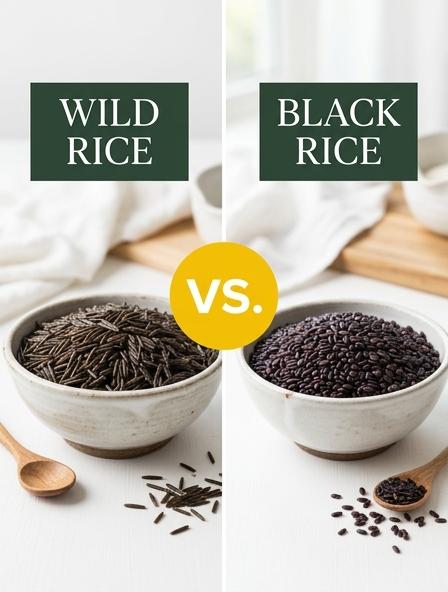
While both grains provide a dramatic contrast to traditional white rice, they offer distinct stylistic vibes. Wild rice, technically a semi-aquatic grass, features long, slender, needle-like grains that vary from deep ebony to chocolate brown. Its "burst" texture when cooked reveals a cream-colored interior, lending a rustic, earthy charm to the plate. In contrast, black rice (often called Forbidden Rice) consists of uniform, short-to-medium grains that maintain a polished, sophisticated appearance.
| Grain Type | Visual Texture | Color Profile |
|---|---|---|
| Wild Rice | Rugged, split grains | Matte dark brown/black |
| Black Rice | Glossy, consistent | Deep royal purple |
Home cooks love pairing the deep, midnight-purple sheen of black rice with bright orange roasted squash or vibrant green edamame to create a visually stunning, Instagram-ready harvest bowl.
Glycemic Index and Impact on Long Term Blood Sugar Health
When comparing wild rice and black rice, both emerge as champions for metabolic health due to their low Glycemic Index (GI) scores. While white rice can cause rapid spikes, wild and black rice typically maintain a GI between 42 and 45. This slow-release energy is vital for maintaining stable insulin levels and protecting long-term pancreatic function.
- Wild Rice: High fiber and protein content slow down the digestion of starches.
- Black Rice: Rich in anthocyanin antioxidants, which have been linked to improved insulin sensitivity.
Incorporating these whole grains into your diet helps mitigate the risk of type 2 diabetes and prevents the "sugar crash" associated with refined carbohydrates. You might choose a chilled wild rice salad for your weekday lunch to ensure a steady stream of focus and energy without the dreaded afternoon slump.
Fiber Content and Digestive Benefits for Family Wellness
Choosing between wild rice and black rice is a win-win for family digestive health, as both are superior to refined white grains. Black rice, often called forbidden rice, slightly leads the category with approximately 5 grams of fiber per cooked cup, while wild rice offers about 3 grams. This dietary fiber is essential for maintaining a healthy gut microbiome and ensuring regular bowel movements for both children and adults.
- Black Rice: Rich in anthocyanins and soluble fiber, which aids in slowing glucose absorption.
- Wild Rice: High in insoluble fiber, which effectively sweeps the digestive tract and promotes satiety.
Integrating these grains into your diet supports long-term wellness by preventing energy crashes and digestive discomfort. Busy parents love swapping standard grains for a wild rice blend in a slow-cooker chicken soup to ensure the kids stay full and energized throughout their afternoon soccer practices.
Structural Integrity and Performance in Soups or Salads
Choosing between wild rice and black rice depends heavily on the desired texture and visual outcome of your dish. Wild rice is an aquatic grass seed known for its resilient outer hull, which maintains a signature "snap" even when submerged in hot liquids for extended periods. In contrast, black rice offers a slightly softer, more glutinous texture. While it remains firm, its higher starch content provides a chewier mouthfeel compared to the grassy rigidity of wild rice.
- Wild Rice: High structural persistence; ideal for brothy soups as it resists becoming mushy.
- Black Rice: Rich in anthocyanins; tends to bleed a deep purple hue into surrounding ingredients and dressings.
You might opt for wild rice in a slow-simmered cream of mushroom soup to ensure the grains remain distinct, or select black rice for a vibrant chilled mango salad where its sticky nature helps bind fresh ingredients together.
Caloric Density and Protein Ratios for Balanced Weight Management
When comparing wild rice and black rice for weight management, the distinction lies in their caloric efficiency and satiety markers. Wild rice is technically an aquatic grass, offering a remarkably low caloric density of approximately 101 calories per cooked cup. It provides a high protein-to-carbohydrate ratio, which is essential for preserving lean muscle mass during a deficit. In contrast, black rice contains about 160 calories per cup but compensates with a dense concentration of anthocyanin antioxidants that support metabolic health.
- Wild Rice: Lowest calorie option, high satiety, and roughly 4 grams of protein per serving.
- Black Rice: Moderate calories, high fiber, and potent anti-inflammatory properties.
Both grains outperform white rice by slowing glucose absorption, though wild rice is the winner for pure volume eating. You might choose wild rice as the base for your weekly meal prep if you want to enjoy larger portions while keeping your total caloric intake low and your hunger fully satisfied.
Wild Rice vs Black Rice source and external links
- Known for its high protein and fiber content, wild rice is actually the seed of a semiaquatic grass native to North America.
- Commonly referred to as forbidden rice, black rice is a nutrient-rich grain that gets its deep purple color from powerful antioxidants called anthocyanins.