
Whole Wheat Pasta vs Chickpea Pasta : Comparing Nutritional Profile, Texture Quality, and Health Benefit Differences
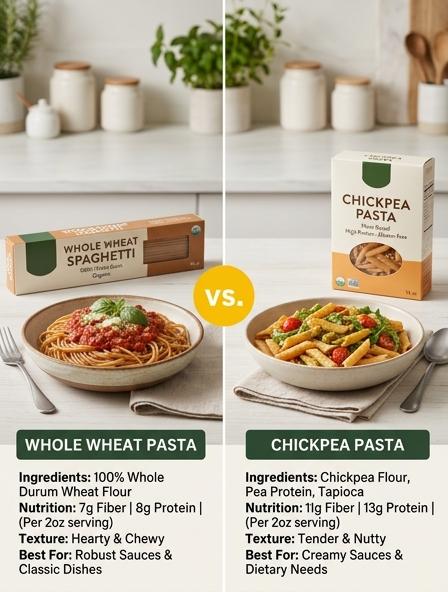
Nutritional Density Comparison Between Grain and Pulse Based Options
Deciding between whole wheat and chickpea pasta requires evaluating their distinct macronutrient profiles. Whole wheat pasta, a grain-based staple, provides essential B vitamins, minerals like manganese, and a significant amount of dietary fiber. However, pulse-based options like chickpea pasta have gained popularity for their superior nutritional density.
- Protein: Chickpea pasta typically contains 11-14 grams per serving, nearly double the protein found in whole wheat.
- Fiber: Both are high-fiber, but pulses offer more prebiotic fiber, which supports gut health.
- Glycemic Load: Chickpea varieties have a lower glycemic index, leading to slower glucose absorption.
While whole wheat remains a budget-friendly source of complex energy, the pulse-based alternative excels in supporting muscle recovery and blood sugar stability. You might reach for chickpea penne when you want a high-protein, plant-based dinner that keeps you feeling full and energized long after your evening workout.
Boiling Stability and Texture Retention During Preparation
The structural integrity of pasta during boiling depends on its protein composition. Whole wheat pasta contains gluten, which forms a resilient network that traps starch and maintains a firm "al dente" texture. In contrast, chickpea pasta is gluten-free and relies on legume proteins and starches, which are more susceptible to leaching into the cooking water.
- Whole Wheat: Highly forgiving; maintains shape even if slightly overcooked.
- Chickpea: Narrow cooking window; prone to heavy foaming and can become mushy or grainy if boiled for even one minute too long.
While whole wheat offers a reliable, sturdy base for heavy sauces, chickpea pasta requires precise timing to prevent the noodles from disintegrating. You might prefer whole wheat for a meal-prep pasta bake that needs to withstand reheating, but choose chickpea for a fresh, protein-rich summer salad where you can monitor the pot closely to ensure the perfect bite.
Glycemic Impact and Sustained Satiety Levels
Comparing whole wheat and chickpea pasta reveals significant differences in metabolic response. While whole wheat is a complex carbohydrate with a moderate glycemic index (GI), chickpea pasta typically has a lower GI due to its legume base. This lower rating ensures a slower, more controlled release of glucose into the bloodstream, preventing the sharp insulin spikes often associated with refined grains.
- Whole Wheat Pasta: Contains germ and bran, offering steady energy and essential B vitamins.
- Chickpea Pasta: Provides nearly double the protein and higher soluble fiber, which actively delays gastric emptying.
The high protein-to-carb ratio in chickpea varieties triggers satiety hormones more effectively than wheat. This biochemical process helps maintain a feeling of fullness long after the meal has ended, making it an excellent tool for appetite control and sustained mental clarity throughout the day.
You might choose chickpea pasta for a pre-workout dinner to ensure your muscles receive a steady supply of fuel without the risk of a mid-exercise energy crash.
Protein Quality and Essential Amino Acid Content
When evaluating these two options, the primary difference lies in their amino acid profiles. Chickpea pasta is a powerhouse for plant-based eaters because it offers a "complete" protein source, containing all nine essential amino acids the body cannot produce on its own. In contrast, whole wheat pasta is naturally low in lysine, making its protein profile incomplete unless paired with legumes.
| Nutrient Feature | Whole Wheat Pasta | Chickpea Pasta |
|---|---|---|
| Protein Completeness | Incomplete (Low Lysine) | Complete |
| Bioavailability | Moderate | High |
While whole wheat offers a respectable 7–8 grams of protein per serving, chickpea varieties often double that amount with better absorption rates. Many fitness enthusiasts prefer swapping traditional noodles for chickpea pasta in their meal prep containers to ensure they hit their muscle-recovery macros after a heavy lifting session without needing to cook an extra chicken breast.
Mouthfeel and Palatability for Family Meal Planning
When choosing between whole wheat and chickpea pasta, texture is the primary factor for family acceptance. Whole wheat pasta provides a familiar "al dente" bite with a slightly grainier finish than refined flour. Conversely, chickpea pasta is a dense, high-protein alternative that offers a unique, nutty flavor profile but requires careful cooking to avoid a mealy or mushy consistency.
- Whole Wheat: Maintains structural integrity well in baked dishes and heavy meat sauces.
- Chickpea Pasta: Offers a tender, grain-free experience that pairs best with creamy or oil-based sauces.
The choice often boils down to how much "chew" your family expects from their noodles. While whole wheat is closer to traditional pasta in elasticity, chickpea varieties provide a more filling, nutrient-dense meal for those managing gluten sensitivities. You might find that blending both types during a transition period helps picky eaters enjoy the added fiber of chickpea noodles without missing the classic bounce of wheat-based pasta.
Fiber Concentrations and Digestive Wellness Benefits
When comparing whole wheat and chickpea pasta, fiber density is a primary differentiator for digestive health. Whole wheat pasta is a reliable source of insoluble fiber, which promotes regular bowel movements. However, chickpea pasta typically contains significantly higher fiber levels, often providing 11 to 13 grams per serving compared to whole wheat's 7 grams. This higher concentration includes soluble fiber, which acts as a prebiotic to nourish beneficial gut bacteria.
- Whole Wheat: High in insoluble fiber to support consistent digestive regularity.
- Chickpea: Rich in soluble fiber and resistant starch for improved microbiome health.
The increased fiber in legume-based noodles also slows glucose absorption, preventing the insulin spikes often associated with traditional grain-based meals. Many health-conscious professionals prefer serving chickpea penne for a quick weekday lunch to ensure they stay full and focused throughout the afternoon without experiencing heavy, post-meal fatigue.
Culinary Performance with Various Sauce Bases
The choice between whole wheat and chickpea pasta often dictates the success of a dish's texture. Whole wheat pasta offers superior structural integrity and elasticity, making it the ideal candidate for heavy, acidic tomato sauces or chunky vegetable ragus that require vigorous tossing. Its fiber-rich strands maintain a firm "al dente" bite even under high heat.
Chickpea pasta, however, is more delicate and starchy. Because it can become gummy if overcooked, it performs best with lighter, emulsified sauces. Its porous surface is particularly effective at "grabbing" onto oils and fats, which helps bridge the gap between the pasta's earthy flavor and the sauce's profile.
- Whole Wheat: Best for acidic Marinaras or thick Bolognese.
- Chickpea: Best for smooth Pestos, infused oils, or light herb butters.
You might choose whole wheat for a traditional Sunday night pasta bake, while chickpea pasta is the go-to for a quick, protein-packed Mediterranean toss with olive oil and fresh garlic.
Caloric Breakdown for Weight Conscious Cooking
When comparing whole wheat pasta and chickpea pasta for weight management, the raw calorie counts are surprisingly similar. Both typically range between 180 and 210 calories per standard two-ounce dry serving. However, the caloric efficiency changes when you analyze satiety and nutrient density.
| Pasta Variety (2oz Dry) | Avg. Calories | Main Weight Loss Benefit |
|---|---|---|
| Whole Wheat Pasta | 180 kcal | High fiber for digestion |
| Chickpea Pasta | 190 kcal | Higher protein for satiety |
While whole wheat is a reliable source of complex carbohydrates, chickpea pasta often provides double the protein, which helps suppress hunger hormones and prevents overeating later in the day. You might reach for chickpea pasta when preparing a light lemon-garlic dinner to ensure you stay full and satisfied until breakfast without needing a late-night snack.
Micronutrient Profiles in Modern Pantry Staples
Comparing whole wheat pasta and chickpea pasta reveals distinct nutritional advantages tailored to different dietary goals. Whole wheat pasta is naturally rich in essential minerals like manganese, which supports bone health, and selenium, a powerful antioxidant. Conversely, chickpea pasta is a nutrient-dense alternative that excels in providing iron, potassium, and folate, making it an excellent choice for those following plant-based or gluten-free diets.
- Whole Wheat: High in B-vitamins (Thiamine, Niacin) and Magnesium for energy metabolism.
- Chickpea: Superior levels of Iron and Phosphorus to support oxygen transport and cellular repair.
While whole wheat offers a familiar texture and steady complex carbohydrates, chickpea varieties provide significantly more fiber and nearly double the protein per serving. This higher fiber content aids in digestive health and helps maintain stable blood sugar levels throughout the day. You might reach for the classic heartiness of whole wheat for a traditional family dinner, but you will likely choose chickpea rotini for a quick, high-protein post-workout meal that keeps you full for hours.
Shelf Life and Textural Changes After Storage
Understanding the longevity and structural stability of whole wheat versus chickpea pasta is essential for pantry management and meal planning. Whole wheat pasta, containing gluten, typically offers a dry shelf life of 1.5 to 2 years and maintains excellent structural integrity when stored as leftovers.
- Whole Wheat: Maintains a firm, "al dente" bite for 3-5 days in the fridge; stays resilient during reheating.
- Chickpea Pasta: Best consumed within 12 months dry; can become grainy, mushy, or brittle after 24 hours of refrigeration.
Because chickpea pasta lacks gluten, its protein-heavy fibers absorb moisture differently than wheat. While whole wheat holds its shape under heavy sauces, chickpea varieties are more prone to breaking down if over-boiled or stored too long. Busy meal preppers often choose whole wheat fusilli for their weekly containers because it stays chewy and satisfying even after being microwaved on a Friday afternoon.
Whole Wheat Pasta vs Chickpea Pasta source and external links
- Whole wheat pasta is a fiber-rich alternative to refined grains that provides essential nutrients and sustained energy, as detailed in this overview of whole wheat pasta.
- Chickpea pasta is a popular gluten-free option known for its high protein and fiber content, making chickpea pasta an excellent choice for plant-based nutrition.