
Whole Milk vs Skim Milk: Are They The Same? Cooking Consistency, Flavor Profiles, and Baking Performance.
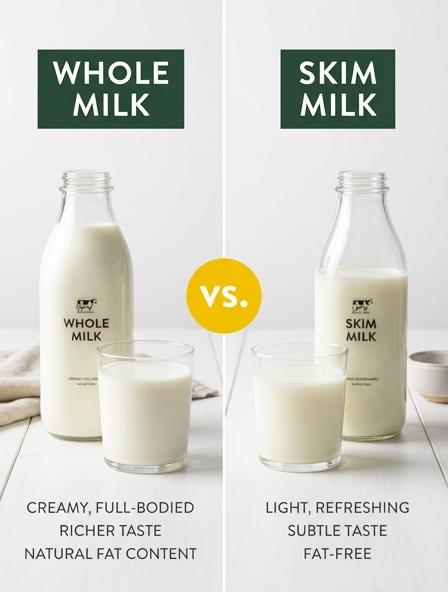
Fat Content Impact on Sauce Consistency
The fat content in milk is the primary driver of a sauce's viscosity and emulsification. Whole milk, containing approximately 3.25% milkfat, provides the lipids necessary to create a stable, velvety texture. These fats coat flour particles in a roux, preventing clumping and ensuring a rich, heavy mouthfeel. In contrast, skim milk lacks these lipids, often resulting in a watery consistency that requires additional starch to achieve similar thickness.
| Milk Type | Consistency | Emulsification |
|---|---|---|
| Whole Milk | Thick & Creamy | Excellent |
| Skim Milk | Thin & Fluid | Poor |
The absence of fat in skim milk can also lead to a "broken" sauce where the liquid separates easily under high heat. You might prefer whole milk when whisking a classic Bechamel for a decadent macaroni and cheese to ensure the sauce stays silky and clings perfectly to the pasta.
Caloric Density in Family Meal Planning
When balancing a household budget and nutritional needs, understanding the caloric density of dairy is essential. Whole milk retains its natural fat content, providing approximately 150 calories per eight-ounce serving. In contrast, skim milk has the fat removed, resulting in a leaner profile of about 80 to 90 calories while maintaining nearly identical levels of protein, calcium, and essential vitamins.
- Whole Milk: High energy density; promotes satiety and aids in the absorption of fat-soluble vitamins.
- Skim Milk: Low energy density; ideal for those prioritizing volume-based eating or weight management.
- Nutrient Retention: Both options provide roughly 8 grams of high-quality protein per cup.
A fitness-focused parent might stir skim milk into their morning coffee to keep calories low, while serving whole milk at the breakfast table to ensure their growing toddler receives the healthy fats necessary for brain development and sustained energy.
Structural Performance in Oven Baking
The choice between whole and skim milk significantly impacts the crumb and texture of baked goods. Whole milk contains approximately 3.25% milkfat, which functions as a natural tenderizer. This fat coats flour proteins, inhibiting excessive gluten development to produce a moist, delicate interior. In contrast, skim milk provides moisture without the lubricating effects of fat, resulting in a firmer, airier structure.
- Whole Milk: Creates a rich, soft crumb and extends shelf life through moisture retention.
- Skim Milk: Promotes a crispier crust and faster browning due to higher protein-to-fat ratios.
Professional pastry chefs prefer whole milk for a velvety birthday cake, while those crafting a crusty, lean sandwich bread often opt for skim milk to achieve a sturdier slice.
Flavor Profiles in Savory and Sweet Dishes
The culinary performance of milk is largely determined by its fat content, which acts as a primary flavor carrier. Whole milk, containing roughly 3.25% milkfat, provides a rich, velvety mouthfeel that rounds out the sharp edges of spices and acids in savory sauces. Skim milk, however, lacks these lipids, resulting in a thinner consistency and a more pronounced, watery sweetness that can get lost in complex recipes.
- Whole Milk: Adds structural depth to béchamel and ensures a moist, tender crumb in cakes and muffins.
- Skim Milk: Best utilized in light smoothies or cold cereal where a lean, refreshing profile is preferred over richness.
You might prefer using whole milk when whisking a decadent stovetop pudding, as the higher fat content is essential for achieving that luxurious, silk-like texture that defines a professional-grade dessert.
Fat Soluble Vitamin Absorption in Prepared Meals
When comparing whole milk to skim milk, the presence of dietary fat plays a critical role in nutrient bioavailability. Fat-soluble vitamins-specifically A, D, E, and K-require a lipid medium to be efficiently absorbed by the digestive system. While skim milk is frequently fortified to replace lost nutrients, the lack of natural milk fat can result in lower absorption rates compared to whole milk.
- Bioavailability: Whole milk provides the necessary lipids to transport vitamins into the bloodstream.
- Nutrient Synergy: Fat helps the body utilize vitamins found in other components of a prepared meal.
- Fortification Efficiency: Synthetic vitamins added to skim milk are best absorbed when paired with a fat source.
You may prefer splashing rich whole milk over your vitamin-fortified breakfast cereal to ensure every nutrient is effectively utilized by your body while enjoying a more satisfying flavor profile.
Textural Differences in Stovetop Custards
The fat content in milk fundamentally dictates the viscosity and mouthfeel of stovetop custards. Whole milk, containing roughly 3.25% milkfat, creates a lush, velvety emulsion by coating the tongue and buffering egg proteins, which prevents a rubbery texture. Conversely, skim milk lacks these lipids, resulting in a thinner consistency that can feel watery or overly firm due to the lack of fat to soften the protein curd.
| Milk Type | Texture Profile |
|---|---|
| Whole Milk | Rich, creamy, and heavy-bodied |
| Skim Milk | Light, lean, and less opaque |
You might prefer using whole milk when crafting a decadent crème pâtissière for a fruit tart to ensure a professional, indulgent finish that holds its shape perfectly.
Heat Stability and Curdling Points
The heat stability of milk is primarily determined by its fat content and protein structure. Whole milk is significantly more stable than skim milk when subjected to high temperatures or acidic environments.
- Whole Milk: The presence of milk fat globules acts as a buffer, coating proteins and preventing them from denaturing and clumping together too quickly.
- Skim Milk: Lacks the protective fat barrier, making it highly susceptible to "feathering" or curdling, especially when added to hot, acidic liquids.
During the heating process, proteins like casein and whey begin to destabilize. Because skim milk is composed almost entirely of water and protein, it reaches its curdling point much faster than its full-fat counterpart. This makes whole milk the preferred choice for culinary applications involving boiling or reduction.
You might choose whole milk when whisking together a homemade tomato soup to ensure the dairy stays smooth and resists curdling against the natural acidity of the vegetables.
Stability When Combined with Acidic Ingredients
When mixing dairy with acidic components like citrus, coffee, or vinegar, the fat content determines the liquid's structural integrity. Whole milk offers superior stability compared to skim milk because its higher concentration of butterfat acts as a protective buffer for proteins.
The process of curdling occurs when acid lowers the pH of the milk, causing casein proteins to clump together. In whole milk, fat globules surround these proteins, physically interfering with the coagulation process. Without this lipid barrier, skim milk is highly susceptible to rapid separation.
- Whole Milk: High fat levels create a smooth emulsion that resists heat and acid-induced curdling.
- Skim Milk: Minimal fat allows proteins to bond instantly, often resulting in a grainy texture.
You might prefer whisking whole milk into your tomato-based vodka sauce to ensure a velvety, consistent texture that won't break under the acidity of the fruit.
Browning Effects on Dough and Crust
The choice between whole and skim milk significantly dictates the final appearance of baked goods through the Maillard reaction-a chemical interaction between lactose (milk sugar) and proteins. While both dairy types provide the necessary components for caramelization, their differing fat contents alter the crust's physical properties:
- Whole Milk: High fat content slows moisture evaporation, resulting in a rich, deeply golden-brown, and tender crust.
- Skim Milk: The absence of fat allows for rapid surface browning but often yields a thinner, crispier, and potentially drier exterior.
Because skim milk facilitates faster browning without the tenderizing effects of lipids, it can lead to a darker color before the interior is fully baked. Professional pastry chefs often prefer whole milk when baking enriched dinner rolls to achieve a soft, uniform mahogany finish that appeals to diners seeking a traditional, buttery mouthfeel.
Mouthfeel Quality in Homemade Beverages
The choice between whole and skim milk fundamentally alters the texture and sensory profile of homemade drinks. Fat content serves as the primary architect of mouthfeel; the lipids in whole milk provide a viscous, velvety coating on the tongue that helps balance the natural acidity of coffee and tea.
- Whole Milk: High fat content contributes to a rich, heavy body and stable, silky micro-foam.
- Skim Milk: Minimal fat leads to a thin, watery consistency with a sharper, more direct flavor perception.
While skim milk offers a lighter profile, it often lacks the structural integrity required for a dense froth. Many home baristas prefer using whole milk when crafting a decadent hot chocolate, as the creamy emulsion allows the cocoa notes to linger longer on the palate for a truly indulgent experience.
Whole Milk vs Skim Milk source and external links
- Whole milk is a nutrient-dense dairy product containing approximately 3.25% milkfat, providing a rich flavor and essential fat-soluble vitamins.
- Skim milk is a fat-free alternative created by removing the cream from whole milk, making it a lower-calorie option for those monitoring their fat intake.