
Whole Milk vs Oat Milk : The Differences in Culinary Performance, Nutritional Profiles, and Environmental Sustainability
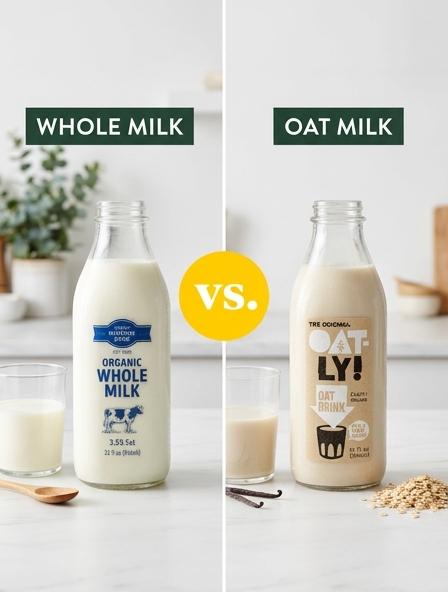
Culinary Performance and Texture in Savory Sauces
Choosing between whole milk and oat milk for savory applications depends largely on how their unique compositions react to heat and emulsification. Whole milk is the traditional gold standard due to its high butterfat and casein protein content, which creates a stable, velvety emulsion in classic mother sauces like Béchamel. In contrast, oat milk relies on grain-based starches that can cause sauces to thicken faster, sometimes resulting in a slightly heavier or "gummy" mouthfeel if overheated.
- Whole Milk: Offers a neutral, rich profile that enhances the saltiness of cheeses and broths.
- Oat Milk: Provides a subtle, toasted sweetness that pairs well with earthy spices like nutmeg or sage.
While professional chefs often reach for whole milk to achieve a glossy finish in pan sauces, many home cooks find that a high-quality barista-edition oat milk creates a surprisingly luscious and creamy dairy-free vodka sauce for a weekend pasta dinner.
Nutritional Profiles and Essential Minerals for Family Health
Comparing whole milk and oat milk involves weighing natural nutrient density against functional fortification. Whole milk is a powerhouse of bioavailable calcium, phosphorus, and vitamin B12, essential for bone development and neurological health. In contrast, oat milk is a plant-based alternative that, while naturally lower in protein, often provides heart-healthy beta-glucan fiber and is fortified with vitamins A and D to bridge the nutritional gap.
| Nutrient | Whole Milk | Oat Milk (Fortified) |
|---|---|---|
| Protein | 8g (Complete) | 2-3g (Incomplete) |
| Key Mineral | Natural Calcium | Fortified Calcium |
| Fiber | 0g | 2g (Beta-glucan) |
You might choose nutrient-dense whole milk to support a growing child's skeletal health, or perhaps you prefer the light, fiber-rich profile of oat milk to complement your daily vegan lifestyle.
Structural Impact and Moisture Retention in Baked Goods
The choice between whole milk and oat milk fundamentally changes the architecture of your bakes. Whole milk utilizes animal proteins and saturated fats to coat flour particles, creating a tender crumb and a sturdy structural network. In contrast, oat milk relies on complex carbohydrates and added stabilizers to mimic this viscosity, often resulting in a slightly denser but exceptionally moist texture.
| Component | Whole Milk Impact | Oat Milk Impact |
|---|---|---|
| Protein | Strong gluten support | Minimal structural lift |
| Sugar/Fat | Balanced tenderness | Faster caramelization |
Because oat milk contains higher natural sugars, it accelerates the Maillard reaction, leading to a darker crust. You might choose oat milk for your weekend banana bread to achieve a rich, caramelized exterior while maintaining a dense, fudge-like interior that keeps the loaf moist for days.
Lactose Presence and Digestive Comfort in Daily Meals
The primary distinction between whole milk and oat milk lies in their carbohydrate profiles and impact on gut health. Whole milk contains lactose, a natural dairy sugar that requires the enzyme lactase for proper breakdown. For individuals with lactose intolerance, consuming dairy can lead to immediate gastrointestinal distress. Conversely, oat milk is naturally lactose-free and plant-based, making it an excellent alternative for those seeking a gentler digestive experience.
- Whole Milk: High bioavailability of nutrients but may cause bloating or gas in sensitive individuals.
- Oat Milk: Inherently free from dairy allergens and easier on the stomach during morning routines.
Many coffee enthusiasts find that switching to oat milk in their morning latte eliminates that heavy, bloated feeling, allowing them to enjoy their caffeine fix without the mid-morning stomach ache common with traditional dairy.
Temperature Resistance and Curdling Factors on the Stove
Managing heat is critical when choosing between dairy and plant-based alternatives. Whole milk contains animal proteins and fats that are prone to scorching or forming a surface film. If the heat is too high or if the liquid meets high acidity, the proteins denature and clump together, causing curdling. Oat milk, while generally more resistant to acidic curdling, contains natural starches that can become unpleasantly viscous or "slimy" if subjected to a rolling boil.
- Whole Milk: Best heated slowly to avoid protein separation and skin formation.
- Oat Milk: More stable in acidic environments but prone to thickening via starch gelatinization.
To ensure a smooth result, always maintain low to medium heat and stir consistently regardless of your choice. You might prefer whole milk for building a stable, simmered white sauce, whereas oat milk is a favorite for those seeking a creamy, non-dairy addition to their stovetop chai without the risk of bitter separation.
Natural Flavor Profiles and Sweetness in Homemade Desserts
Choosing between whole milk and oat milk significantly alters the flavor architecture of homemade treats. Whole milk provides a rich, velvety mouthfeel and a subtle, savory sweetness derived from lactose. It acts as a neutral canvas, allowing primary ingredients like vanilla or chocolate to lead the palate. Conversely, oat milk introduces a distinct toasted, grain-forward profile. Because the enzymatic process used to create oat milk converts starches into maltose, it often carries a higher perceived sweetness than dairy, which may require adjusting added sugars in your recipes.
- Whole Milk: High fat content for a creamy finish and mild, lactic sweetness.
- Oat Milk: Nutty, cereal-like undertones with a natural malt-like sugar profile.
Imagine whisking a velvety vanilla custard where the whole milk provides a classic dairy richness, or opting for oat milk in a spiced rice pudding to naturally enhance those warm, earthy cereal undertones.
Environmental Footprint and Resource Sustainability
Comparing whole milk to oat milk reveals a significant disparity in ecological impact. Traditional dairy production is resource-intensive, contributing substantially to greenhouse gas emissions, primarily through methane. It also demands vast tracts of land for cattle grazing and feed cultivation.
Oat milk offers a more sustainable profile, utilizing fewer natural resources to produce an equivalent volume. Key environmental metrics include:
- Carbon Emissions: Dairy produces roughly three times more greenhouse gases than oat milk.
- Land Usage: One liter of cow's milk requires nearly nine times more land than oat-based alternatives.
- Water Consumption: While oats require irrigation, dairy farming remains significantly more water-demanding per liter.
Eco-conscious baristas often prefer oat milk because it delivers a rich, creamy microfoam for latte art while significantly lowering the carbon footprint of every morning cup.
Satiety Levels and Caloric Density for Meal Planning
Understanding the nutritional profiles of whole milk and oat milk is essential for effective meal planning. Whole milk is calorically dense, containing approximately 150 calories per cup, driven by a balanced mix of fats and high-quality proteins. These macronutrients slow digestion and trigger satiety hormones effectively. In contrast, oat milk often matches whole milk in calories-ranging from 120 to 160 per cup-but its energy comes primarily from carbohydrates and added oils, frequently lacking the protein depth needed for long-term fullness.
- Whole Milk: High protein and fat content provide a lower glycemic response and sustained satiety.
- Oat Milk: Higher starch content offers a quick energy source but may lead to earlier hunger cues.
You might choose whole milk for a breakfast smoothie to keep you satisfied until your afternoon break, whereas oat milk is what people like when seeking a lighter, carb-focused base for a pre-run beverage.
Frothing Consistency and Texture in Hot Beverages
The ability to create a stable micro-foam depends heavily on the protein and fat composition of the liquid. Whole milk is the gold standard for baristas because its whey and casein proteins provide a structural framework that traps air, while the milk fats deliver a silky, glossy finish. In contrast, oat milk relies on its high starch content to generate thickness.
- Whole Milk: Creates resilient, fine-textured bubbles that are ideal for high-definition latte art.
- Oat Milk: Produces a denser, heavier foam that mimics dairy well, though it can occasionally separate if not aerated correctly.
While dairy offers a classic aerodynamic foam, many modern plant-based enthusiasts find that "Barista Edition" oat milks provide a superior, creamy mouthfeel that doesn't mask the espresso's flavor profile. You might find yourself reaching for whole milk when crafting a delicate macchiato, or opting for oat milk when you want a rich, velvet-like coating in your favorite vanilla latte.
Shelf Life and Storage Stability for Household Use
Understanding the storage requirements of whole milk versus oat milk is essential for reducing food waste. Whole milk is a highly perishable dairy product that must be kept refrigerated at all times, typically lasting only five to seven days after opening. In contrast, oat milk offers superior convenience due to its processing and packaging.
- Whole Milk: Requires constant refrigeration; short shelf life (7 days opened).
- Oat Milk: Available in shelf-stable aseptic packaging; stays fresh for up to 10 days once refrigerated.
While whole milk relies on a strict cold chain to prevent spoilage, many oat milk brands can be stored in a kitchen pantry for months until they are ready to be used. Busy professionals often prefer stocking up on shelf-stable oat milk cartons so they always have a fresh creamy base available for their morning lattes without worrying about frequent trips to the grocery store.
Whole Milk vs Oat Milk source and external links
- Whole milk is a nutrient-dense dairy beverage containing approximately 3.25% milk fat along with essential vitamins and minerals like calcium and vitamin D.
- Oat milk is a popular plant-based alternative made from liquefied oats that offers a creamy texture and is often fortified to provide a nutritional profile similar to cow's milk.