
Whole Milk vs Non-fat Milk: Which is Best for Baking Results, Sauce Consistency, and Nutritional Balance?
Fat Content Impact on Sauce Consistency and Mouthfeel
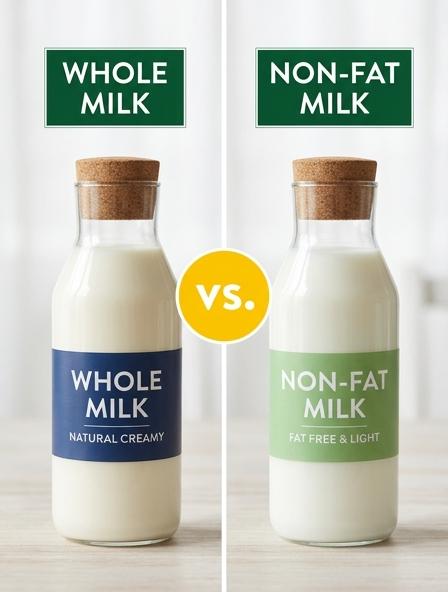
The culinary distinction between whole and non-fat milk is defined by lipid concentration. Whole milk, containing approximately 3.25% milkfat, provides a rich, viscous foundation for emulsified sauces. These fat globules coat the palate, creating a "velvety" mouthfeel that non-fat alternatives struggle to replicate.
- Whole Milk: High fat content promotes a thick, stable emulsion and a luxurious, creamy texture.
- Non-fat Milk: Lacks lipids, often resulting in a thinner, watery consistency that may require extra starch.
In high-heat applications, the fat in whole milk acts as a buffer, protecting proteins from denaturing too quickly and preventing a grainy texture. Without this fat, sauces can break or feel "flat" on the tongue, missing the structural depth required for gourmet finishes.
You might choose whole milk when whisking a decadent Béchamel for a homemade macaroni and cheese to ensure the sauce remains silky and clings perfectly to every noodle.
Caloric Density and Nutritional Balance in Family Meals
Selecting the appropriate milk requires balancing caloric density with the diverse nutritional requirements of a household. Whole milk provides approximately 150 calories per cup, offering higher satiety and aiding the absorption of fat-soluble vitamins like A and D. In contrast, non-fat milk serves as a calorie-efficient source of high-quality protein and calcium, ideal for those monitoring total lipid intake.
| Nutrient (per 8oz) | Whole Milk (3.25%) | Non-fat Milk (Skim) |
|---|---|---|
| Calories | ~150 kcal | ~80 kcal |
| Total Fat | 8g | 0g |
| Protein | 8g | 8g |
A health-conscious parent might stir non-fat milk into their morning coffee to save calories while ensuring their active toddler gets the whole milk necessary for healthy brain development during breakfast.
Heat Stability and Curdling Prevention in Liquid Bases
The fundamental difference in how whole and non-fat milk respond to heat is determined by fat content. Whole milk contains fat globules that act as a protective buffer for proteins. When heated, these lipids coat the casein and whey, preventing them from denaturing and bonding too tightly, which reduces the risk of curdling or "feathering."
Non-fat milk lacks this lipid barrier, making it significantly more sensitive to high temperatures and acidic environments. Without fat to stabilize the mixture, proteins are prone to rapid coagulation. Consider these stability factors:
- Whole Milk: High heat tolerance; ideal for boiling and acidic reductions.
- Non-fat Milk: Low heat tolerance; likely to separate in coffee or tomato-based soups.
Home cooks often choose whole milk when whisking together a creamy béchamel sauce to ensure a perfectly smooth texture that remains stable even as the base reaches a simmer.
Influence of Dairy Fat on Baking Results and Crumb Structure
The fat content in milk serves as a vital tenderizing agent in baking. Whole milk, which contains approximately 3.25% milkfat, coats flour proteins and slows down gluten development. This results in a delicate, fine-grained crumb and a moist mouthfeel. In contrast, non-fat milk provides the liquid necessary for hydration and the lactose needed for crust browning, but it lacks the lubricating lipids that create a soft texture.
- Whole Milk: Produces a rich, velvety crumb and extends shelf life by retaining moisture.
- Non-fat Milk: Results in a leaner, firmer structure with a slightly tougher bite.
When substituting non-fat milk, the lack of fat can make cakes feel dry, which is why many home bakers prefer using whole milk for a classic vanilla sponge to ensure a plush, melt-in-your-mouth experience.
Flavor Profile and Richness in Savory Dish Applications
The primary distinction between whole and non-fat milk in savory cooking lies in lipid concentration. Whole milk, containing approximately 3.25% milkfat, offers a velvety mouthfeel and a subtle sweetness that balances sharp or acidic ingredients. Conversely, non-fat milk has virtually all fat removed, resulting in a thinner consistency and a milder flavor profile.
When used in culinary applications, the physical properties of these liquids impact both texture and taste depth:
- Whole Milk: Acts as a natural emulsifier, providing body and a creamy finish to pan sauces and stews.
- Non-fat Milk: Lacks the viscosity of fat, often requiring additional thickeners like cornstarch to prevent a watery result.
Fat serves as a critical carrier for fat-soluble flavor compounds, which is why whole milk creates more cohesive, rounded flavors in complex dishes. You might reach for whole milk when whisking a classic Béchamel for a homemade lasagna to achieve that signature luxurious texture that diners crave.
Bioavailability of Fat Soluble Vitamins in Prepared Foods
The primary distinction between whole and non-fat milk lies in the lipid content required for nutrient absorption. Fat-soluble vitamins require a fat matrix to be effectively transported and assimilated by the human body. Without sufficient dietary fat, the bioavailability of these essential nutrients decreases significantly during digestion.
- Vitamin A: Supports vision and immune function.
- Vitamin D: Essential for calcium absorption and bone health.
- Vitamin E: Protects cells from oxidative stress.
- Vitamin K: Critical for proper blood clotting.
In prepared dishes, the milk fat in whole milk acts as a natural delivery vehicle, enhancing the uptake of vitamins from both the milk itself and accompanying ingredients. Many home cooks prefer using a splash of whole milk in their morning oatmeal to ensure they are getting the full nutritional benefit of their fortified grains and toppings.
Surface Browning and Texture Development in Baked Goods
The choice between whole and non-fat milk significantly impacts the Maillard reaction and final crumb structure. Whole milk contains milk solids and lipids that coat flour proteins, inhibiting excessive gluten development to create a soft, tender crumb. In contrast, non-fat milk provides the necessary lactose and proteins for surface browning but lacks the fat needed to tenderize the dough, often resulting in a firmer, leaner bite.
- Whole Milk: Results in a rich golden-brown finish and a moist, velvety interior.
- Non-fat Milk: Produces a crisp, darkened crust with a more structured, chewy texture.
You might choose whole milk when baking a weekend batch of cinnamon rolls to ensure they stay incredibly soft and develop a beautifully glazed, golden appearance.
Moisture Retention and Crumb Tenderness in Homemade Bread
The choice between whole milk and non-fat milk significantly alters the structural integrity and shelf life of homemade bread. Whole milk contains natural milk fats that coat gluten proteins, preventing them from forming overly tight bonds. This lubrication results in a more tender crumb and a velvety mouthfeel. Additionally, these fats slow down the staling process by trapping moisture within the starch granules.
- Whole Milk: High fat content creates a soft, rich texture and superior moisture retention.
- Non-fat Milk: Provides essential proteins and lactose for browning but yields a leaner, chewier, and drier loaf.
While non-fat milk is excellent for crusty artisanal loaves, bakers who desire a soft sandwich bread that resists drying out often reach for the full-cream variety. Imagine pulling a batch of golden dinner rolls from the oven; using whole milk ensures they remain pillow-soft and moist even when served as leftovers the next morning.
Satiety Levels and Dietary Impact of Dairy Percentages
The fat content in dairy plays a crucial role in appetite regulation and nutrient absorption. Whole milk contains lipids that slow down the digestive process, leading to a more gradual release of glucose into the bloodstream and sustained fullness. Conversely, non-fat milk lacks these fats, which can result in quicker gastric emptying and a shorter duration of satiety.
| Milk Type | Satiety Level | Digestion Speed |
|---|---|---|
| Whole (3.25%) | High | Slow |
| Non-fat (0%) | Low | Fast |
Choosing between these options often depends on individual metabolic goals and caloric requirements. While non-fat milk reduces total energy intake, the presence of milk fat in whole versions assists in the absorption of fat-soluble vitamins A and D. You might find that reaching for whole milk during breakfast keeps you satisfied until lunch, preventing the need for processed snacks during your busy workday.
Viscosity and Structural Stability in Chilled Desserts
The choice between whole and non-fat milk fundamentally alters the rheological properties of chilled desserts. Whole milk provides superior viscosity because its fat globules physically obstruct fluid flow, creating a denser, more resistant texture. Furthermore, the interaction between milkfat and casein proteins builds a stable structural matrix that resists syneresis, or liquid separation, during refrigeration.
| Milk Type | Structural Integrity | Mouthfeel |
|---|---|---|
| Whole Milk | High (Fat-protein matrix) | Creamy and Cohesive |
| Non-fat Milk | Lower (Requires stabilizers) | Thin and Watery |
When crafting a delicate chocolate mousse, home bakers prefer whole milk to ensure the peaks remain firm and the texture stays luxuriously smooth until the final bite.
Whole Milk vs Non-fat Milk source and external links
- Whole milk is a nutrient-rich dairy product that contains approximately 3.25% milk fat, providing a creamy texture and essential fat-soluble vitamins.
- Non-fat milk, also known as skim milk, has had nearly all of its fat content removed to offer a lower-calorie alternative that remains high in protein and calcium.