
Whole Milk vs Half and Half : Comparing Nutrition, Culinary, and Texture Differences
Fat Concentration and Culinary Results
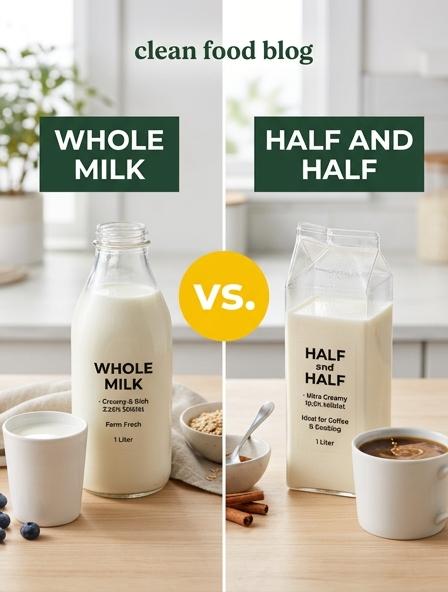
Understanding the distinction between whole milk and half and half is primarily a study of lipid concentration. Whole milk contains approximately 3.25% milkfat, offering a light, fluid consistency. Conversely, half and half is a homogenized blend of equal parts milk and cream, yielding a significantly higher fat content-usually between 10.5% and 18%.
This difference in fat density alters how these liquids behave under heat and their interaction with other ingredients:
- Whole Milk: Best for daily consumption, cereal, and standard baking.
- Half and Half: Ideal for thickening sauces and providing a silkier mouthfeel in savory dishes.
Home cooks often choose half and half over whole milk when preparing a creamy vodka sauce to ensure a luxurious texture that resists curdling when combined with acidic tomatoes.
Nutritional Comparisons for Family Health
Choosing between whole milk and half-and-half depends on your family's specific dietary goals. Whole milk contains approximately 3.25% milkfat, providing a balanced profile of protein, calcium, and vitamin D essential for bone health and childhood growth. Half-and-half, a mixture of equal parts milk and cream, jumps to roughly 10% to 12% fat, making it significantly higher in calories and saturated fats.
| Nutrient (per 1 oz) | Whole Milk | Half and Half |
|---|---|---|
| Calories | ~19 kcal | ~40 kcal |
| Total Fat | ~1.0g | ~3.5g |
| Protein | ~1.0g | ~0.8g |
While whole milk is a staple for hydration and muscle recovery, half-and-half is primarily used as a texture enhancer in cooking and beverages. Many parents prefer keeping whole milk in the fridge for the kids' daily cereal while saving half-and-half to add a velvety richness to their own morning coffee or Sunday scrambled eggs.
Structural Performance in Baked Goods
The choice between whole milk and half and half significantly alters the crumb and stability of baked goods due to the ratio of fat to water. Whole milk, containing approximately 3.25% fat, provides higher hydration levels, which is essential for gluten development and structural strength in airy cakes or lean breads. In contrast, half and half contains between 10.5% and 18% fat, acting as a powerful tenderizer.
When substituted, the increased lipid content in half and half interferes with gluten formation, resulting in a denser, more velvety texture. Key differences include:
- Gluten Inhibition: Higher fat coats flour proteins, creating a shorter, more tender crumb.
- Moisture Retention: The fats in half and half help prevent staling.
- Maillard Reaction: Increased dairy solids promote deeper browning on crusts.
You might choose half and half over whole milk when crafting ultra-rich scones or pound cakes to ensure a luxurious, melt-in-your-mouth consistency that standard dairy cannot replicate.
Caloric Density and Weight Management
When managing weight, the primary distinction between whole milk and half and half lies in caloric density. Half and half is a blend of equal parts milk and cream, resulting in a significantly higher fat concentration and calorie count per ounce compared to whole milk.
| Dairy Type (per cup) | Calories | Total Fat |
|---|---|---|
| Whole Milk | ~150 kcal | 8g |
| Half and Half | ~315 kcal | 28g |
For those tracking daily energy intake, these differences are substantial. While half and half provides a richer mouthfeel, it delivers more than double the calories of whole milk. Substituting whole milk for half and half in recipes or beverages can help reduce total caloric load without completely sacrificing the creaminess associated with dairy fats.
You might choose to use whole milk in your morning cereal to save on calories, while reserving a small splash of half and half for your coffee as a decadent, portion-controlled treat.
Heat Stability During Sauce Preparation
Temperature management is crucial when choosing between whole milk and half and half for culinary applications. The primary difference lies in fat concentration, which directly impacts a liquid's resistance to curdling. Whole milk, containing roughly 3.25% fat, is more likely to "break" or grain when subjected to high heat or acidic components like wine or lemon. Half and half, boasting 10.5% to 18% fat, provides superior thermal buffering.
- Whole Milk: Higher water content makes proteins more susceptible to denaturing at boiling points.
- Half and Half: Increased lipid levels coat milk proteins, preventing them from clumping together during a simmer.
Because higher fat levels ensure a more resilient emulsion, half and half is the preferred choice for reductions and high-temperature thickening. You might reach for the half and half when whisking a rich vodka sauce to guarantee a silky, heat-resistant texture that remains perfectly stable from the stove to the dinner table.
Flavor Profiles in Savory Recipes
In savory applications, the choice between whole milk and half and half dictates the final dish's richness and body. Whole milk offers a mild, clean taste that allows delicate herbs and primary ingredients to shine without being masked by fat. In contrast, half and half contains a higher butterfat content, which provides a velvety mouthfeel and helps to temper aggressive spice or high acidity in sauces.
- Whole Milk: Provides a lighter finish, ideal for everyday roux-based sauces and vegetable soups.
- Half and Half: Delivers a luxurious, coating consistency that stands up better to high-heat reductions.
You might prefer the indulgent silkiness of half and half when whisking together a decadent vodka sauce for a dinner party, while whole milk is often the go-to for a lighter, more refreshing corn chowder.
Texture Differences in Homemade Desserts
The choice between whole milk and half and half fundamentally changes the structural integrity and mouthfeel of homemade sweets. The deciding factor is fat content; whole milk contains roughly 3.25% milkfat, while half and half ranges from 10.5% to 18%. This disparity dictates how moisture and fats interact with proteins and starches.
- Whole Milk: Yields a lighter, more delicate crumb in sponges and a subtle, clean finish in flans.
- Half and Half: Provides a silky, heavy body and a richer, creamier mouthfeel in stovetop puddings.
Higher fat levels in half and half also inhibit large ice crystal formation, which is vital for smooth textures in semi-frozen desserts. Home bakers often swap milk for half and half when they want to upgrade a simple bread pudding into a dense, custard-heavy indulgence that feels truly professional.
Consistency in Hot Beverages
The primary difference in consistency between whole milk and half and half stems from their butterfat concentration. Half and half is a blend of equal parts milk and cream, typically resulting in a fat content of 10% to 18%. In contrast, whole milk contains only about 3.25% fat. This higher lipid count in half and half creates a significantly thicker, more viscous mouthfeel that can withstand the bold acidity of dark roast coffees without thinning out.
- Whole Milk: Provides a light, fluid body that subtly enhances the beverage's natural flavor profile.
- Half and Half: Delivers a velvety, creamier texture that coats the palate and adds significant weight.
You may find that while whole milk is ideal for a balanced, everyday latte, half and half is the preferred choice for those who want to transform a standard cup of black coffee into a rich, dessert-like indulgence.
Mineral and Vitamin Content
Whole milk and half-and-half both provide essential micronutrients, including calcium, phosphorus, and potassium. Because half-and-half is a mixture of milk and cream, it naturally contains a higher concentration of fat-soluble vitamins, specifically Vitamin A, per ounce. However, since whole milk is typically consumed in larger volumes, it often serves as the primary source of Vitamin D and minerals in a standard diet.
- Calcium: Both options support bone density and nerve function.
- Vitamin A: Found in higher levels in the butterfat of half-and-half.
- Vitamin D: Frequently fortified in both to assist with calcium absorption.
- Potassium: Essential for heart health and maintaining fluid balance.
Fitness enthusiasts often choose a glass of whole milk for a balanced nutrient profile after a workout, while home cooks reach for half-and-half to add rich vitamins and minerals to a creamy quiche base.
Kitchen Budget and Value Considerations
When evaluating kitchen expenses, the price-per-ounce disparity between whole milk and half and half is a primary factor. Whole milk is significantly more affordable, making it the economical choice for high-volume needs such as baking, smoothies, or cereal. In contrast, half and half-a blend of equal parts milk and cream-commands a higher price point due to its increased butterfat content and processing.
- Unit Cost: Whole milk is usually sold in larger, more cost-effective quantities like gallons.
- Usage Efficiency: Half and half is more concentrated; you need less volume to achieve desired richness in recipes.
- Shelf Life: Higher fat content often results in a longer expiration window, potentially reducing food waste.
Budget-conscious shoppers often buy whole milk for general cooking but keep a small carton of half and half specifically to add a splash of affordable luxury to their daily morning coffee.
Whole Milk vs Half and Half source and external links
- Whole milk is a nutrient-dense dairy liquid that typically contains at least 3.25% milk fat for a creamy texture and rich flavor. Whole Milk
- Half and half consists of a balanced blend of equal parts whole milk and light cream, making it a popular addition to coffee and various dessert recipes. Half and Half