
Whole Milk vs Almond Milk: Comparing Nutritional Profiles, Culinary Performance, and Texture Differences
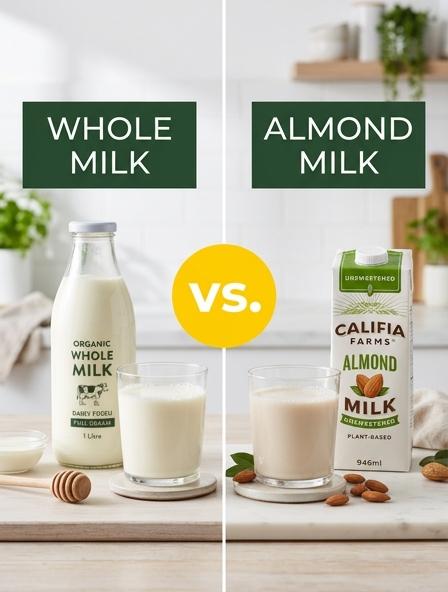
Fat Content and Sauce Consistency
The primary difference between whole milk and almond milk in cooking lies in their fat and protein structures. Whole milk contains approximately 3.25% to 3.5% milkfat, which provides the essential lipids needed for natural emulsification. This results in a stable, velvety texture when creating reductions or white sauce bases.
In contrast, almond milk is mostly water and lacks the complex proteins (casein) found in dairy. This often leads to a thinner consistency and a higher risk of the sauce separating when exposed to high heat. Consider these structural differences:
- Whole Milk: High fat and protein create a rich, creamy mouthfeel.
- Almond Milk: Lower fat content usually requires added thickeners like flour or cornstarch.
Home cooks often prefer whole milk for a luxurious, restaurant-quality Alfredo sauce, while those seeking a lighter, plant-based alternative might choose almond milk for a thinner, nutty-flavored vegetable gravy.
Nutritional Profiles and Family Health Impact
Deciding between whole milk and almond milk involves balancing nutrient density with specific dietary goals. Whole milk is a natural source of high-quality protein, calcium, and Vitamin D, providing the essential fats necessary for rapid brain development and bone growth in young children. In contrast, almond milk serves as a heart-healthy, low-calorie alternative that is naturally lactose-free and rich in Vitamin E, though it typically lacks the protein found in dairy.
| Nutrient | Whole Milk (1 cup) | Almond Milk (1 cup) |
|---|---|---|
| Protein | 8 grams | 1 gram |
| Calories | 150 kcal | 30-50 kcal |
| Fat Content | 8 grams | 2.5 grams |
Many health-conscious parents choose to serve creamy whole milk for their toddler's growth while opting for unsweetened almond milk to lower the caloric density of their own post-workout smoothies.
Browning Results and Surface Texture in Baking
The choice between whole milk and almond milk significantly impacts the visual and structural outcome of baked goods. This is primarily due to the Maillard reaction-a chemical interaction between amino acids and reducing sugars that creates browning and complex flavors.
Whole milk contains lactose and high protein levels, which consistently produce a rich, golden-brown crust and a soft, supple surface. In contrast, almond milk has lower protein and sugar content, often leading to a paler finish and a crispier, drier exterior. Consider these performance differences:
- Whole Milk: Promotes intense browning, moisture retention, and a tender crumb.
- Almond Milk: Results in a matte, light-colored surface and a thinner, more brittle crust.
You might choose whole milk for a classic, glossy-topped brioche, whereas almond milk is ideal when you want a light, delicate crunch on the edges of a vegan lemon loaf.
Energy Density and Caloric Value in Cooking
When comparing whole milk and almond milk, energy density is the primary differentiator for culinary applications. Whole milk is a high-energy liquid, containing approximately 150 calories per cup. Its caloric value is derived from a balanced mix of fats, proteins, and carbohydrates, which provides the structural richness and "mouthfeel" essential for custards and creamy sauces.
In contrast, unsweetened almond milk is significantly less energy-dense, typically containing only 30 to 50 calories per cup. While excellent for weight management, its high water content means it behaves differently under heat.
- Whole Milk: High fat content aids in emulsification and provides a velvety texture.
- Almond Milk: Low calorie count requires additional thickeners like cornstarch for similar consistency.
You might prefer the richness of whole milk when whisking a decadent sausage gravy, but choose almond milk as a light, low-calorie base for your post-workout fruit smoothie.
Protein Performance and Structural Integrity
The primary distinction between whole milk and almond milk lies in their protein architecture, which dictates how they behave under heat and mechanical stress. Whole milk is rich in casein and whey proteins, which form a robust molecular network. This structural integrity is what allows dairy to create a stable, velvety microfoam that holds its shape. In contrast, almond milk contains significantly less protein, often lacking the "elasticity" required to maintain bubbles without the help of added stabilizers or gums.
- Whole Milk: High protein density (approx. 8g per cup) ensures a thick, creamy emulsion.
- Almond Milk: Low protein density (approx. 1g per cup) often results in a thinner consistency that may split in acidic environments.
Because of these differences, whole milk remains the standard for achieving a consistent texture in baking and steamed beverages. You will notice the difference most when pouring a latte, as the dense protein structure of whole milk allows a barista to craft intricate latte art that stays defined while you sip your drink.
Flavor Neutrality and Aroma Profiles
When comparing whole milk and almond milk, the primary distinction lies in how they interact with other ingredients. Whole milk is often considered the gold standard for flavor neutrality in cooking; its mild, lactic sweetness and rich mouthfeel provide a creamy backdrop without overshadowing delicate flavors. Its aroma is subtle and buttery, derived from natural milk fats.
- Whole Milk: Features a "dairy-neutral" profile with a smooth, lingering finish that balances acidity.
- Almond Milk: Offers a distinct nutty, toasted profile that can significantly alter the taste of a recipe.
While whole milk acts as a flavor carrier, almond milk serves as a flavor contributor. Even unsweetened varieties carry a recognizable roasted almond scent and a thinner, slightly more astringent texture. A barista might choose whole milk for a traditional cappuccino to let the espresso notes remain central, while a smoothie enthusiast may prefer almond milk specifically to add a nutty depth to a protein shake.
High Temperature Stability and Curdling Risks
Temperature stability is a critical factor when choosing between whole milk and almond milk for hot beverages or cooking. Whole milk is naturally homogenized with fats and proteins that provide high thermal resistance. While it can scald or form a skin at boiling points, it rarely separates unless introduced to high acidity.
Almond milk, however, is significantly more temperamental. Due to its lower protein density and lack of natural emulsifiers, it often undergoes "feathering." This occurs when the cold milk hits a hot, acidic liquid, causing the plant proteins to denature and clump together.
- Whole Milk: High stability; best for sauces and boiling.
- Almond Milk: Low stability; prone to separation in temperatures exceeding 160°F.
Coffee lovers often find that pre-warming their almond milk is the best way to prevent that unappealing curdled look when pouring it into a fresh, acidic light-roast brew.
Sugar Content and Natural Sweetness
When comparing whole milk and almond milk, the carbohydrate profile is a major differentiator. Whole milk contains lactose, a naturally occurring sugar that provides a mild, creamy sweetness and contributes approximately 12 grams of sugar per cup. Because this sugar is intrinsic to the dairy, it is not classified as "added sugar."
In contrast, unsweetened almond milk is naturally very low in sugar, often containing less than 1 gram per serving. However, many processed almond milks are fortified with cane sugar or syrups to improve flavor.
- Whole Milk: High natural sugar (lactose), zero added sugars.
- Unsweetened Almond Milk: Negligible natural sugar, ideal for ketogenic diets.
- Sweetened Almond Milk: High added sugars, often exceeding dairy levels.
Fitness enthusiasts often reach for unsweetened almond milk to keep their post-workout smoothies low-carb, while coffee lovers frequently prefer the rich, natural sweetness of whole milk to balance a bitter espresso.
Viscosity Differences in Creamy Soup Bases
The texture of a creamy soup depends heavily on the fat and protein structures within the liquid base. Whole milk offers a high viscosity due to its emulsified fat globules and casein proteins, which create a rich, mouth-coating thickness. In contrast, almond milk is primarily water-based with minimal protein, resulting in a much thinner consistency that lacks natural body.
- Whole Milk: High fat content provides a velvety "cling" to ingredients.
- Almond Milk: Low solids count requires added thickeners like starch to prevent a watery base.
While whole milk provides a structural creaminess that withstands simmering, almond milk remains fluid and may require a roux to mimic a traditional bisque mouthfeel. You will likely reach for whole milk when crafting a decadent New England Clam Chowder, whereas almond milk serves those who prefer a lighter, nutty finish in a pureed roasted red pepper soup.
Vitamin and Mineral Content in Prepared Meals
The choice between whole milk and almond milk in prepared meals significantly impacts the final micronutrient profile. Whole milk is naturally rich in Vitamin B12, phosphorus, and riboflavin, providing essential nutrients for energy metabolism. In contrast, almond milk is naturally low in minerals but is typically fortified with calcium and Vitamins A and D to compete with dairy. A key distinction lies in Vitamin E; almond milk serves as a superior source of this antioxidant, whereas whole milk offers higher bioavailability for bone-strengthening minerals.
| Nutrient | Whole Milk | Almond Milk (Fortified) |
|---|---|---|
| Vitamin B12 | Naturally High | Varies (Fortified) |
| Vitamin E | Low | High |
Fitness enthusiasts often choose prepared protein shakes made with whole milk to capitalize on its natural electrolyte balance and B-vitamins for post-workout recovery.
Whole Milk vs Almond Milk source and external links
- Whole milk is a nutrient-dense dairy product that contains approximately 3.25% milk fat and provides essential vitamins such as Vitamin D. whole milk
- Almond milk is a popular plant-based beverage made from ground almonds and water, serving as a common dairy-free alternative. almond milk