
Voatsiperifery Peppercorns vs Tellicherry Peppercorns: Are They The Same? Flavor Profiles, Heat Intensity, and Essential Oils.
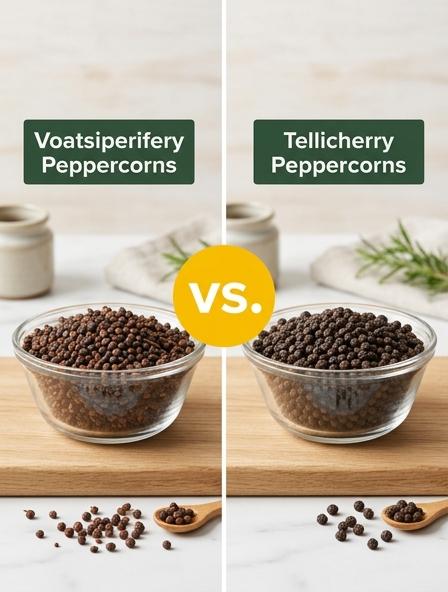
Flavor Contrast Between Wild Forest Berries and Large Bold Grains
Understanding the difference between Voatsiperifery and Tellicherry peppercorns is essential for culinary precision. Voatsiperifery, harvested from wild vines in Madagascar, is known for its small berries and "tails," offering a complex profile of woody, floral, and citrus notes. In contrast, Tellicherry peppercorns are premium Piper nigrum grains from India, left on the vine longer to grow larger and develop a deeper, more pungent heat with bright acidity.
- Voatsiperifery: Rare, earthy, and mildly spicy with a forest-like aroma.
- Tellicherry: Bold, robust, and classically sharp with lemony undertones.
While Voatsiperifery excels in delicate applications, Tellicherry is the go-to for traditional savory dishes. You might choose the wild Madagascar berries to add a sophisticated floral finish to a dark chocolate ganache, whereas the bold Tellicherry grains are perfect for creating a classic, peppery crust on a seared filet mignon.
Heat Intensity and Pungency Levels in Daily Cooking
Understanding the heat profiles of Voatsiperifery and Tellicherry peppercorns is essential for balancing flavors. Tellicherry peppercorns, harvested from fully ripened berries, are renowned for their high piperine content, delivering a sharp, immediate pungency and a classic bold bite. In contrast, wild Voatsiperifery peppercorns from Madagascar offer a more moderate heat level. Their spice profile is characterized by a slow-building warmth accompanied by complex citrus and woody undertones rather than an aggressive sting.
- Tellicherry: Sharp, biting, and high piperine intensity; the standard for savory depth.
- Voatsiperifery: Earthy, mild heat with a lingering, resinous, and aromatic finish.
You might reach for the aggressive spice of Tellicherry to season a heavy ribeye steak, but you will prefer the subtle, floral heat of Voatsiperifery when finishing a delicate strawberry salad or a dark chocolate ganache.
Health Benefits and Antioxidant Properties of Specialty Spices
Both Voatsiperifery and Tellicherry peppercorns are rich in piperine and essential oils that offer significant health advantages. Tellicherry peppercorns, harvested when nearly ripe, contain high levels of antioxidants that help neutralize free radicals and reduce inflammation. Meanwhile, the rare Voatsiperifery pepper from Madagascar is celebrated for its unique woody terpenes, which support digestive health and may improve blood circulation.
- Bioavailability: Piperine increases the absorption of nutrients like selenium and curcumin.
- Oxidative Stress: High phenolic content protects cells from environmental damage.
- Metabolic Support: These spices stimulate digestive enzymes for improved gut efficiency.
Health-conscious foodies often prefer freshly cracking Tellicherry over a turmeric latte to maximize its anti-inflammatory effects or using a pinch of Voatsiperifery in raw honey for a potent, antioxidant-rich morning tonic.
Impact on High Temperature Searing and Slow Simmering Results
The culinary performance of Voatsiperifery versus Tellicherry peppercorns is dictated by their chemical stability under heat. Tellicherry peppercorns are robust and high in piperine, making them the superior choice for high-temperature searing. Their bold, spicy profile withstands intense heat, developing a toasted, savory complexity without losing their characteristic bite. In contrast, the wild Voatsiperifery peppercorn is prized for its delicate volatile oils, which provide floral and citrus notes that can dissipate or turn bitter if exposed to extreme temperatures.
- Searing: Tellicherry maintains structural integrity and pungent flavor in pan-searing and roasting.
- Simmering: Voatsiperifery excels in low-heat liquid environments, slowly releasing earthy, forest-floor nuances.
Enthusiasts typically prefer Tellicherry for a heavy-crusted au poivre steak, while reserving freshly cracked Voatsiperifery to finish a slow-simmered lamb tagine or a delicate berry reduction.
Essential Oil Concentration and Aromatic Longevity Comparison
The aromatic profile of peppercorns is dictated by their volatile oil content. Voatsiperifery, a wild pepper from Madagascar, is renowned for its exceptional essential oil concentration, often reaching 5% to 10%. This high density results in a persistent, woody, and floral fragrance that lingers far longer than traditional varieties. Conversely, Tellicherry peppercorns-premium Piper nigrum-typically contain 2% to 4% essential oils. While Tellicherry offers a bold, classic pungency and clean heat, its aromatic peak is more fleeting compared to the complex, resinous depth of the wild berries.
- Voatsiperifery: High oil density; notes of forest floor and citrus; extreme aromatic longevity.
- Tellicherry: Moderate oil density; focused on piperine heat; bright but shorter-lived aroma.
The structural complexity of Voatsiperifery allows its scent to withstand heat better, making it ideal for slow-infusions. You might choose these wild Madagascar berries to finish a rich chocolate ganache or a slow-roasted venison, where you want the exotic, piney aroma to remain vibrant until the very last bite.
Grinding Efficiency and Textural Influence on Dish Presentation
The physical structure of peppercorns dictates their behavior in a mill and their visual impact on a plate. Tellicherry peppercorns are standardized by size, typically exceeding 4.25mm, which ensures maximum grinding efficiency in adjustable ceramic or steel burr mills. Their uniform density produces a consistent "cracked" texture ideal for classic culinary applications.
In contrast, Voatsiperifery peppercorns are smaller and possess fragile stems (tails). These unique traits can challenge standard grinders, often requiring a mortar and pestle to maintain their delicate integrity. The textural differences are distinct:
- Tellicherry: Provides a bold, symmetrical appearance for uniform seasoning.
- Voatsiperifery: Offers a rustic, artisanal aesthetic with a finer, more irregular crumb.
You may find that while Tellicherry is the reliable workhorse for a perfectly crusted au poivre, the wild, hand-crushed silhouette of Voatsiperifery is what guests truly admire when it is scattered over a fresh burrata salad.
Chemical Composition and Piperine Differences in Mature Harvests
While both peppercorns belong to the Piper genus, their molecular profiles diverge significantly at maturity. Tellicherry peppercorns are prized for their high piperine content, typically reaching 4-5%, which provides a sharp, biting pungency. Conversely, the wild Voatsiperifery (Piper borbonense) contains lower piperine levels but a more complex array of essential oils and terpenes, resulting in a milder heat with prominent woody and floral notes.
| Component | Tellicherry (Cultivated) | Voatsiperifery (Wild) |
|---|---|---|
| Piperine (Heat) | High Concentration | Moderate Concentration |
| Aroma Profile | Clean, Citrusy, Pine | Earthy, Resinous, Floral |
Connoisseurs prefer finishing a delicate chocolate mousse or a seared duck breast with crushed Voatsiperifery to provide a lingering, aromatic warmth that elevates the dish without the aggressive sting of traditional black pepper.
Harvesting Maturity and Origin Influence on Culinary Sharpness
The culinary sharpness of peppercorns is dictated by their genetic origin and the timing of their harvest. Tellicherry peppercorns are premium Piper nigrum berries from India's Malabar Coast, left on the vine longer to reach a larger diameter. This extended maturation mellows the raw heat, replacing it with a complex, citrus-forward pungency. In contrast, Voatsiperifery is a wild pepper (Piper borbonense) native to the Madagascan rainforest. It is harvested by hand from high-altitude vines, offering a completely different flavor profile.
- Tellicherry: High maturity yields a balanced, bold heat with fruity undertones.
- Voatsiperifery: Wild harvesting provides a resinous, woody sharpness with floral notes.
While Tellicherry offers the classic bite expected in savory dishes, Voatsiperifery provides a rare, aromatic tingle that lingers longer on the palate. You might prefer coarse-ground Tellicherry for seasoning a premium steak to achieve a balanced crust, whereas Voatsiperifery is the choice for enthusiasts looking to elevate a delicate seafood carpaccio or a dark chocolate mousse with exotic, earthy spice.
Flavor Performance in Cream Based Sauces and Roasted Meats
Choosing between Tellicherry and Voatsiperifery depends on your desired aromatic profile. Tellicherry peppercorns are celebrated for their bold, pungent heat and citrus undertones, making them ideal for creating a spicy, textured crust on roasted meats. In contrast, Voatsiperifery-a rare wild pepper from Madagascar-offers a complex profile of woody, floral, and resinous notes with a milder lingering heat.
| Application | Tellicherry Performance | Voatsiperifery Performance |
|---|---|---|
| Cream Sauces | Adds classic, sharp pungency. | Infuses delicate floral layers. |
| Roasted Meats | Provides a robust, peppery bite. | Adds an exotic, forest-like aroma. |
You might choose cracked Tellicherry for a traditional garlic-rubbed prime rib, whereas whisking Voatsiperifery into a white wine cream sauce elevates a simple chicken dish with an unexpected, sophisticated earthiness that guests always admire.
Storage Stability and Volatile Compound Retention in the Pantry
The longevity of a peppercorn's flavor profile is dictated by its chemical composition and physical structure. Tellicherry peppercorns (Piper nigrum) are highly stable; their larger size and dense piperine content protect essential oils for up to three years when stored whole. Conversely, Voatsiperifery (Piper borbonense) is a wild variety containing fragile volatile compounds that are more susceptible to oxidation and thermal degradation.
- Tellicherry: Excellent retention of heat and citrus notes due to robust outer husks.
- Voatsiperifery: Higher sensitivity; its unique woody and floral aromas diminish faster if exposed to light.
To preserve these nuances, both varieties require airtight, dark glass storage away from stove heat. You will love the way a fresh crack of Voatsiperifery transforms a simple goat cheese appetizer, releasing intense, wild forest scents that pre-ground peppers lose within weeks.
Voatsiperifery Peppercorns vs Tellicherry Peppercorns source and external links
- Voatsiperifery peppercorns are a rare, wild-grown spice harvested from the tropical forests of Madagascar, prized for their complex woody aroma and floral, citrusy notes. Voatsiperifery peppercorns
- Tellicherry peppercorns are premium black peppercorns from India that are left to ripen on the vine longer, resulting in larger berries with a more robust and fruity pungency. Tellicherry peppercorns