
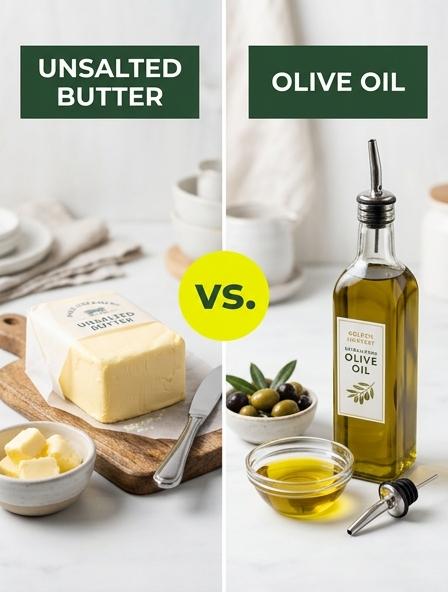
Unsalted Butter vs Olive Oil : The Differences in Cooking Performance, Nutritional Profile, and Culinary Texture.
Smoke Point and Heat Tolerance for Everyday Sautéing
When choosing between unsalted butter and olive oil, heat tolerance is the primary functional difference. The smoke point-the temperature at which fats begin to break down and release acrid smoke-dictates their culinary versatility. Unsalted butter contains milk solids that burn quickly at lower temperatures, making it less ideal for high-heat techniques. Conversely, olive oil provides a higher threshold for everyday stovetop cooking:
| Fat Type | Approximate Smoke Point |
|---|---|
| Unsalted Butter | 302°F (150°C) |
| Extra Virgin Olive Oil | 375°F – 405°F (190°C – 207°C) |
Home cooks often prefer starting a sauté with olive oil for its resilience and finishing with a knob of unsalted butter to achieve a rich, golden glaze without the risk of scorching.
Influence on Texture and Crumb in Baking
Choosing between unsalted butter and olive oil fundamentally alters a baked good's structural integrity. Butter contains water and milk solids; when creamed with sugar, it traps air bubbles, resulting in a light, aerated, and fluffy crumb typical of classic sponges. Conversely, olive oil is a 100% liquid fat that coats flour proteins more efficiently, inhibiting gluten development to create a denser, remarkably moist, and uniform texture.
- Unsalted Butter: Produces a tender, melt-in-your-mouth feel and flaky layers in pastries.
- Olive Oil: Ensures long-lasting moisture and a silkier, heavier mouthfeel in cakes.
Professional bakers often reach for high-quality olive oil when crafting a dense Mediterranean citrus cake, while opting for unsalted butter to achieve the perfect rise in a delicate Victoria sponge.
Heart Health Impacts of Saturated and Monounsaturated Fats
The primary difference between unsalted butter and olive oil lies in their lipid profiles. Unsalted butter is dense in saturated fats, which, when consumed in excess, can elevate LDL cholesterol levels and contribute to arterial plaque buildup. Conversely, olive oil is a cornerstone of the Mediterranean diet, primarily composed of monounsaturated fats like oleic acid.
- Unsalted Butter: Contains approximately 63% saturated fat, impacting long-term cardiovascular markers.
- Olive Oil: Contains roughly 73% monounsaturated fat, which helps reduce inflammation and improves "good" HDL cholesterol.
While butter provides essential fat-soluble vitamins, nutritional science generally favors replacing solid animal fats with liquid plant oils to lower the risk of heart disease. You might choose to swap the butter in your pan for a drizzle of extra virgin olive oil when sautéing vegetables to prioritize your daily heart health.
Browning Capabilities and Visual Results in Pan Frying
The visual appeal of pan-fried food depends heavily on whether you use unsalted butter or olive oil. Butter contains milk solids and proteins that trigger the Maillard reaction, leading to a rapid, deep mahogany browning. Olive oil, consisting almost entirely of fat, provides a consistent heat transfer that yields a lighter, more translucent golden finish without the "toasted" debris associated with dairy.
| Frying Medium | Visual Result | Primary Cause |
|---|---|---|
| Unsalted Butter | Deep Golden Brown | Milk Solid Caramelization |
| Olive Oil | Light Amber Gloss | Even Heat Distribution |
Home cooks often prefer swirling a pat of butter into the pan during the final minutes of searing a ribeye to achieve that professional, crusty mahogany exterior that steakhouse lovers crave.
Nutritional Composition and Caloric Content for Families
Understanding the nutritional profiles of unsalted butter and olive oil is essential for maintaining a balanced family diet. Both are calorie-dense fats, providing significant energy necessary for active children and adults. However, their lipid structures offer different health benefits:
- Unsalted Butter: Contains saturated fats and fat-soluble vitamins like A, D, and E, which support bone health and immune function.
- Olive Oil: Primarily composed of monounsaturated fatty acids (oleic acid) and polyphenols, known for reducing inflammation and supporting heart health.
While butter provides approximately 100 calories per tablespoon and olive oil offers about 120, the choice often comes down to the type of fat your family needs. Substituting saturated fats with unsaturated plant oils can improve long-term cholesterol levels without sacrificing satiety.
Health-conscious parents often choose to drizzle heart-healthy olive oil over a fresh Mediterranean salad while reserving creamy unsalted butter to create the perfect, flaky texture in a batch of homemade morning biscuits.
Flavor Profiles and Aromatic Impact on Meals
The choice between unsalted butter and olive oil dictates the final sensory experience of a dish. Unsalted butter is prized for its ability to provide a rich, creamy, and subtly sweet foundation that rounds out acidic or sharp ingredients. Conversely, olive oil offers a complex range of vegetal notes that can vary by region and extraction method.
- Unsalted Butter: Features a nutty, toasted aroma when heated and a smooth, velvety mouthfeel.
- Olive Oil: Delivers vibrant notes of fresh grass, artichoke, or a peppery finish that cuts through heavy textures.
While butter creates a comforting depth in baked goods and sauces, olive oil is often used to add a bright, herbaceous lift to savory recipes. Home cooks often prefer whisking a cold knob of butter into a red wine reduction for a glossy finish, while drizzling a pungent extra virgin olive oil over toasted sourdough remains a quintessential Mediterranean favorite.
Storage Life and Stability in Home Kitchens
The longevity of culinary fats depends largely on their chemical composition. Unsalted butter contains milk solids and water, making it highly susceptible to oxidation and spoilage if left at room temperature. Conversely, olive oil is a pure plant-based lipid that offers significantly better shelf stability when stored correctly.
- Unsalted Butter: Requires refrigeration; typically stays fresh for 1 to 3 months, or up to 9 months when frozen.
- Olive Oil: Shelf-stable in a cool, dark pantry; maintains peak quality for 12 to 24 months if unopened, and 3 to 6 months once bottled is cracked.
While olive oil is more resilient against spoilage, both fats are sensitive to light and heat, which eventually degrades their flavor profiles. You might find that keeping a small portion of butter in a ceramic crock provides the perfect spreadable texture for your morning toast, while storing your extra virgin olive oil in a tinted glass bottle ensures every drizzle over your pasta remains vibrant and peppery.
Moisture Retention and Mouthfeel in Roasted Foods
Choosing between unsalted butter and olive oil significantly alters the sensory profile of roasted dishes. Butter contains roughly 15-20% water; during roasting, this moisture evaporates while milk solids coat the food, creating a rich, velvety mouthfeel and promoting tenderness. Olive oil, a pure fat, functions differently by creating a consistent lipid barrier that seals in internal juices more efficiently, resulting in a lighter, cleaner finish.
- Unsalted Butter: Delivers a creamy, lingering texture and soft, "melt-in-your-mouth" interior.
- Olive Oil: Produces a crisp, thin exterior seal with a moist, non-greasy core.
Professional chefs often reach for a butter-baste to achieve a succulent, decadent roasted chicken, whereas home cooks prefer olive oil to ensure that signature, audible crunch on golden herb-roasted potatoes.
Physical Appearance and Color in Finished Dishes
The choice between unsalted butter and olive oil dictates the final aesthetic of a meal. Butter provides a dense, opaque finish and is famous for creating a rich golden-brown crust through the Maillard reaction. Conversely, olive oil imparts a translucent, liquid shimmer that enhances the vibrant colors of the ingredients without masking them.
| Visual Trait | Unsalted Butter | Olive Oil |
|---|---|---|
| Finish | Opaque and Matte | Translucent and Glossy |
| Browning | Deep Golden/Amber | Minimal to Light Gold |
Home cooks often reach for a high-quality extra virgin olive oil to drizzle over a fresh Caprese salad, creating a brilliant, dew-like sheen that makes the red tomatoes and white mozzarella pop on the plate.
Performance and Behavior During Stovetop Preparation
The choice between unsalted butter and olive oil for stovetop cooking depends largely on heat tolerance and moisture content. Unsalted butter contains milk solids and water, causing it to foam as it heats and moisture evaporates. This process facilitates the Maillard reaction, yielding a rich, nutty aroma, though it limits the smoke point to roughly 350°F.
Conversely, olive oil consists of pure fats, providing greater thermal stability for sustained heat. While extra virgin varieties have lower smoke points, refined olive oils can withstand temperatures up to 410°F without breaking down into acrid compounds.
- Unsalted Butter: Ideal for low-to-medium heat, basting, and achieving a golden-brown crust.
- Olive Oil: Preferred for sautéing, searing, and maintaining a liquid consistency across various temperatures.
You might choose the foaming richness of unsalted butter for a delicate fried egg, whereas olive oil is your best bet for a high-heat vegetable stir-fry.
Unsalted Butter vs Olive Oil source and external links
- Unsalted butter is a pure dairy product made from churned cream that provides complete control over the flavor profile of baked goods, making unsalted butter a preferred choice for many recipes.
- Olive oil is a nutrient-rich liquid fat extracted from olives that serves as a cornerstone of the Mediterranean diet, showcasing why olive oil is valued for both its health benefits and culinary versatility.