
Unsalted Butter vs Margarine: Are They The Same? Baking Performance, Nutritional Profiles, and Flavor Differences
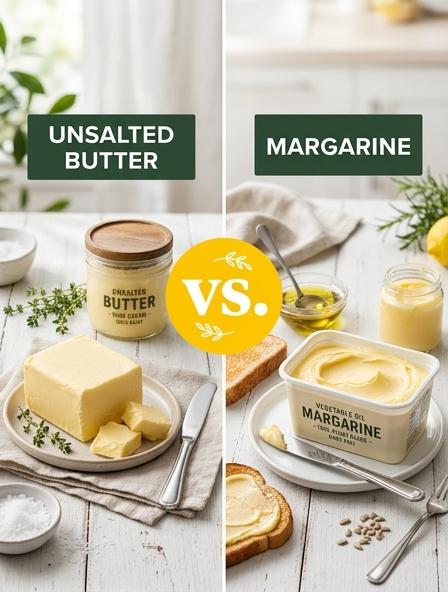
Flavor Variations in Pan Sautéing and Finished Dishes
Choosing between unsalted butter and margarine significantly alters the aromatic profile of a meal. During pan sautéing, unsalted butter undergoes the Maillard reaction; its milk solids caramelize to produce complex, nutty, and toasted notes. In contrast, margarine-composed primarily of refined vegetable oils-remains relatively neutral or provides a mild, engineered buttery scent that lacks the depth found in dairy.
- Unsalted Butter: Offers a rich, creamy mouthfeel and enhances the natural umami of proteins.
- Margarine: Provides a lighter, cleaner finish that allows delicate vegetable flavors to remain front and center.
In finished dishes, butter acts as a flavor carrier, binding sauces together with a velvety texture that margarine struggle to replicate. You will notice a distinct culinary upgrade when using unsalted butter to finish a wild mushroom risotto, as it creates a luxurious, glossy sheen that brings all the earthy elements together.
Texture Development in Flaky Crusts and Layered Pastries
The choice between unsalted butter and margarine fundamentally alters the structural integrity of laminated doughs. Unsalted butter contains approximately 80-82% milkfat and 18% water. During baking, this water evaporates, creating steam that lifts individual flour layers to produce a distinctively crisp, shattered texture.
Margarine, formulated from vegetable oils and emulsifiers, often has a higher melting point. While this makes the dough more stable in warm environments, it can lack the rapid steam release necessary for extreme leavening. Key textural differences include:
- Unsalted Butter: Produces sharp, defined layers and a "melt-in-the-mouth" finish.
- Margarine: Creates a softer, more flexible crumb with a consistent, uniform rise.
Professional bakers typically prefer high-quality unsalted butter when crafting artisanal croissants to achieve that signature golden, shattered-glass crunch that pastry enthusiasts crave.
Dietary Fat Profiles and Cardiovascular Health Considerations
Understanding the fat profiles of unsalted butter and margarine is crucial for cardiovascular wellness. Butter consists primarily of saturated fats, which are linked to increased LDL (bad) cholesterol levels when consumed in excess. Conversely, modern margarines are typically crafted from plant-based oils, offering a blend of monounsaturated and polyunsaturated fats that support heart health by improving lipid profiles.
- Unsalted Butter: High in saturated fat and contains natural dairy cholesterol.
- Margarine: Rich in heart-healthy unsaturated fats and generally free of trans fats.
While professional pastry chefs prefer the rich mouthfeel of unsalted butter for crafting flaky croissants, health-conscious individuals often choose a plant-based margarine spread to keep their daily breakfast toast heart-friendly without sacrificing spreadability.
Thermal Resistance and Browning Outcomes in High Heat Cooking
The choice between unsalted butter and margarine significantly impacts flavor development and stability during high-heat applications. Unsalted butter contains milk solids and proteins that facilitate the Maillard reaction, creating a complex, nutty profile. However, these same solids lower its smoke point, making it susceptible to scorching at temperatures above 350°F.
| Feature | Unsalted Butter | Margarine |
|---|---|---|
| Smoke Point | Low (~350°F) | Variable (Higher) |
| Browning Potential | High (Rich Aroma) | Low (Stable Fats) |
Margarine offers better thermal resistance for prolonged sautéing, yet professional chefs prefer basting a searing ribeye with unsalted butter to achieve that signature, aromatic golden-brown crust that margarine simply cannot replicate.
Water Content Impacts on Moistness in Homemade Cakes
The choice between unsalted butter and margarine fundamentally alters cake texture due to their differing water-to-fat ratios. Unsalted butter maintains a consistent balance, whereas margarine compositions can vary significantly depending on the brand and type.
- Unsalted Butter: Contains approximately 16-18% water, providing enough steam for lift without compromising the fat's ability to shorten gluten strands.
- Margarine: Often contains higher water percentages (up to 40%), which can over-hydrate flour and result in a rubbery or tough crumb structure.
While the extra water in margarine might seem beneficial, it often evaporates too quickly during baking, potentially leaving the cake dry. Conversely, the stable fat content in butter coats flour proteins more effectively, ensuring a soft, lingering mouthfeel that preserves freshness over time.
Home bakers love using high-quality unsalted butter for holiday pound cakes to achieve that signature melt-in-your-mouth richness that margarine simply cannot replicate.
Preservation Qualities and Storage Duration in the Kitchen
Understanding the shelf life of unsalted butter versus margarine is essential for maintaining kitchen efficiency. Unsalted butter lacks the sodium that acts as a natural preservative, making it more prone to spoilage and bacterial growth than salted varieties. Conversely, margarine is a processed oil-based product formulated with emulsifiers and preservatives to extend its longevity and maintain consistency at varying temperatures.
- Unsalted Butter: Typically stays fresh for 1 month in the refrigerator or up to 9 months in the freezer.
- Margarine: Generally maintains quality for 4 to 6 months refrigerated due to its stable vegetable fat structure.
While professional pastry chefs reach for unsalted butter to ensure a fresh, creamy flavor in delicate croissants, many busy families prefer the long-lasting convenience of margarine for a quick-spreading topping that stays soft and shelf-stable throughout the month.
Sourcing Comparison Between Dairy Based and Vegetable Based Fat Sources
The primary distinction between unsalted butter and margarine lies in their raw origins. Unsalted butter is a dairy-based fat, traditionally sourced from cow's milk. The process involves churning fresh cream to separate the solid fats from the liquid buttermilk, resulting in a product with a natural fat content of at least 80%.
Conversely, margarine is a vegetable-based fat. It is engineered from refined plant oils, such as soybean, corn, or canola. Because these oils are naturally liquid at room temperature, they undergo emulsification and sometimes hydrogenation to achieve a spreadable, solid consistency. This fundamental difference in sourcing impacts everything from the fatty acid profile to the smoke point.
- Unsalted Butter: Derived from animal milk (cream).
- Margarine: Derived from plant-based oil extracts.
Professional pastry chefs often choose chilled unsalted butter over margarine when laminating dough to ensure the ultimate flaky texture and rich, creamy aroma that consumers crave in a high-end croissant.
Structural Integrity of Frostings and Creamy Fillings
The choice between unsalted butter and margarine dictates the stability and "pipe-ability" of cake finishes. Butter consists primarily of saturated fats, which remain solid at room temperature. This allows buttercream to hold sharp peaks and intricate designs. Margarine, often derived from vegetable oils, has a lower melting point and a higher water content, which can cause emulsions to break or decorations to lose their definition.
- Butter: Offers superior "crusting" capabilities and a firm structure that supports heavy cake layers.
- Margarine: Provides a softer, more spreadable consistency that may require extra stabilizers or sugar to maintain its shape.
Professional pastry chefs often reach for high-quality unsalted butter when constructing multi-tiered wedding cakes to ensure the delicate floral piping doesn't wilt before the reception ends.
Processing Differences Between Natural Churning and Oil Solidification
The fundamental distinction between unsalted butter and margarine lies in their production methods. Unsalted butter is a dairy product achieved through mechanical churning. This physical process agitates fresh cream until the milk fats separate from the liquid buttermilk, resulting in a high-fat solid with a natural melting point.
Margarine, conversely, is an engineered food product that begins as liquid vegetable oil. To achieve a butter-like consistency, it undergoes solidification via chemical processes:
- Hydrogenation: Adding hydrogen atoms to transform liquid fats into solids.
- Interesterification: Rearranging fatty acids to alter the oil's melting properties.
- Emulsification: Adding water and stabilizers to mimic dairy texture.
These industrial steps allow margarine to remain soft at colder temperatures, whereas butter's natural structure hardens when chilled. You might prefer the rich, nutty depth of churned butter for a delicate French pastry, while others choose the consistent spreadability of margarine for a quick morning bagel.
Economic Factors and Availability for Frequent Home Cooking
When choosing between unsalted butter and margarine for high-volume home cooking, cost and accessibility play pivotal roles. Margarine is consistently the more budget-friendly option because vegetable oils are less expensive to process than animal fats. Conversely, unsalted butter is treated as a premium ingredient, with prices reflecting dairy market fluctuations and shorter shelf lives.
- Margarine: Offers significant cost savings for bulk baking and daily meal preparation.
- Unsalted Butter: Represents a higher investment but is widely available in various grades from standard to artisanal.
While both are staples in any local grocery store, the decision often comes down to the frequency of use and the specific culinary application. Many home cooks prefer using affordable margarine for large batches of school bake-sale cookies, while reserving a single block of high-quality unsalted butter for the delicate lamination of a special Sunday puff pastry.
Unsalted Butter vs Margarine source and external links
- Unsalted butter is a pure dairy product made from churned cream that allows for precise control over flavor and sodium levels in various recipes. Learn more about Unsalted Butter.
- Margarine is a processed food spread designed to taste and look like butter, typically manufactured from vegetable oils and water. Read more about Margarine.