
Umeboshi Vinegar vs Mirin: The Differences in Flavor Profiles, Nutritional Composition, and Culinary Impact.
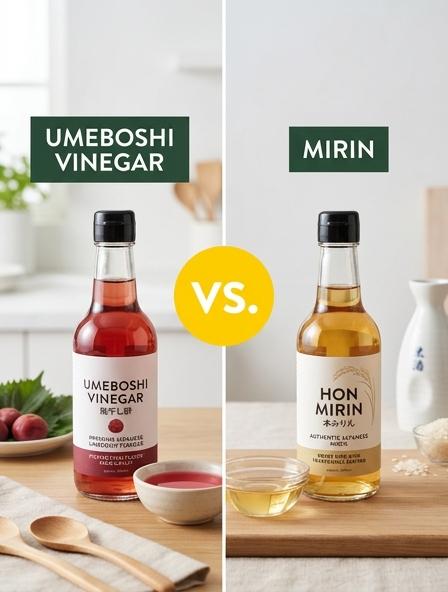
The Effect of Salty Fruit Brine Versus Sweet Rice Glazes on Meat
Choosing between umeboshi vinegar and mirin fundamentally changes how meat proteins behave during cooking. Umeboshi vinegar, actually a salty brine from fermented plums, uses its high acidity and salinity to deeply tenderize muscle fibers. It infuses meat with a vibrant, tangy saltiness that highlights lighter proteins like poultry or white fish.
In contrast, mirin is a fermented rice wine that excels at surface interaction. Its natural sugars create a lustrous glaze and promote the Maillard reaction, resulting in a rich, caramelized exterior. While both ingredients can reduce gamey odors, their primary functions differ significantly:
| Ingredient | Primary Action | Flavor Profile |
|---|---|---|
| Umeboshi Vinegar | Tenderizing / Brining | Sharp, Salty, Fruity |
| Mirin | Glazing / Browning | Sweet, Mellow, Umami |
You might use a mirin-based reduction to achieve a glossy, lacquered finish on grilled salmon, while opting for umeboshi vinegar to quickly brighten and soften a lean pork loin.
Nutritional Breakdown of Sodium Heavy Liquids and Natural Sugars
Comparing umeboshi vinegar and mirin reveals two distinct nutritional profiles essential for balancing Japanese flavors. Umeboshi vinegar, the brine from pickled plums, is a sodium-heavy liquid. It is intensely salty and acidic, often functioning as a functional salt substitute rich in organic acids. Conversely, mirin is prized for its natural sugars derived from fermented glutinous rice, providing a mild sweetness and umami depth without the high salt content.
| Feature | Umeboshi Vinegar | Mirin |
|---|---|---|
| Primary Nutrients | Sodium, Citric Acid | Complex Carbohydrates |
| Flavor Profile | Salty & Tart | Sweet & Syrupy |
You might use a splash of umeboshi vinegar to brighten a heavy tahini dressing, while opting for mirin to create a perfectly balanced, shimmering glaze for roasted eggplant or teriyaki.
How Fermented Plum Extract and Sweet Rice Wine Alter Sauce Texture
While both are staples in Japanese cuisine, Umeboshi vinegar and Mirin provide contrasting textural foundations for sauces. Umeboshi vinegar, which is actually a lactic-fermented brine, acts as a thinning agent. Its high acidity and salt content break down dense fats, resulting in a sharp, light consistency.
Conversely, Mirin is a sweet rice wine with significant sugar content that introduces body and viscosity. When heated, Mirin reduces into a thick, syrup-like glaze that coats ingredients evenly. Their textural impacts are summarized below:
- Umeboshi Vinegar: Watery and astringent; excellent for cutting through heavy oils.
- Mirin: Syrupy and smooth; provides a professional, glossy sheen to finishes.
You might choose Mirin to achieve a sticky, lustrous coat on grilled unagi, or swap it for Umeboshi vinegar when you need to transform a thick nut butter into a pourable, zesty dressing.
Comparing Antioxidant Properties in Fruit Brines and Rice Bases
Umeboshi vinegar and mirin offer distinct antioxidant profiles rooted in their unique fermentation origins. Umeboshi vinegar, a byproduct of lacto-fermented plums, is dense with organic acids and polyphenols. These fruit-derived compounds are often bolstered by red shiso leaves, which provide anthocyanins that combat oxidative stress and inflammation. Conversely, mirin is a rice-based ferment where the antioxidant capacity stems from grain proteins and the koji-mediated breakdown of starches during saccharification.
- Umeboshi Vinegar: High in alkalizing citric acid and phenolic compounds from the ume fruit.
- Mirin: Contains ferulic acid and melanoidins developed during the aging of glutinous rice.
While both contribute to a balanced diet, their chemical makeup dictates their physiological impact and culinary utility. You might reach for umeboshi vinegar to brighten a massaged kale salad with its tangy, protective nutrients, or use mirin to create a silky, antioxidant-rich glaze for grilled eggplant.
Visual Impact of Ruby Red Pigments Versus Golden Syrup Sheen
Choosing between umeboshi vinegar and mirin fundamentally changes the aesthetic presentation of a dish. These liquids provide contrasting visual finishes based on their unique compositions:
- Umeboshi Vinegar: Infused with red shiso leaves, it provides a vibrant, ruby-red pigment that acts as a natural dye, staining light-colored ingredients like radishes or onions with a rustic, pinkish hue.
- Mirin: Due to its high sugar content and viscosity, mirin creates a "terimaki" effect-a lustrous, golden sheen that gives cooked proteins a professional, mirror-like glaze.
While the vinegar offers a matte, colorful saturation, mirin is prized for its translucent, syrupy glow that catches the light on the plate. Imagine a chef finishing a piece of grilled salmon with a splash of mirin to achieve that signature shimmering amber crust that restaurant diners find so irresistible.
Flavor Profile Analysis of Sharp Acidity Against Mellow Sweetness
Umeboshi vinegar and mirin represent opposite ends of the Japanese flavor spectrum, serving distinct functional roles in the kitchen. Umeboshi vinegar-technically the brine from pickled plums-is characterized by its vibrant, puckering acidity and high salt content. In contrast, mirin is a fermented rice wine that provides a gentle, syrupy sweetness and a rich umami depth.
- Umeboshi Vinegar: Sharp, fruity, and intensely salty; best for brightening heavy dishes.
- Mirin: Mellow, sugary, and alcoholic; ideal for glazing and neutralizing "fishy" aromas.
While these two liquids are rarely interchangeable, they are often used together to achieve a "sweet and sour" harmony. Home cooks love adding a splash of mirin to a simmering soy glaze for a glossy finish, while vegan chefs frequently reach for umeboshi vinegar to provide a tangy, fermented kick to creamy cashew-based dressings.
Interaction of Probiotic Brines and Alcohol Bases During Heat Exposure
When combining Umeboshi vinegar and Mirin, heat serves as the catalyst for a complex chemical transformation. Umeboshi vinegar, a lactic-acid fermented brine, contains bioactive compounds that lose probiotic potency above 115°F, though its organic acids remain stable. Conversely, Mirin-a rice-based alcohol-undergoes evaporation, concentrating its natural sugars through mild caramelization.
- Umeboshi Vinegar: Contributes high salinity and sharp acidity; offers heat-stable flavors despite the loss of live cultures.
- Mirin: Provides fermentative sweetness and body; the alcohol content acts as a solvent to extract deeper aromatics from the dish.
The synergy between these liquids creates a robust profile where the sharp salt of the plum brine is rounded by the koji-derived sweetness of the rice wine. Home chefs love deglazing a searing pan with this duo to create a shimmering reduction that balances tart saltiness with a mellow, professional-grade finish on roasted vegetables.
Long Term Pantry Stability of Fermented Acidic and Sweet Liquids
Both umeboshi vinegar and mirin offer exceptional shelf stability, though they rely on different chemical properties for preservation. Umeboshi vinegar is a byproduct of lactic acid fermentation, boasting a high salt content and acidity that make it nearly impervious to bacterial growth at room temperature.
| Feature | Umeboshi Vinegar | Hon-Mirin |
|---|---|---|
| Preservative | High Salt & Organic Acid | Alcohol & Natural Sugar |
| Pantry Life | Indefinite (Salt-stable) | Long (Store in dark) |
In contrast, true mirin (Hon-mirin) utilizes its 14% alcohol content and complex sugars to maintain quality. While mirin-style seasonings may degrade faster due to lower alcohol levels, authentic versions remain stable for years if kept away from direct light. You might find that a bottle of umeboshi vinegar tucked away in your pantry remains perfectly pungent and bright for your dressings even a year after the first pour.
Caloric Differences Between Fruit Derived Brines and Grain Syrups
When comparing Umeboshi vinegar and Mirin, the most significant nutritional distinction lies in their caloric density and sugar content. Umeboshi vinegar, which is actually a lactic acid brine extracted during the plum pickling process, contains negligible calories because its flavor profile is dominated by organic acids and salt rather than sugars. In contrast, Mirin is a fermented grain syrup derived from glutinous rice, resulting in a high concentration of complex carbohydrates.
- Umeboshi Vinegar: Low-calorie, fruit-based byproduct with high acidity and salinity.
- Mirin: High-calorie, rice-based liquid sweetener with significant sugar content.
While Umeboshi vinegar provides a tart, salty punch without adding energy density, Mirin contributes a rich sweetness and glossy finish to dishes at the cost of additional calories. You might choose Umeboshi vinegar to brighten a light vinaigrette without the guilt, or opt for Mirin when you want that signature syrupy glaze on a savory grilled eel dish.
The Role of Acidic Versus Sweet Elements in Balancing Daily Meals
Achieving a harmonious flavor profile in home cooking relies on the strategic interplay between sharp acidity and mellow sweetness. Umeboshi vinegar, a byproduct of lacto-fermented plums, introduces a pungent, salty tang that brightens heavy fats and awakens the palate. In contrast, mirin-a traditional fermented rice wine-provides a subtle sugary depth and umami that softens bitter notes and creates a professional, lustrous sheen on sauces.
- Umeboshi Vinegar: High acidity and salinity; ideal for quick-pickling vegetables and adding zest to vegan dressings.
- Mirin: Gentle sweetness and complex aroma; perfect for deglazing pans and balancing salt-heavy soy dishes.
Health-conscious foodies love whisking umeboshi vinegar into tahini for a zesty, probiotic-rich salad dressing, while home chefs prefer a splash of mirin in their stir-fry to achieve that signature restaurant-style glaze and balanced sweetness.
Umeboshi Vinegar vs Mirin source and external links
- Umeboshi vinegar is a tart, salty, and fruity seasoning produced as a byproduct of the traditional plum pickling process. Umeboshi vinegar
- Mirin is a sweet Japanese rice wine that adds a mild acidity and a beautiful luster to sauces, glazes, and simmered dishes. Mirin