
Tasmanian Peppercorns vs White Peppercorns: Which is Best for Flavor Intensity, Nutritional Value, and Culinary Performance?
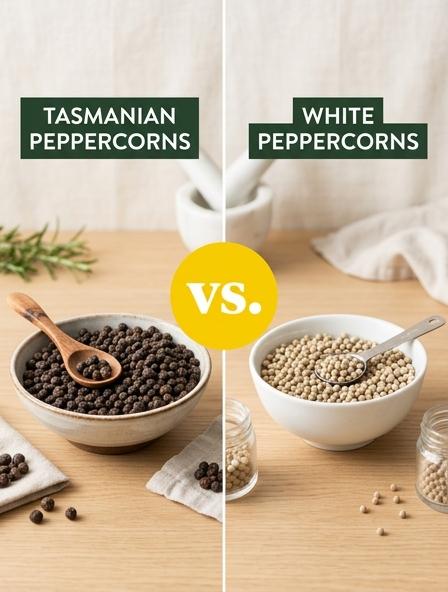
Flavor Profile Comparison of Tasmanian Peppercorns and White Peppercorns
Though both offer significant heat, Tasmanian and white peppercorns provide contrasting culinary experiences. Tasmanian peppercorns, harvested from the Tasmannia lanceolata shrub, are celebrated for their complex, multi-layered profile. They begin with a sweet, fruity note reminiscent of juniper or blackberry, followed by a potent, numbing spice similar to Sichuan peppercorns. White peppercorns, which are Piper nigrum seeds with the outer husk removed, deliver a more direct, sharp pungency and earthy depth without the floral aromatics.
- Tasmanian Peppercorns: Woodsy, sweet-fruity start with a lingering tingle.
- White Peppercorns: Clean, fermented, and intensely sharp heat.
You might choose the wild, forest-like notes of Tasmanian peppercorns to elevate a seared duck breast, whereas white peppercorns are your essential tool for adding a hidden, spicy bite to a classic pale cream sauce.
Heat Intensity and Sensory Impact of Tasmanian and White Peppercorns
Tasmanian peppercorns and white peppercorns offer distinct sensory experiences defined by their unique chemical compositions. White peppercorns, derived from the Piper nigrum plant, provide a sharp, immediate pungent heat fueled by piperine, often accompanied by earthy or fermented notes. In contrast, Tasmanian berries deliver a complex, slow-building heat that creates a tingling, numbing sensation on the palate.
- Tasmanian Peppercorns: Features notes of juniper and forest berries with a potent, floral aroma.
- White Peppercorns: Known for a clean, biting spice and a musky fragrance that blends into sauces.
While white pepper is prized for its subtlety in appearance, Tasmanian pepper is celebrated for its bold, "wild" profile and the deep purple hue it imparts to food. You might reach for the Tasmanian variety to add a sophisticated, woodsy heat to a seared venison loin, whereas white peppercorns are your best choice for providing an invisible yet fiery bite to a classic, creamy béchamel sauce.
Nutritional Properties and Health Impact of Peppercorn Varieties
Tasmanian peppercorns and white peppercorns offer distinct nutritional profiles. Tasmanian berries are renowned for their potent antioxidant capacity, containing polygodial which provides anti-inflammatory benefits and supports respiratory health. They are also rich in vitamins C and E. Conversely, white peppercorns-the inner seed of the Piper nigrum fruit-are concentrated sources of piperine. This alkaloid enhances nutrient absorption and stimulates digestive enzymes. While both varieties support metabolic function, their specific compounds target different wellness needs:
- Tasmanian: High polygodial content, intense antioxidants, and antimicrobial properties.
- White: High piperine concentration, manganese, and dietary fiber for digestive support.
You might reach for the Tasmanian variety to give your morning smoothie an antioxidant boost or choose white peppercorns to gently aid digestion in a creamy cauliflower soup.
Aromatic Differences and Volatile Oil Concentration in Peppercorns
Tasmanian and white peppercorns possess distinct chemical profiles that dictate their unique culinary applications. Tasmanian peppercorns, harvested from the Tasmannia lanceolata shrub, are dense with volatile oils and polygodial, offering a complex bouquet of camphor, eucalyptus, and dark berries. In contrast, white peppercorns are Piper nigrum seeds with the outer drupe removed. This processing results in a higher piperine concentration but a significantly reduced terpene profile compared to the wild Tasmanian variety.
- Tasmanian Peppercorn: High volatile oil content featuring floral and woody top notes.
- White Peppercorn: Fermented, earthy aromatics with a sharp, clean pungency.
Fine-dining enthusiasts often choose the subtle, musky heat of white pepper for a pristine Béchamel sauce, whereas those seeking a bold, wild-harvested profile love using cracked Tasmanian berries to crust a prime ribeye for an aromatic, numbing finish.
Culinary Performance of Tasmanian and White Peppercorns in Cooking
Tasmanian and white peppercorns offer contrasting sensory profiles. Tasmanian pepper, derived from a native Australian shrub, provides a complex, fruity sweetness followed by a creeping, numbing heat. In contrast, white peppercorns are Piper nigrum seeds with the outer husks removed, resulting in a clean, sharp pungency and earthy "funk" without the resinous notes of black pepper.
| Feature | Tasmanian Pepper | White Peppercorn |
|---|---|---|
| Flavor Notes | Menthol, Berry, Resin | Floral, Musky, Sharp |
| Heat Style | Delayed Tingle | Immediate Bite |
You might reach for the Tasmanian variety to crust a venison steak for a bold, exotic finish, while opting for white peppercorns to maintain the pristine aesthetic and sharp kick of a classic French Béchamel sauce.
Visual Influence and Color Integration of Peppercorns in Dishes
The visual impact of a spice is as crucial as its flavor profile. When comparing Tasmanian peppercorns to white peppercorns, the aesthetic results are diametrically opposed. Tasmanian peppercorns, which are actually dried berries, possess a deep, dark skin that releases a striking purple or magenta pigment when exposed to heat or moisture. In contrast, white peppercorns are processed to remove the outer husk, specifically to ensure they remain inconspicuous.
- Tasmanian Peppercorns: Create a vibrant, bleeding violet hue, ideal for bold culinary infusions.
- White Peppercorns: Provide "invisible" heat, maintaining the pristine look of light-colored bases.
White peppercorns are the classic choice for chefs who want to season a creamy Béchamel without leaving dark specks behind. Conversely, home cooks love using Tasmanian berries to transform a simple gin cocktail or a pale goat cheese spread into a visually stunning, berry-stained masterpiece that serves as an instant conversation starter at dinner parties.
Digestive Property Variations and Bioavailability of Peppercorn Compounds
The metabolic impact of peppercorns depends largely on their active alkaloids. White peppercorns are dense in piperine, a compound known to stimulate hydrochloric acid secretion and significantly increase the bioavailability of other nutrients, such as curcumin. Conversely, Tasmanian peppercorns (Mountain Pepper) contain polygodial, which provides a unique numbing heat and acts as a potent anti-inflammatory agent with gastroprotective qualities.
- White Pepper: Enhances nutrient absorption and aids protein digestion in the stomach.
- Tasmanian Pepper: Offers superior antioxidant capacity, protecting cells against oxidative stress.
While both varieties support gut health, their chemical pathways differ; white pepper acts as a metabolic catalyst, whereas the Tasmanian variety serves as a bioactive superfood. Culinary enthusiasts often choose white pepper for its discrete appearance in white sauces to assist digestion, while health-conscious foodies prefer grinding whole Tasmanian berries over grilled salmon to maximize antioxidant intake during a meal.
Origin Sourcing and Environmental Sustainability of Peppercorn Production
The environmental footprint of spice production varies significantly between these two varieties. Tasmanian peppercorns are wild-harvested from the Tasmannia lanceolata shrub native to Australia's cool-climate rainforests. This wild-crafting method preserves natural biodiversity and requires minimal agricultural intervention. In contrast, white peppercorns are derived from Piper nigrum vines cultivated in tropical regions like Indonesia and Vietnam. Their production involves "retting," a water-intensive fermentation process used to remove the outer drupe, which can impact local water systems if not managed correctly.
- Tasmanian: Low-impact foraging, native ecosystem preservation, and minimal processing.
- White: Traditional plantation farming, higher water consumption, and global supply chain logistics.
Eco-conscious home cooks often prefer wild-harvested Tasmanian berries for a woodsy, peppery kick that supports sustainable foraging practices over industrial monocultures.
Storage Stability and Flavor Longevity of Tasmanian and White Peppercorns
White peppercorns offer superior shelf stability because they are the inner seeds of Piper nigrum, stripped of the volatile outer drupe. When stored whole in airtight containers, they retain their pungent heat for up to three years. Conversely, Tasmanian peppercorns-technically dried berries from the Tasmannia lanceolata shrub-are far more sensitive to oxidation. Their unique polygodial compounds and floral esters degrade faster, typically losing peak potency within 12 months.
- White Peppercorns: High longevity; best kept in cool, dry pantries.
- Tasmanian Peppercorns: Moderate longevity; benefit from refrigeration or vacuum sealing to preserve "bush-pepper" aromas.
To maximize flavor, culinary enthusiasts often buy white peppercorns in bulk for daily seasoning, while reserving small batches of Tasmanian berries to be ground fresh over a medium-rare venison loin for that signature, fleeting tingle.
Textural Integration and Grind Consistency for Peppercorn Varieties
Achieving the perfect grind depends heavily on the structural density of the spice. White peppercorns are the hard, inner seeds of the Piper nigrum plant, offering a crystalline hardness that produces a uniform, fine dust. Conversely, Tasmanian peppercorns (Mountain Pepperberries) are dried fleshy drupes, making them more brittle and prone to a flaky, irregular grind.
- White Peppercorns: High density requires a high-quality burr grinder for smooth, sediment-free integration into liquids.
- Tasmanian Peppercorns: Softer composition allows for easy hand-crushing or coarse milling, providing a varied mouthfeel.
Professional chefs often choose the fine, invisible heat of white pepper for a silky velvet hollandaise, while home cooks enjoy the rustic, dark purple flecks of cracked Tasmanian berries to add a crunchy "pop" of heat to seared venison.
Tasmanian Peppercorns vs White Peppercorns source and external links
- Tasmanian peppercorns are unique purple-black berries that provide a sweet, fruity start followed by a powerful, numbing heat.
- Produced by removing the outer husk of ripe berries, white peppercorns offer a sharp pungency and earthy flavor profile commonly used in light-colored sauces.