
Tasmanian Peppercorns vs Tellicherry : Which is Best for Flavor Profiles, Culinary Applications, and Nutritional Value?
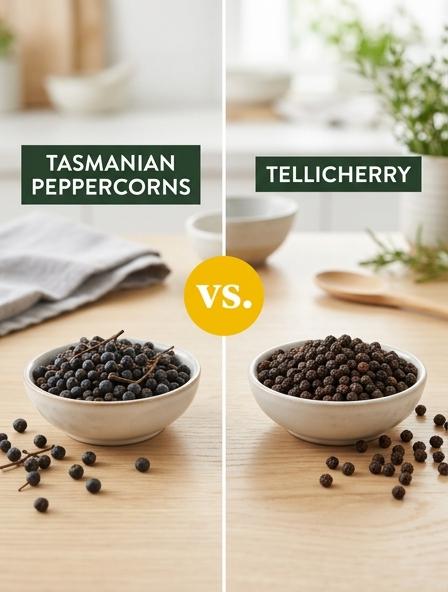
Comparing Floral Berry Notes With Sharp Citrus Profiles
Tasmanian peppercorns and Tellicherry peppercorns offer vastly different sensory experiences. Tasmanian berries, harvested from the Tasmannia lanceolata shrub, are prized for their deep purple color and a complex profile rich in floral and dark berry notes. They offer a unique, creeping heat that starts sweet and ends with a slight numbing sensation. In contrast, Tellicherry peppercorns represent the premium standard of black pepper, celebrated for their sharp, bright, and citrusy punch.
- Tasmanian Peppercorns: Hints of blackberry, plum, and violet with a slow-burn finish.
- Tellicherry Peppercorns: Intense lemon zest, pine aromas, and a bold, immediate spice.
While Tellicherry relies on high piperine levels for its classic pungency, Tasmanian peppercorns utilize polygodial for a different kind of intensity. You might prefer the sharp citrus of Tellicherry for seasoning a heavy ribeye, whereas the floral, berry-like complexity of Tasmanian peppercorns is the go-to choice for elevating a delicate duck confit or a botanical gin cocktail.
Visual Effects Of Deep Purple Pigments Versus Traditional Black Tones
The visual distinction between Tasmanian peppercorns and Tellicherry is defined by their pigment stability. Tasmanian berries, often called mountain pepper, are rich in anthocyanins, resulting in a glossy, deep-purple skin. When crushed or heated, this pigment bleeds, imparting a dramatic violet or pinkish tint to pale ingredients. In contrast, Tellicherry peppercorns provide the classic culinary aesthetic; these high-quality black peppercorns are left to ripen longer on the vine, resulting in large, dark brown to black berries that maintain their integrity without altering the color profile of the dish.
| Visual Feature | Tasmanian Peppercorn | Tellicherry Peppercorn |
|---|---|---|
| Color Profile | Midnight Purple / Ink Black | Deep Brown / Charcoal |
| Dye Effect | Strong Violet Leaching | None (Color Stable) |
You might reach for the Tasmanian variety when you want to transform a simple white fish or creamy goat cheese into a visually stunning, lavender-hued centerpiece that captivates your dinner guests.
Antioxidant Levels In Wild High Altitude Harvests Versus Cultivated Vine Varieties
Tasmanian peppercorns (Tasmannia lanceolata) thrive in high-altitude wilderness, where extreme UV exposure and harsh climates force the plant to produce potent secondary metabolites. These wild harvests contain exceptionally high levels of polygodial and anthocyanins, often surpassing the antioxidant profiles of traditional cultivated vine varieties like Tellicherry. While Tellicherry peppercorns represent the pinnacle of Piper nigrum cultivation with a rich, refined pungency, they lack the specific bioactive intensity found in wild alpine species.
- Tasmanian Pepper: Wild-harvested, high anthocyanin and polygodial content.
- Tellicherry Pepper: Farm-cultivated, consistent piperine levels and classic aroma.
You might find yourself choosing the Tasmanian berry for its intense, healthful zing in a raw carpaccio, while reserving the Tellicherry for slow-simmered stews that demand a steady, aromatic warmth.
Performance In High Heat Searing Versus Cold Infusions
Tellicherry and Tasmanian peppercorns react differently to temperature due to their distinct chemical structures. Tellicherry contains heat-stable piperine, making it the superior choice for high-heat applications where its woody, citrus notes are enhanced by the maillard reaction. Conversely, Tasmanian peppercorns are highly volatile; their complex, berry-like esters and unique polygodial heat degrade quickly when exposed to intense flame, often losing their floral nuance or turning bitter.
- Tellicherry: Maintains structural integrity and pungent aroma during pan-searing and roasting.
- Tasmanian: Best reserved for cold-steeping, finishing, or macerating to preserve delicate aromatics.
Chefs love using Tasmanian peppercorns in cold gin infusions to release a stunning purple hue and spicy fruitiness, whereas a Tellicherry-crusted ribeye remains the gold standard for a smoky, pepper-forward sear.
Texture Contrast Between Fleshy Fruit Structures And Hard Seed Husks
The physical sensation of these spices differs significantly due to their botanical makeup. Tellicherry peppercorns are the mature drupes of the Piper nigrum vine, featuring a dense, lignified seed husk that provides a sharp, crystalline snap when cracked. In contrast, Tasmanian peppercorns are entire dried berries from the Tasmannia lanceolata shrub, characterized by a more leathery, fleshy structure that yields differently under pressure.
- Tellicherry: Woody, uniform hardness that requires a high-quality burr grinder.
- Tasmanian: Shriveled, berry-like exterior with a brittle, slightly hollow interior.
While the Tellicherry offers a consistent, gritty bite, the Tasmanian berry softens quickly when exposed to moisture. Home cooks love using a mortar and pestle to lightly bruise Tasmanian peppercorns for a rustic, jammy texture in artisanal gin infusions or fruit compotes.
Sensory Impact Of Numbing Sensations Compared To Pungent Sharpness
The primary distinction between Tasmanian peppercorns and Tellicherry lies in their chemical delivery of heat. Tellicherry, a premium Piper nigrum, relies on piperine to produce its signature pungent sharpness-an immediate, clean bite that pierces the palate. In contrast, Tasmanian peppercorns contain polygodial, which creates a delayed, "creeping" heat followed by a distinct numbing sensation similar to Sichuan peppercorns, though with a darker, woody profile.
- Tellicherry: High piperine content; results in a sharp, linear, and aromatic sting.
- Tasmanian: Rich in polygodial; induces a vibrating, anesthetic-like tingle and herbal depth.
While Tellicherry provides the bright, citrusy punch expected in traditional culinary applications, the Tasmanian variety offers a sensory journey that evolves from sweetness to a profound lingual buzz. You might choose the Tasmanian berry to add a sophisticated, tingly complexity to a slow-roasted venison, whereas a coarse Tellicherry grind is what people love for a classic, sharp finish on a prime ribeye.
Digestive Benefits And Enzyme Concentrations Within These Varieties
Both Tasmanian and Tellicherry peppercorns offer significant digestive support, though they rely on different bioactive compounds. Tellicherry peppercorns, premium berries from the Piper nigrum vine, are concentrated with piperine. This alkaloid stimulates the secretion of hydrochloric acid and pancreatic enzymes, which are essential for breaking down proteins and fats efficiently.
In contrast, Tasmanian peppercorns (Tasmannia lanceolata) derive their potency from polygodial. This compound provides a signature numbing heat and acts as a powerful anti-inflammatory agent within the gastrointestinal tract, promoting gut motility without the same acidic stimulation as black pepper.
- Tellicherry: High piperine levels enhance nutrient bioavailability and bile production.
- Tasmanian: Rich in polygodial and antioxidants that protect the stomach lining.
Food enthusiasts love grinding fresh Tellicherry over a heavy ribeye steak to accelerate protein digestion, or using crushed Tasmanian berries in a post-dinner tonic to soothe a bloated stomach after a rich meal.
Flavor Interactions In Pastries And Sweets Relative To Savory Braised Meats
Tasmanian peppercorns and Tellicherry black pepper interact differently across the culinary spectrum due to their unique terpene profiles. In savory braised meats, Tellicherry provides a consistent, pine-like heat that balances rich fats and collagen. Conversely, Tasmanian peppercorns offer a camphor-like depth and a delayed, numbing heat that complements wild game or slow-cooked beef by adding a "wild" floral complexity.
When transitioning to pastries and sweets, the contrast sharpens significantly:
- Tellicherry: Best for enhancing citrus-based tarts or adding a crisp, clean bite to dark chocolate ganache.
- Tasmanian: Excels in fruit-forward desserts, as its spicy-sweet, clove-like notes harmonize naturally with red berries and stone fruits.
While Tellicherry acts as a classic flavor enhancer, Tasmanian pepper serves as a primary aromatic agent that can bridge the gap between savory and sweet. You might crush a few Tasmanian berries over a vanilla bean panna cotta with balsamic-glazed cherries to see how the floral heat elevates the creaminess through a sophisticated, tingling finish.
Essential Oil Potency And Aromatic Longevity During Storage
The culinary impact of Tasmanian and Tellicherry peppercorns is dictated by the stability of their volatile compounds. Tellicherry peppercorns, a premium Piper nigrum variety, are prized for their high piperine content and robust essential oils. These oils are deeply embedded within the hardened berry, allowing them to retain their signature citrus and pine aromas for several years when stored whole in airtight containers.
In contrast, Tasmanian peppercorns contain polygodial, a compound that delivers an intense, numbing heat. However, these "pepperberries" are more chemically volatile and prone to oxidation than traditional black pepper.
- Tellicherry: Superior shelf-life stability; aromatic integrity lasts 2-3 years.
- Tasmanian: Higher initial potency; aromatics are best preserved through vacuum-sealing or refrigeration.
Professional chefs often choose Tellicherry for consistent bulk seasoning, while home gourmets prefer using the more delicate Tasmanian berries as a fresh, finishing grind over seared wagyu beef to capture their fleeting, tingly heat.
Terroir Influence On Flavor Intensity In Mountain And Tropical Regions
The distinct profiles of Tasmanian and Tellicherry peppercorns are deeply rooted in their respective environments. Tasmanian peppercorns (Mountain Pepper) thrive in the cool, high-altitude temperate rainforests of Australia. This rugged terroir produces a berry with intense, woody heat and unique floral notes. Conversely, Tellicherry peppercorns originate from the humid, tropical Malabar Coast of India. The warm climate and rich soil allow these berries to ripen longer on the vine, resulting in a larger size and a complex, citrus-forward pungency.
| Peppercorn Type | Terroir Type | Key Flavor Note |
|---|---|---|
| Tasmanian | Cool Mountain | Camphor & Spicy Heat |
| Tellicherry | Tropical Lowland | Sweet Citrus & Pine |
You might prefer the wild, peppery bite of the Tasmanian variety for seasoning earthy game meats, while choosing the balanced, aromatic depth of Tellicherry to elevate a delicate lemon butter sauce.
Tasmanian Peppercorns vs Tellicherry source and external links
- Tasmanian Peppercorns are unique Australian berries that offer a complex flavor profile starting with fruity sweetness followed by a sharp, numbing heat.
- Tellicherry Peppercorns are premium, larger-than-average black peppercorns from India known for their robust pungency and deep, woody aroma.