
Tarragon Mustard vs Horseradish: Which is Best for Culinary Flavor, Meat Marinades, and Health Benefits?
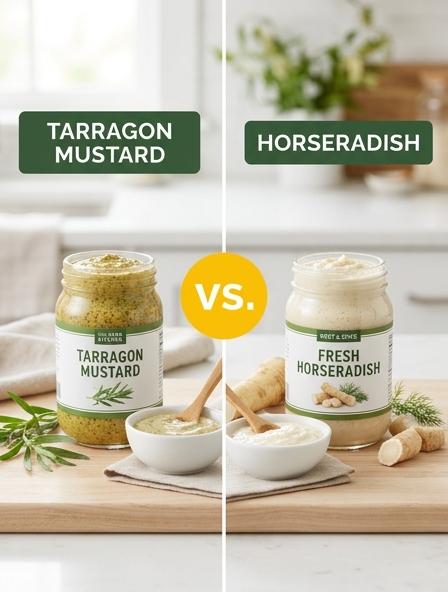
Flavor Profiles and Aromatic Pungency Variations
Comparing tarragon mustard and horseradish reveals a stark contrast in aromatic intensity and depth. Tarragon mustard offers a sophisticated, mild heat layered with the distinct, licorice-like sweetness of the herb. Its pungency is tempered by the acidity of vinegar and the creaminess of mustard seeds. In contrast, horseradish delivers a sharp, volatile pungency that triggers a temporary "sinus-clearing" sensation due to its high concentration of allyl isothiocyanate.
- Tarragon Mustard: Herbal, anise-scented, tangy, and subtly sweet.
- Horseradish: Piercingly sharp, earthy, and intensely hot.
While both provide a culinary "kick," they interact differently with heat; horseradish loses its potency when cooked, whereas tarragon mustard maintains its botanical essence. Many home cooks prefer a dollop of creamy tarragon mustard to brighten a delicate poached salmon, whereas fans of traditional Sunday roasts typically reach for the raw, aggressive heat of freshly grated horseradish.
Nutritional Densities and Potential Health Impacts
Tarragon mustard and horseradish provide unique nutritional profiles tailored to functional health. Horseradish is exceptionally dense in glucosinolates, specifically sinigrin, which is known for its potent antimicrobial and sinus-clearing properties. It also serves as a notable source of Vitamin C and potassium. Tarragon mustard leverages the medicinal properties of mustard seeds-rich in selenium and magnesium-blended with tarragon, which contains antioxidants that may support insulin sensitivity and digestive comfort. Both condiments are excellent low-calorie alternatives to creamy sauces, helping to manage weight while providing intense flavor.
- Horseradish: High enzyme activity for respiratory support and metabolic stimulation.
- Tarragon Mustard: Polyphenols and essential minerals for cardiovascular and digestive health.
You might reach for horseradish to clear your sinuses during a cold, while opting for tarragon mustard to infuse a gourmet salad dressing with subtle, health-promoting herbs.
Chemical Stability and Performance in High Heat Cooking
The culinary performance of tarragon mustard versus horseradish is dictated by the thermal stability of their pungent compounds. Mustard contains isothiocyanates stabilized by acidic vinegar, allowing it to withstand higher temperatures. While the "bite" mellows, the anise-like aromatic profile of the tarragon and the emulsifying properties of the mustard seeds remain intact during roasting or simmering.
Conversely, horseradish relies on allyl isothiocyanate, a highly volatile compound. When exposed to heat, this chemical bond breaks rapidly, causing the signature sinus-clearing heat to evaporate, often leaving behind a woody or bitter aftertaste. For heat-intensive applications, the structural differences are clear:
- Tarragon Mustard: Chemically stable; ideal for marinades, glazes, and pan sauces.
- Horseradish: Thermally unstable; best used as a cold condiment or added at the final second of plating.
You might prefer whisking tarragon mustard into a white wine reduction for seared salmon to ensure the herbal complexity survives the pan's high heat.
Texture Differences and Emulsification Properties in Sauces
Tarragon mustard and horseradish offer distinct structural contributions to culinary applications. Tarragon mustard acts as a powerful natural emulsifier due to the mucilage found in mustard seeds, which helps bind oil and vinegar into a stable, creamy consistency. Its texture is typically smooth or finely ground, providing a velvety mouthfeel that coats the palate.
Conversely, horseradish is a grated root that introduces a fibrous, pulpy, or crunchy texture. It lacks the chemical properties necessary to stabilize emulsions, serving instead as a pungent additive that sits within the liquid rather than binding it.
| Feature | Tarragon Mustard | Horseradish |
|---|---|---|
| Consistency | Smooth, Paste-like | Fibrous, Shredded |
| Role | Stabilizing Binder | Textural Component |
Home cooks often whisk tarragon mustard into vinaigrettes for a perfectly unified silkiness, whereas those seeking a rustic, sinus-clearing kick prefer folding raw horseradish into a thick sour cream base for roast beef.
Sodium Content and Additive Comparison for Daily Use
When evaluating tarragon mustard versus horseradish for daily consumption, sodium and additive profiles are the primary differentiators. Tarragon mustard often blends mustard seeds with vinegar and aromatic herbs; however, commercial varieties frequently include higher salt levels-averaging 60mg to 125mg per teaspoon-alongside stabilizers like xanthan gum to maintain consistency.
In contrast, prepared horseradish is often more "clean-label," typically consisting of just grated root, vinegar, and salt. It generally boasts a lower sodium footprint, often containing less than 30mg per serving. For those managing hypertension, horseradish is the leaner choice, while mustard provides more complex phytonutrients.
- Tarragon Mustard: Higher sodium, potential thickeners, includes antioxidants from mustard seeds.
- Horseradish: Lower sodium, fewer additives, potent sinus-clearing compounds.
You might enjoy dolloping a spoonful of tarragon mustard onto a warm salmon fillet to enjoy a gourmet, bistro-style crust without the need for heavy cream sauces.
Influence on Meat Tenderness and Marinade Efficiency
The choice between tarragon mustard and horseradish significantly impacts the structural integrity of meat. Tarragon mustard excels in marinade efficiency due to its vinegar base and natural emulsifying properties. The acetic acid in the mustard gently denatures proteins, breaking down tough connective tissues to improve tenderness. Additionally, mustard seeds act as a surfactant, ensuring that oils and aromatics bind evenly to the meat's surface.
- Tarragon Mustard: High acid content for protein breakdown and superior moisture retention through emulsification.
- Horseradish: Rich in volatile isothiocyanates that provide deep flavor penetration but offer minimal enzymatic tenderization.
While horseradish is prized for its pungent heat, it lacks the acidic profile required to soften dense muscle fibers. Many culinary enthusiasts prefer whisking tarragon mustard into a white wine marinade for a hanger steak to ensure a perfectly tender, herb-infused result after searing.
Botanical Structures and Digestive System Support
Tarragon mustard and horseradish offer distinct botanical profiles that provide unique gastrointestinal benefits. Tarragon mustard combines the aromatic leaves of Artemisia dracunculus with glucosinolate-rich mustard seeds, creating a blend that supports metabolic function. In contrast, horseradish is a potent taproot from the Brassicaceae family, concentrated with volatile oils like allyl isothiocyanate.
- Tarragon Mustard: Acts as a mild carminative, helping to reduce bloating and stimulate bile production for fat digestion.
- Horseradish: Functions as a powerful gastric stimulant, triggering the secretion of enzymes that break down heavy proteins.
Both ingredients leverage secondary metabolites to optimize the digestive process and improve nutrient absorption. Home cooks often reach for tarragon mustard to brighten a light vinaigrette for sensitive stomachs, while choosing fiery horseradish to help the body process a dense Sunday roast.
Regional Culinary Heritage and Historical Usage
Tarragon mustard and horseradish represent distinct geographical legacies within European gastronomy. Tarragon mustard is deeply rooted in French culinary history, particularly the Dijon region, where the infusion of "Estragon" became a hallmark of sophisticated herb-forward condiments favored by the aristocracy.
- Tarragon Mustard: Originates from Western Europe (France); reflects a refined, vinegar-based preservation method.
- Horseradish: Hails from Central and Eastern Europe; traditionally used by Slavic and Germanic cultures for its hardy, medicinal properties.
While tarragon mustard evolved through the artisan guilds of vinegar makers to complement delicate poultry and sauces, horseradish remained a rustic staple. Its pungent root was essential in Ashkenazi Jewish traditions and Northern European winter diets, providing a sharp contrast to fatty meats and preserved foods.
You might reach for the herbal elegance of tarragon mustard when whisking a classic French vinaigrette, while choosing the fiery kick of freshly grated horseradish to elevate your traditional holiday prime rib.
Volatile Compound Sensitivity and Pantry Shelf Life
Both tarragon mustard and horseradish rely on glucosinolates for their signature heat, but their chemical stability differs significantly. Horseradish contains high concentrations of allyl isothiocyanate, a highly volatile compound that dissipates quickly upon exposure to oxygen and heat, leading to a shorter peak shelf life. Tarragon mustard, while also containing volatile oils, benefits from the preservative acidity of vinegar and the antioxidant properties of tarragon leaves.
- Horseradish: Loses its characteristic "bite" rapidly; enzymatic reactions often cause browning and flavor degradation within weeks of opening.
- Tarragon Mustard: More resilient; the vinegar stabilizes the pungent isothiocyanates, allowing the aromatic licorice-like notes to persist longer in pantry conditions.
When preparing a heavy holiday prime rib, chefs prefer freshly opened horseradish for an intense nasal "kick," whereas home cooks love tarragon mustard as a reliable, long-lasting staple for elevating simple weekday salad dressings.
Caloric Contributions and Impact on Overall Dish Balance
When comparing tarragon mustard and horseradish, both serve as low-calorie flavor enhancers that integrate easily into health-conscious diets. Generally, a single tablespoon of either condiment contributes fewer than 15 calories, meaning their nutritional impact is negligible compared to their culinary influence.
- Tarragon Mustard: Provides an acidic, herbal brightness and acts as an emulsifier to smooth out dressings.
- Horseradish: Delivers a sharp, pungent heat that cuts through fatty proteins without adding acidity or sweetness.
The decision hinges on the desired structural balance of the meal; mustard adds a complex, vinegar-based tang, while horseradish offers a clean, volatile spice that clears the palate. You might fold tarragon mustard into a delicate chicken salad for a sophisticated anise undertone, whereas purists prefer a thick dollop of horseradish to provide a bold, sinus-clearing contrast to a rich slice of prime rib.
Tarragon Mustard vs Horseradish source and external links
- Tarragon mustard is a gourmet condiment that blends the sharp heat of mustard seeds with the delicate, anise-like aroma of fresh herbs, often featured in specialty Tarragon Mustard recipes.
- Known for its intense and pungent flavor, Horseradish is a root vegetable frequently grated into sauces to provide a distinct, sinus-clearing heat to various dishes.