
Table Cream vs Buttermilk: Which is Best for Baking, Meat Tenderizing, and Digestive Health?
Nutritional Comparison of Rich and Cultured Liquids
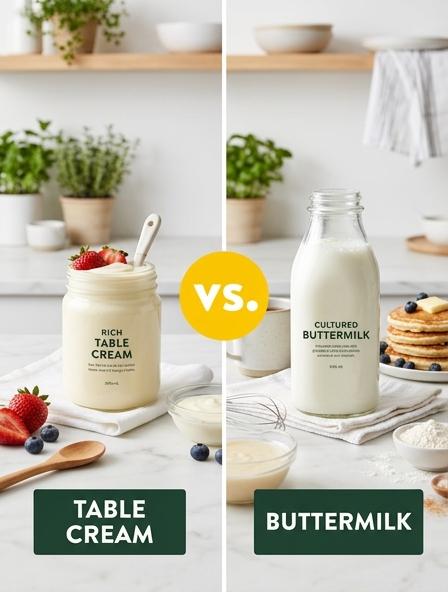
Table cream and buttermilk represent opposite ends of the dairy spectrum. Table cream is defined by its high concentration of milkfat, usually ranging between 18% and 30%, making it a calorie-dense source of fat-soluble vitamins. Conversely, buttermilk is a fermented, low-fat liquid characterized by a tangy flavor and lower caloric density. Its acidic nature is essential for chemical leavening and protein breakdown during cooking.
| Nutrient | Table Cream | Buttermilk |
|---|---|---|
| Fat Content | High (18%+) | Low (1-2%) |
| Acidity | Neutral | High (Lactic Acid) |
While chefs reach for table cream to add a silky finish to gourmet tomato soups, home bakers prefer buttermilk to activate baking soda for the loftiest, most tender biscuits.
Impact of Fat Content and Acidity on Baking Results
The performance of table cream versus buttermilk in the oven depends on their distinct chemical profiles. Table cream, boasting a milkfat content between 18% and 30%, contributes intense richness and a velvety crumb by coating flour proteins. However, it lacks the acidity needed to trigger certain leavening agents.
Buttermilk functions differently due to its lactic acid and lower fat content. This acidity is crucial for specific baking outcomes:
- Leavening: The acid reacts with baking soda to create carbon dioxide, ensuring a high rise.
- Tenderness: Acid breaks down long gluten strands, resulting in a softer texture.
- Flavor: It introduces a signature tang that balances sugary batters.
Professional bakers often swap table cream into a scone recipe for a heavy, luxurious density, but they always rely on buttermilk when the goal is a sky-high, airy batch of golden pancakes for a family brunch.
Digestive Differences Between Fresh and Fermented Dairy
The primary digestive distinction between table cream and buttermilk lies in the fermentation process. Table cream is a fresh dairy product with a high concentration of milk fat and natural lactose. For those with sensitivities, the combination of high fat and intact lactose can lead to slower gastric emptying and potential discomfort.
In contrast, cultured buttermilk is a fermented product. During this process, lactic acid bacteria break down much of the lactose, making it significantly easier for the gut to process. The differences are summarized below:
- Table Cream: High fat and full lactose; requires more bile and lactase for digestion.
- Buttermilk: Lower in fat; contains lactic acid and probiotics that support gut health.
Many home cooks prefer using tangy buttermilk in pancake batters or dressings because it provides a light, airy texture that is much gentler on the stomach than heavy, cream-based alternatives.
Heat Stability and Reaction in Hot Liquid Dishes
The primary difference between table cream and buttermilk during cooking lies in their fat and acid concentrations. Table cream, containing 18% to 30% milkfat, is highly heat-stable. Its high fat content surrounds milk proteins, preventing them from bonding and curdling when introduced to simmering liquids. This makes it ideal for thickening hot soups and sauces.
Buttermilk, however, is lean and acidic. When exposed to high heat, its proteins denature and clump almost instantly, resulting in a grainy texture. To avoid separation, it must be used with caution in hot applications.
- Table Cream: Resists breaking; can be boiled briefly in reductions.
- Buttermilk: Prone to curdling; best added off-heat or tempered slowly.
Professional chefs prefer whisking table cream into a bubbling wild mushroom bisque for a silky, consistent finish that never separates on the plate.
Role of pH and Fat Levels in Meat Preparation
Understanding the chemical differences between table cream and buttermilk is essential for mastering meat textures. Buttermilk is prized for its low pH; the lactic acid acts as a gentle tenderizer by breaking down tough protein fibers without turning the meat mushy. Conversely, table cream lacks acidity but offers a high fat concentration that coats muscle fibers, providing a rich mouthfeel and protecting against moisture loss during intense heat.
- Buttermilk: Acidic (pH ~4.5), ideal for deep-tissue tenderizing and brining.
- Table Cream: Lipid-heavy (18-30% fat), perfect for moisture retention and creating velvety finishes.
The choice hinges on whether you need to chemically alter the meat's structure or simply enhance its succulent profile through fat integration.
You might soak chicken in buttermilk overnight to ensure a fall-off-the-bone texture for Sunday dinner, or whisk table cream into a pan-seared pork medallion sauce for that signature silky richness guests adore.
Consistency and Texture Variations in Cold Emulsions
Understanding the structural differences between table cream and buttermilk is essential for mastering cold culinary emulsions. Table cream is characterized by its high butterfat content (typically 18–30%), which creates a dense, smooth, and highly viscous liquid. In contrast, buttermilk is a fermented dairy product; its texture is thinner and derives from the acidification of milk proteins rather than lipid concentration.
- Table Cream: Delivers a rich, tongue-coating sensation and a high-gloss finish.
- Buttermilk: Offers a pourable, slightly particulate consistency with a signature lactic tang.
These physical properties influence how each liquid binds with complementary ingredients in uncooked preparations. Professional chefs often reach for table cream to add a decadent, velvety mouthfeel to chilled dessert soups, while home cooks love using buttermilk to provide a light, zesty lift to creamy ranch dressings.
Caloric Profiles and Dietary Impact of Liquid Selections
Understanding the nutritional divergence between table cream and buttermilk is essential for managing caloric intake and dish texture. Table cream is a high-fat dairy product, typically containing 18% to 30% milkfat, making it calorie-dense and rich in fat-soluble vitamins. Conversely, buttermilk is a fermented liquid with a significantly lower fat content-often less than 2%-offering a tangy flavor profile with a fraction of the calories.
| Nutrient (approx.) | Table Cream (100g) | Buttermilk (100g) |
|---|---|---|
| Calories | ~195–240 kcal | ~40–60 kcal |
| Fat Content | High (18%+) | Low (1–2%) |
While table cream provides a velvety mouthfeel and heat stability for savory sauces, buttermilk introduces lactic acid which helps tenderize gluten in baked goods. You might reach for the table cream to add a luxurious finish to a cream of mushroom soup, but opt for buttermilk when you want to achieve that classic, tangy lift in a batch of homemade biscuits.
Influence of Composition on Leavening and Crumb Structure
The primary distinction between table cream and buttermilk lies in their pH levels and fat concentrations, which fundamentally alter the chemistry of baking. Buttermilk is acidic, acting as a leavening catalyst when paired with baking soda to produce carbon dioxide. This reaction results in an airy, porous crumb and significant height.
In contrast, table cream has a neutral pH and a high butterfat content (typically 18-30%). It does not trigger chemical leavening but instead coats flour proteins to inhibit gluten, leading to a denser, more velvety structure.
- Buttermilk: High acidity creates a light, tender sponge through gas expansion.
- Table Cream: High fat content produces a moist, tight-crumbed, and rich mouthfeel.
You might reach for buttermilk to achieve the signature fluffiness of classic American pancakes, but opt for table cream when the goal is a luxurious, tight-grained tea cake that melts in your mouth.
Flavor Profiles and Taste Contrasts in Savory Cooking
Choosing between table cream and buttermilk significantly alters the sensory profile of savory dishes. Table cream is characterized by its high butterfat content, offering a mild, sweet, and velvety finish that excels at neutralizing capsaicin in spicy recipes. Conversely, buttermilk provides a sharp, acidic tang resulting from lactic acid fermentation, which adds brightness and depth to heavy sauces.
- Table Cream: Provides a rich, luxurious mouthfeel and stabilizes emulsions in creamy soups.
- Buttermilk: Delivers a refreshing zing and functions as a natural tenderizer for proteins.
The culinary application depends on whether a dish requires soothing enrichment or a vibrant, fermented edge. While table cream rounds out the profile of a classic stroganoff, the acidity in buttermilk is essential for cutting through the fat in complex dressings. You might reach for table cream to mellow a robust peppercorn sauce, while others prefer the acidic bite of buttermilk for a perfectly tangy marinade.
Shelf Life and Storage Characteristics of Liquid Ingredients
The longevity of table cream and buttermilk is dictated by their chemical compositions and processing methods. Table cream, typically containing 18% to 30% milkfat, is highly perishable and usually remains fresh for five to seven days after opening. Because it lacks the high acidity found in fermented products, it is more susceptible to bacterial spoilage.
In contrast, buttermilk is a cultured dairy product. The presence of lactic acid acts as a natural preservative, inhibiting the growth of harmful bacteria and extending its refrigerated shelf life to approximately two weeks. To maximize freshness, both should be stored at 40°F (4°C) in the back of the refrigerator.
- Table Cream: Use within 7 days; sensitive to temperature fluctuations.
- Buttermilk: Lasts up to 14 days; acidity provides a safety buffer.
You might choose buttermilk for its extended shelf life when planning a week of fluffy pancakes, or opt for table cream for that immediate, velvety richness in your evening soup.
Table Cream vs Buttermilk source and external links
- Table cream is a dairy product with a fat content usually ranging from 18 to 30 percent, commonly used to add richness to coffee and various dessert dishes.
- Originally the liquid left over from churning butter, modern buttermilk is a fermented dairy drink frequently used in baking to provide a tangy flavor and tender texture.