
Sweet Onion vs Chives: Are They The Same? Flavor Profiles, Nutritional Benefits, and Culinary Performance.
Flavor Profiles and Culinary Roles of Sweet Onions and Chives
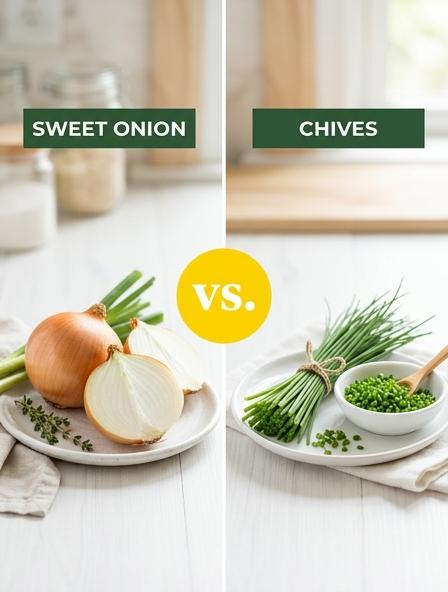
While both belong to the Allium family, sweet onions and chives serve distinct purposes in the kitchen. Sweet onions, such as Vidalias, are prized for their high sugar and water content, offering a mild, crisp bite without the typical pungent sting. They excel when caramelized or served in thick, raw slices. Conversely, chives are delicate herbs with a subtle, grass-like onion flavor and a hint of garlic, usually added at the end of cooking to preserve their bright aroma.
- Sweet Onions: Best for bulk, sweetness, and high-heat cooking like roasting or frying.
- Chives: Best for garnishing, aesthetic appeal, and infusing cold dips or butter.
You might enjoy the deep, jammy sweetness of sautéed onions on a gourmet burger, whereas a sprinkle of fresh chives is the perfect finishing touch for a creamy loaded baked potato.
Nutritional Impact and Health Benefits of Bulb Alliums and Green Herbs
Comparing sweet onions and chives reveals distinct nutritional profiles within the Allium family. Sweet onions, as bulb alliums, are primary sources of dietary fiber and Vitamin C, containing organosulfur compounds that may aid cardiovascular health. Conversely, chives serve as potent green herbs, delivering significantly higher concentrations of Vitamin K and Vitamin A per gram.
- Sweet Onions: Rich in quercetin, an antioxidant known for its anti-inflammatory properties and support for the immune system.
- Chives: Packed with lutein and zeaxanthin, carotenoids that are essential for maintaining healthy vision and skeletal integrity.
While both contribute to a heart-healthy diet, the choice often depends on the desired intensity of phytonutrients versus volume. Home chefs love finishing a loaded baked potato with a sprinkle of fresh chives for a nutrient-dense garnish, whereas thick rings of sweet onion are the go-to for adding a mild, juicy crunch to a classic backyard burger.
Heat Sensitivity and Cooking Performance in Traditional Recipes
Understanding how sweet onions and chives respond to temperature is essential for culinary success. Sweet onions, characterized by high sugar and moisture content, perform exceptionally well under sustained heat. They soften and caramelize, adding savory depth to soups and roasts. In contrast, chives are delicate herbs that lose their pungency and bright green color when exposed to prolonged cooking.
- Sweet Onions: Excel in long-duration heat, becoming sweeter and more translucent as they break down.
- Chives: Highly heat-sensitive; best used as a raw garnish or added during the final seconds of cooking to preserve volatile oils.
In traditional cooking, sweet onions are typically sautéed first to build a flavor base, whereas chives are reserved for the finishing touch. You sprinkle freshly snipped chives over a hot, buttered baked potato just before serving to ensure a bright, aromatic bite that a slow-cooked onion simply cannot replicate.
Textural Differences and Structural Integrity in Finished Plates
Sweet onions and chives offer vastly different structural contributions to culinary presentations. Sweet onions, such as Vidalias, are thick-walled and fibrous. When raw, they provide a substantial, juicy crunch; when caramelized, they transform into a soft, jammy consistency that adds physical body to sauces and tarts. In contrast, chives are delicate, hollow, and cylindrical, offering a fleeting, brittle snap rather than a hearty chew.
- Sweet Onions: Provide physical mass, retain shape when lightly sautéed, and act as a foundational base.
- Chives: Fragile structure, easily wilted by residual heat, used primarily as a high-contrast topical accent.
Choosing between them depends on whether the dish requires a foundational bite or a refined visual finish. Professional chefs often build a rustic tart using slow-cooked sweet onions for a rich, dense interior, then finish the plate with a scatter of fresh chives to provide a vibrant, crisp counterpoint that guests adore.
Aromatic Strength and Flavor Influence in Home Kitchens
Understanding the aromatic profiles of sweet onions versus chives is essential for balancing flavor depth. Sweet onions, such as Vidalia or Walla Walla varieties, possess high sugar and water content with low pyruvic acid. This chemical makeup results in a mellow, non-pungent profile that anchors savory dishes without overpowering other ingredients. In contrast, chives are delicate perennial herbs that offer a bright, grassy essence and a subtle garlic-onion hint that dissipates quickly when exposed to high heat.
- Sweet Onions: Best for building a foundational, sugary base through caramelization or bulk raw applications.
- Chives: Primarily used as a finishing herb to provide a localized burst of color and sharp, fresh aromatics.
Many home cooks enjoy slow-roasting thick rounds of sweet onion to bring out a jammy sweetness, while they prefer snipping fresh chives over a classic sour cream baked potato or a fluffy omelet for a sophisticated, vibrant finish.
Vitamin Concentration and Dietary Value of Diverse Allium Varieties
Comparing sweet onions and chives reveals a stark contrast in nutrient density. While sweet onions are culinary favorites for their low sulfur content and high water volume, their vitamin concentration is relatively diluted compared to their herbal relatives. Chives, however, function as a concentrated source of fat-soluble vitamins, particularly Vitamin K and Vitamin A.
- Sweet Onions: An excellent source of Vitamin C and dietary fiber when consumed in larger portions.
- Chives: Densely packed with Vitamin K for bone health and beta-carotene for immune support.
This discrepancy means that even small garnishes of chives can rival the micronutrient impact of a full serving of onion. You might sprinkle freshly snipped chives over a morning omelet to gain a rapid Vitamin K boost, or choose a thick slice of sweet onion for a summer salad when you want a crisp, mild crunch that doesn't overwhelm your palate.
Moisture Content and Effect on Recipe Consistency and Texture
The moisture profiles of sweet onions and chives fundamentally change a dish's structural outcome. Sweet onions are characterized by high water content and thick layers, causing them to soften and release juices during cooking. This process leads to a translucent, jam-like consistency that adds significant body to sauces or stews. Conversely, chives are thin-walled herbs with low moisture, meaning they provide a delicate, fibrous bite without altering the overall liquid balance of a recipe.
- Sweet Onions: High moisture allows for caramelization and creates a melting, tender texture in hot applications.
- Chives: Low moisture ensures they remain crisp and distinct, making them ideal for temperature-sensitive garnishes.
Home cooks love sweating sweet onions to create a luscious, syrupy base for savory tarts, then finishing the dish with a sprinkle of fresh chives to add a vibrant, crunchy contrast that cuts through the richness.
Visual Presentation and Plating Aesthetics for Home Cooking
When deciding between sweet onions and chives for presentation, the choice depends on the desired visual texture and color contrast. Sweet onions provide a translucent, rustic appeal, typically appearing as substantial rings or chunky dices that suggest a hearty, homemade feel. Conversely, chives offer a refined, minimalist aesthetic with their vibrant green color and delicate, needle-like structure.
| Aesthetic Element | Sweet Onion | Chives |
|---|---|---|
| Color Profile | Pale White/Cream | Vibrant Emerald Green |
| Structural Impact | Bulky and Textural | Fine and Precise |
You might sprinkle finely snipped chives over a pale cauliflower soup to create a high-end restaurant finish, whereas you would layer thick sweet onion rings atop a grilled burger to emphasize a bold, appetizing structure.
Storage Longevity and Freshness Maintenance for Pantry Staples
Understanding the shelf life differences between sweet onions and chives is crucial for reducing food waste. Sweet onions have a higher moisture and sugar content than standard storage onions, limiting their pantry life to roughly two to four weeks. In contrast, chives are highly perishable herbs that wilt within days if left at room temperature. Maintaining their peak flavor requires specific storage methods to handle these distinct moisture profiles:
- Sweet Onions: Keep in a cool, dark, and well-ventilated area; avoid using plastic bags which trap moisture and cause rot.
- Chives: Wrap loosely in a damp paper towel and store in the refrigerator's crisper drawer to prevent dehydration.
Home cooks love keeping fresh chives upright in a small glass of water on the fridge shelf to ensure a snappy, vibrant garnish for their morning omelets.
Culinary Performance and Application Versatility in Daily Meals
In the kitchen, sweet onions and chives offer contrasting textures and heat tolerances. Sweet onions are prized for their high sugar content and low sulfur, making them ideal for high-heat applications like caramelization, where they develop a rich, jammy depth. Chives, however, are delicate herbs that lose their aromatic potency when cooked. They are best utilized as a fresh finishing element to provide a mild, grass-like pungency and a pop of color.
- Sweet Onions: Best for building flavor bases in soups, sautéing, or eating raw in thick slices on sandwiches.
- Chives: Best for garnishing, infusing oils, or mixing into cold dairy-based dressings.
Many home cooks enjoy layering these flavors by slow-roasting sweet onions to create a savory tart base, then finishing the dish with a generous sprinkle of fresh chives for a bright, aromatic contrast.
Sweet Onion vs Chives source and external links
- Known for their mild flavor and low sulfur content, these vegetables are often eaten raw in salads or sandwiches. Sweet Onion
- This perennial herb belongs to the onion family and is frequently used as a flavorful garnish for soups and potatoes. Chives