
Sweet Basil vs Thai Basil: Are They The Same? Flavor Profiles, Cooking Performance, and Visual Identification.
Distinct Flavor Profiles of Clove and Anise Notes
The aromatic complexity of basil varieties is driven by specific chemical compounds that dictate their culinary applications. Sweet Basil is defined by eugenol, the same compound found in cloves, which imparts a warm, peppery, and slightly sweet undertone. Conversely, Thai Basil is dominated by estragole, providing a bold, spicy, and pungent profile characterized by intense anise and licorice notes.
- Sweet Basil: Subtle clove notes; pairs best with acidic ingredients like tomatoes.
- Thai Basil: Strong anise finish; maintains its structural integrity and flavor during high-heat cooking.
While a gardener might reach for Sweet Basil to brighten a fresh Caprese salad with its gentle clove warmth, many foodies prefer Thai Basil when simmering a green curry to ensure that distinctive licorice aroma stands up against bold chilies and creamy coconut milk.
Heat Tolerance and Performance During Stir Frying
In high-heat cooking, the structural differences between these two herbs dictate their culinary roles. Thai basil is the superior choice for the wok due to its sturdy, narrow leaves and stable essential oils. It withstands prolonged heat, maintaining its distinct licorice-like aroma and firm texture throughout the sautéing process. Conversely, Sweet Basil is highly delicate; its thin, moisture-rich leaves oxidize and turn black almost instantly when exposed to high temperatures, causing its peppery sweetness to vanish.
- Thai Basil: High heat tolerance; stays fragrant and intact during vigorous stir frying.
- Sweet Basil: Low heat tolerance; best added as a fresh garnish or at the very end of cooking.
You will appreciate Thai basil's resilience when tossing it into a scorching pad kra pao, where it wilts just enough to release its fragrance without turning into a mushy, flavorless mess.
Visual Identification Through Leaf Shape and Color
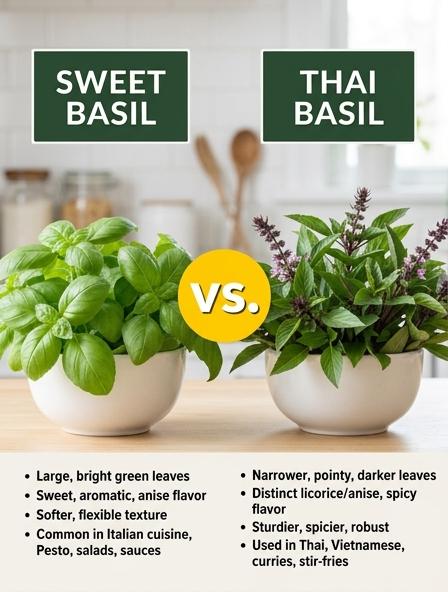
Distinguishing between these two popular herbs is simple once you recognize their unique physical characteristics. Sweet basil is defined by its large, floppy, and oval-shaped leaves that often curve inward. They are typically a bright, uniform green with a smooth, delicate texture. Conversely, Thai basil possesses sturdier, narrower leaves with serrated edges and a more pointed, spear-like appearance.
| Feature | Sweet Basil | Thai Basil |
|---|---|---|
| Leaf Shape | Rounded and cupped | Narrow and pointed |
| Stem Color | Light green | Deep purple |
| Leaf Color | Bright green | Dark green |
You might reach for the iconic, deep purple stems and pointed leaves of Thai basil when you want a visually striking garnish that provides a sharp contrast against a vibrant red curry.
Comparative Nutrient Density and Antioxidant Content
While both Sweet and Thai basil belong to the Ocimum basilicum species, their nutritional profiles offer distinct health advantages. Both varieties are excellent sources of Vitamin K, essential for blood clotting and bone health, but they differ significantly in their secondary metabolites and antioxidant stability.
- Sweet Basil: Features high levels of Vitamin A and magnesium, alongside rosmarinic acid, a potent antioxidant known for its anti-inflammatory properties.
- Thai Basil: Boasts a higher concentration of polyphenols and heat-stable antioxidants like orientin and vicenin, which better protect cellular structures during cooking.
Sweet basil typically offers higher essential oils like linalool, whereas Thai basil is richer in estragole, contributing to its unique licorice-like aroma and antimicrobial potential. You might prefer fresh Sweet basil leaves torn over a Caprese salad for a raw nutrient boost, while choosing Thai basil for high-heat stir-fries to ensure the antioxidants remain intact throughout the cooking process.
Role in Traditional Mediterranean and Asian Recipes
Sweet basil and Thai basil serve as culinary cornerstones in their respective regions, defined by distinct flavor profiles and heat tolerances. Sweet basil is the soul of Mediterranean cooking, particularly in Italian dishes where its peppery, clove-like sweetness elevates fresh tomato sauces and olive oil-based dressings. Conversely, Thai basil is indispensable in Southeast Asian kitchens, offering a bold, licorice-scented punch that remains stable under high temperatures.
| Cuisine | Basil Variety | Key Culinary Uses |
|---|---|---|
| Mediterranean | Sweet Basil | Pesto Genovese, Caprese Salad, Marinara |
| Asian | Thai Basil | Green Curry, Pad Krapow, Pho Garnish |
Home cooks love tossing a handful of fresh sweet basil into a simmering marinara just before serving, while those craving a spicy Red Curry rely on the sturdy Thai basil leaves to infuse the broth with a signature anise aroma.
Aromatic Intensity and Sensory Influence
The sensory profiles of Sweet and Thai basil diverge significantly due to their distinct chemical compositions. Sweet basil is celebrated for its delicate, peppery sweetness and subtle minty undertones, largely attributed to the compound linalool. In contrast, Thai basil provides a much more robust and spicy olfactory experience, characterized by bold notes of anise, licorice, and cinnamon that remain stable under high heat.
- Sweet Basil: Features a mild, floral aroma; best used fresh to preserve its volatile oils.
- Thai Basil: Known for its pungent, savory intensity; its sturdy leaves hold up well in simmering curries.
You might reach for the gentle, clove-like fragrance of Sweet Basil to balance a fresh tomato bruschetta, while the spicy punch of Thai Basil is what you need to cut through the rich, coconut-based broth of a traditional Red Curry.
Refrigeration Longevity and Wilting Resistance
When comparing the shelf life of these popular herbs, Thai Basil is significantly more resilient than Sweet Basil. Sweet Basil is notorious for its sensitivity to cold; its high-moisture, delicate leaves often undergo "chilling injury," turning black and slimy within forty-eight hours of being placed in a refrigerator. In contrast, Thai Basil features a sturdier physical structure with narrower leaves and woodier stems, providing much higher resistance to wilting and oxidation.
- Sweet Basil: Highly perishable; best stored at room temperature in a glass of water, much like a bouquet of flowers.
- Thai Basil: Cold-tolerant; maintains freshness for up to a week when wrapped in a damp paper towel inside a plastic bag in the crisper drawer.
Home cooks often prefer buying Thai Basil for weekly meal prepping because it maintains its vibrant purple stems and spicy fragrance long after Sweet Basil has withered in the vegetable bin.
Texture Variations in Sauces and Pastes
The structural integrity of basil leaves dictates the final mouthfeel of culinary emulsions and grinds. Sweet basil is characterized by tender, high-moisture leaves that break down rapidly into a smooth, buttery consistency. Conversely, Thai basil features a sturdier, more fibrous anatomy that resists total liquification, providing a distinct grit and resilience in heavy sauces.
- Sweet Basil: Blends into a silky, homogenized finish, perfect for creamy emulsions.
- Thai Basil: Maintains a coarse, rustic texture that holds up under high-heat simmering.
The moisture-rich cells of sweet basil allow it to bruise and emulsify with oil effortlessly, whereas the narrow, serrated leaves of Thai basil provide a satisfying structural bite. You might prefer the leafy, resilient flecks of Thai basil in a stone-ground red curry paste, while choosing the velvety, uniform spread of sweet basil for a classic Genovese pesto on your favorite pasta.
Essential Oil Concentration and Biological Properties
The chemical profiles of Sweet and Thai basil significantly influence their therapeutic potential and culinary behavior. Sweet basil is defined by high levels of linalool, which provides its signature floral notes and potent antioxidant properties. In contrast, Thai basil contains high concentrations of estragole (methyl chavicol) and anethole, resulting in a distinct anise-like aroma and robust antimicrobial activity.
| Feature | Sweet Basil | Thai Basil |
|---|---|---|
| Dominant Compound | Linalool | Estragole |
| Biological Activity | Anti-inflammatory | Antifungal / Antibacterial |
These essential oils also dictate heat stability; Sweet basil's delicate compounds evaporate quickly, while Thai basil's oils are more resilient during high-heat cooking. You might prefer bruising fresh Thai basil leaves directly into a simmering red curry to release those spicy, medicinal aromatics that can withstand the intense heat of the wok.
Impact on Final Dish Presentation and Color
The visual distinction between sweet basil and Thai basil can define the character of a meal. Sweet basil is known for its large, rounded, and tender bright green leaves. However, it is highly sensitive to heat and oxidation; once sliced or cooked, it quickly turns a dark, muddy brown. This makes it ideal for raw applications where its vibrant emerald hue can shine.
In contrast, Thai basil is more resilient. It features narrower, serrated leaves and striking purple stems that hold their shape and color even after being tossed into a high-heat wok or simmering curry. This structural integrity makes it a superior choice for cooked presentations.
- Sweet Basil: Best as a fresh garnish to maintain its delicate green color.
- Thai Basil: Provides a rustic look with its signature purple-green contrast that withstands heat.
You might find that sweet basil adds a soft, sophisticated touch to a fresh Caprese salad, while Thai basil provides that essential, vibrant pop of color within a steaming bowl of green curry.
Sweet Basil vs Thai Basil source and external links
- Commonly used in Italian cuisine, Sweet Basil is known for its large, rounded green leaves and its essential role in making traditional pesto.
- Distinguished by its sturdy purple stems and licorice-like flavor, Thai Basil is a resilient herb that maintains its aroma even when cooked at high temperatures.