
Sweet Basil vs Holy Basil: Are They The Same? Flavor Profiles, Culinary Uses, and Health Benefits.
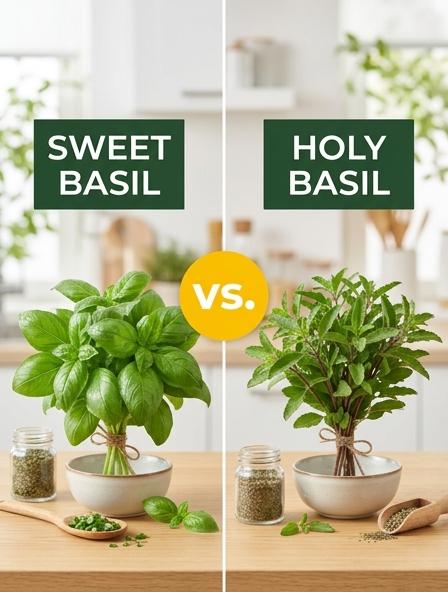
Flavor Profile Variations for Home Cooking
Choosing the right herb depends on the desired depth of flavor and cooking method. Sweet basil is famous for its bright, peppery sweetness and subtle notes of anise, making it a primary ingredient in Mediterranean dishes. Conversely, holy basil (Tulsi) presents a much more robust, spicy, and musky aroma. While sweet basil is delicate and often added at the end of cooking to preserve its oils, holy basil's clove-like pungency stands up remarkably well to high heat.
- Sweet Basil: Sweet, peppery, and fresh; ideal for uncooked or lightly heated applications.
- Holy Basil: Spicy, peppery, and musky; essential for heat-intensive stir-fries.
You might love the cooling, aromatic finish sweet basil adds to a fresh Caprese salad, but you will need the pungent, peppery bite of holy basil to master an authentic, fiery Thai Pad Krapow.
Heat Resistance and Performance in the Pan
The primary culinary distinction between Sweet Basil and Holy Basil lies in their structural integrity under heat. Sweet Basil is delicate; its volatile oils dissipate quickly, and its leaves often turn bruised or black when exposed to high temperatures. In contrast, Holy Basil, also known as Tulsi, is incredibly hardy, featuring a spicy, peppery profile that actually intensifies during the cooking process.
| Feature | Sweet Basil | Holy Basil |
|---|---|---|
| Heat Tolerance | Low (wilts easily) | High (retains structure) |
| Flavor Change | Loses aroma | Develops depth |
When preparing a traditional Thai Basil Chicken (Pad Kra Pao), home cooks prefer Holy Basil because it withstands the searing heat of a high-flame wok, infusing the meat with a distinctive clove-like bite that remains vibrant until the final plate.
Aromatic Strength and Impact on Savory Dishes
Sweet basil and holy basil offer distinct aromatic profiles that define their culinary roles. Sweet basil is known for its bright, clove-like sweetness with a hint of anise, making it the cornerstone of Mediterranean cuisine. Its delicate leaves lose flavor quickly when exposed to high heat, so it is typically added as a finishing touch. Conversely, holy basil-often called Tulsi-possesses a more aggressive, spicy, and musky aroma reminiscent of black pepper and pungent cloves. Unlike its sweet counterpart, holy basil is robust enough to withstand prolonged cooking, making it ideal for high-heat stir-fries.
- Sweet Basil: Best for fresh sauces, pesto, and light pasta dishes.
- Holy Basil: Essential for spicy Thai stir-fries and slow-simmered savory broths.
You might prefer throwing a handful of holy basil into a sizzling wok for a spicy Pad Krapow, while choosing sweet basil to garnish a classic Margherita pizza.
Nutritional Profiles and Wellness Attributes
While both herbs belong to the Lamiaceae family, their chemical compositions serve different health purposes. Sweet basil is a nutritional powerhouse of Vitamin K, essential for bone density and blood clotting, and contains significant amounts of Vitamin A and manganese. In contrast, Holy Basil-often called Tulsi-is celebrated in Ayurvedic medicine as a potent adaptogen.
- Sweet Basil: High in antioxidants like lutein and zeaxanthin; aids digestive health and provides anti-inflammatory benefits.
- Holy Basil: Rich in Vitamin C, Zinc, and eugenol; specifically known for reducing oxidative stress and regulating metabolic function.
Holy Basil excels in balancing cortisol levels and supporting the immune system, whereas sweet basil provides immediate culinary nutrition through its high concentration of essential minerals. You might toss handfuls of sweet basil into a vibrant caprese salad for a Vitamin K boost, or brew a warm cup of holy basil tea when you want to soothe your nerves after a demanding afternoon.
Regional Culinary Traditions and Common Applications
Sweet Basil and Holy Basil occupy distinct niches in global gastronomy, defined by their unique aromatic profiles and heat tolerances. Sweet basil, particularly the Genovese variety, is the aromatic cornerstone of Mediterranean cooking, where its delicate, peppery-sweet notes complement cold dishes and light sauces. In contrast, Holy Basil-known as Tulsi in India and Bai Graprao in Thailand-is prized for its robust, clove-like pungency that intensifies when cooked.
- Sweet Basil: Essential for Italian pesto, Caprese salads, and tomato-based pasta dishes.
- Holy Basil: A staple in high-heat stir-fries, such as Thai Pad Kra Pao, and traditional Ayurvedic herbal teas.
While an Italian chef might layer fresh sweet basil over a buffalo mozzarella pizza for a fragrant finish, a home cook in Bangkok will reach for a handful of pungent holy basil to stand up to the fiery chilies and garlic in a sizzling wok.
Leaf Texture Differences and Visual Presentation
Distinguishing sweet basil from holy basil begins with their contrasting surface textures and growth habits. Sweet basil (Ocimum basilicum) is recognized by its large, smooth, and glossy leaves that often feature a characteristic "cupped" or convex shape. In contrast, holy basil (Ocimum tenuiflorum), also known as Tulsi, displays a more rugged, matte appearance. Its leaves are typically smaller with serrated (toothed) edges and are often covered in fine, soft hairs that give the plant a slightly fuzzy texture.
- Sweet Basil: Bright green, waxy sheen, and smooth margins.
- Holy Basil: Dull green to purple hues, jagged edges, and pubescent (hairy) stems.
Imagine garnishing a vibrant Margherita pizza with glossy sweet basil leaves for a polished professional aesthetic, or brewing a rustic, restorative tea using the serrated, earthy foliage of fresh Tulsi.
Essential Oil Concentration and Scent Longevity
The aromatic profiles of Sweet Basil and Holy Basil are defined by their chemical potency. Holy Basil (Tulsi) possesses a significantly higher essential oil concentration, primarily driven by eugenol. This results in a robust, musky, and clove-like scent that exhibits remarkable longevity. Conversely, Sweet Basil features more volatile compounds like linalool and estragole, which provide a bright, peppery aroma that is refreshing but dissipates quickly when exposed to heat or air.
| Characteristic | Sweet Basil | Holy Basil |
|---|---|---|
| Primary Compound | Linalool | Eugenol |
| Scent Profile | Fresh & Sweet | Spicy & Earthy |
| Persistence | Low | High |
Home chefs typically reach for Sweet Basil to provide a fleeting, aromatic finish to a fresh Caprese salad, while those seeking a lasting, grounding atmosphere prefer diffusing Holy Basil oil to maintain a calming scent in a workspace for hours.
Behavioral Changes Under High Heat
Temperature fluctuations significantly dictate the growth patterns and chemical compositions of Sweet and Holy Basil. While both varieties are sun-loving, their physiological responses to extreme heat diverge sharply.
| Variety | Reaction to Extreme Heat | Flavor Profile Change |
|---|---|---|
| Sweet Basil | Rapid bolting and wilting | Becomes bitter and woody |
| Holy Basil | Increased resin production | Retains pungent, spicy notes |
Sweet Basil is highly susceptible to heat stress; when temperatures soar, the plant prioritizes seed production, leading to smaller, less flavorful leaves. In contrast, Holy Basil (Tulsi) is a tropical powerhouse that thrives in scorching conditions, often increasing its essential oil concentration as a protective mechanism. Gardeners in sweltering climates often prefer Holy Basil because it stays lush and aromatic for afternoon teas long after the Sweet Basil has bolted and turned bitter in the midday sun.
Flavor Affinity with Various Pantry Staples
Sweet basil and holy basil possess distinct chemical profiles that dictate their ideal kitchen companions. Sweet basil, rich in linalool, offers a cooling, minty-anise sweetness that anchors Mediterranean staples. In contrast, holy basil (Tulsi) contains high levels of eugenol, providing a pungent, clove-like heat that stands up to bold, savory seasonings.
- Sweet Basil: Pairs best with acidic and fatty ingredients like tomatoes, extra virgin olive oil, balsamic vinegar, and fresh mozzarella.
- Holy Basil: Thrives alongside salty and spicy elements such as fermented fish sauce, soy sauce, bird's eye chilies, and garlic.
While sweet basil is the go-to choice for balancing a bright summer pesto, many home cooks prefer using holy basil to add a complex, peppery depth to a traditional Thai stir-fry or a spicy minced meat dish.
Storage Durability and Freshness Timelines
Understanding the shelf life of sweet basil versus holy basil is essential for maintaining their distinct flavor profiles. Sweet basil features tender, moisture-rich leaves that are notoriously sensitive to cold; they often oxidize and turn black in the refrigerator within 48 hours. Conversely, holy basil, also known as Tulsi, possesses a sturdier, more fibrous leaf structure that grants it a slightly longer lifespan when stored under proper conditions.
- Sweet Basil: Lasts 3–5 days; thrives best at room temperature in a glass of water like a bouquet.
- Holy Basil: Lasts 5–7 days; remains stable when wrapped in a breathable cloth or damp paper towel in the fridge.
Home chefs often prefer keeping sweet basil on the countertop for quick access during pasta nights, whereas wellness enthusiasts appreciate the durability of holy basil when prepping a week's worth of soothing herbal infusions.
Sweet Basil vs Holy Basil source and external links
- Sweet basil is a popular culinary herb widely used in Italian cuisine, particularly as the primary ingredient in traditional pesto. Sweet Basil
- Holy basil, also known as Tulsi, is a sacred plant in Hindu belief that is frequently used in Ayurvedic medicine and herbal teas. Holy Basil