
Sweet Basil vs Genovese Basil: Comparing Flavor Profiles, Leaf Texture, and Culinary Performance Differences
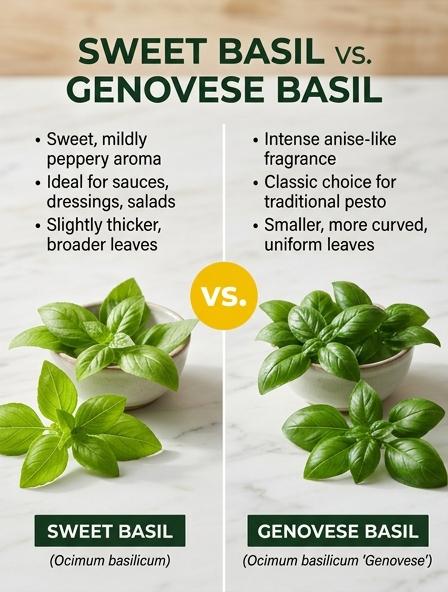
Flavor Nuances in Traditional Mediterranean Herb Varieties
Understanding the distinction between Sweet Basil and Genovese Basil is essential for authentic Mediterranean cooking. While "Sweet Basil" often serves as a general umbrella term for various Ocimum basilicum cultivars, Genovese is a specific, refined variety hailing from Italy, prized for its aromatic intensity.
- Genovese Basil: Known for its classic peppery finish and subtle notes of clove. The leaves are typically pointier and flatter, offering a robust flavor that stands up to garlic and pine nuts.
- Sweet Basil: Usually features a milder, more delicate sweetness with less peppery bite. Its leaves are often more rounded and provide a subtle aromatic lift without overpowering other ingredients.
The choice between them often dictates the depth of your dish's herbal profile. You might reach for the pungent Genovese variety when pounding a traditional green pesto, but choose standard Sweet Basil for a balanced, fresh garnish on a classic Caprese salad.
Structural Differences in Leaf Texture for Fresh Salads
When selecting between Sweet Basil and Genovese Basil for culinary use, leaf morphology plays a critical role in the final dish's texture. While both belong to the same species, their physical attributes differ significantly. Sweet Basil typically produces flatter, thinner leaves that offer a delicate, tender mouthfeel. In contrast, Genovese Basil-a specific Italian cultivar-is characterized by its "spoon-shaped" appearance. These leaves are thicker, more robust, and curve downward, providing a distinct crunch and better resistance to wilting.
- Sweet Basil: Features pliable, smooth leaves that blend seamlessly into mixed baby greens.
- Genovese Basil: Features convex, crinkled leaves that provide structural integrity and a firmer bite.
You might prefer the sturdy, cupped leaves of Genovese Basil when building a hearty Caprese salad, as they act as a natural vessel for holding pools of balsamic glaze and olive oil without losing their shape.
Comparative Nutritional Values and Health Benefits
While Genovese basil is technically a specialized cultivar of sweet basil, both varieties offer nearly identical, high-density nutritional profiles. They are exceptional sources of Vitamin K, which is essential for bone health and blood clotting. Additionally, these herbs contain significant amounts of Vitamin A and manganese, alongside potent antioxidants like lutein and zeaxanthin that support eye health.
- Vitamin K: Critical for bone density and cardiovascular health.
- Antioxidants: Rich in polyphenols that combat oxidative stress.
- Essential Oils: High concentrations of eugenol and linalool provide natural anti-inflammatory benefits.
The antimicrobial properties found in their essential oils further enhance their status as functional foods that support the immune system. You might choose Genovese basil when you want that intense, peppery punch for a traditional pesto Genovese, while opting for classic Sweet Basil for a milder, aromatic finish on a fresh Margherita pizza.
Thermal Stability and Performance Under High Heat
When comparing thermal stability, Genovese basil is the preferred cultivar for warm culinary applications. While both varieties possess delicate cell structures, Genovese basil contains a higher concentration of essential oils-specifically linalool and eucalyptol-which provide a marginally better resistance to heat-induced oxidation. In contrast, standard sweet basil tends to lose its signature brightness and develop a muted, slightly bitter profile when exposed to high temperatures.
- Genovese Basil: Maintains structural integrity and aromatic potency longer in simmering sauces.
- Sweet Basil: Rapidly wilts and loses its characteristic peppery sweetness upon contact with steam.
To ensure maximum flavor retention, professional chefs recommend adding the leaves at the very end of the cooking process. Home cooks especially love tossing freshly torn Genovese leaves into a pan of piping hot pomodoro sauce, where the residual heat creates a fragrant, clove-scented steam just seconds before serving.
Concentration of Essential Oils and Aromatic Strength
While Genovese basil is technically a cultivar of Sweet basil, it is specifically bred for a superior concentration of essential oils. The primary difference lies in the aromatic strength; Genovese varieties possess significantly higher levels of linalool and eugenol. These compounds produce the intense, peppery, and clove-like scent that defines high-quality Mediterranean cuisine. In contrast, generic Sweet basil offers a more balanced, milder profile with a noticeable anise-like sweetness but less volatile intensity.
Key aromatic markers include:
- Genovese: High linalool content results in a sharp, spicy-floral fragrance that persists even after processing.
- Sweet Basil: Lower oil density provides a subtle, fresh herbal note suitable for light garnishing.
Because these concentrated oils are released upon bruising, home cooks specifically prefer Genovese basil when they want to achieve that unmistakable, room-filling fragrance essential for an authentic, pungent Pesto alla Genovese.
Visual Characteristics and Aesthetic Impact on Plating
While often used interchangeably, Genovese and Sweet Basil offer distinct visual profiles that influence culinary presentation. Genovese basil is the quintessential variety for Italian cuisine, characterized by its deep, dark green color and iconic "spoon-shaped" leaves that curve significantly inward. In contrast, standard Sweet Basil features flatter, slightly more pointed leaves with a lighter, medium-green hue.
| Feature | Genovese Basil | Sweet Basil |
|---|---|---|
| Leaf Shape | Incurved / Cupped | Flat / Oval |
| Color Density | Deep, Glossy Green | Bright, Matte Green |
The structural rigidity and uniform appearance of Genovese leaves make them the superior choice for garnishing heavy pastas or layering in a vertical Caprese salad. You might prefer tucking a whole, glossy Genovese leaf under a slice of buffalo mozzarella to create that professional, high-contrast look found in fine-dining Italian eateries.
Moisture Levels and Consistency in Sauce Preparation
The success of a sauce often hinges on the water-to-oil ratio, where the choice between Sweet Basil and Genovese Basil becomes critical. While Sweet Basil is a broad category, Genovese is a specific cultivar bred for its concentrated oils and lower moisture content. This structural difference prevents sauces from becoming overly watery or breaking during the emulsification process.
- Sweet Basil: Larger, flatter leaves that may harbor higher water retention, occasionally leading to a thinner sauce.
- Genovese Basil: Distinctively curved, spoon-shaped leaves that offer a denser texture and more robust aromatic oils.
Managing these moisture levels ensures that your pesto achieves a creamy, cohesive binding rather than a separated, fluid mess. Professional chefs often reach for Genovese Basil when they want a vibrant, thick green paste that coats every ridge of a rigatoni noodle without pooling at the bottom of the bowl.
Historical Origins and Traditional Culinary Roles
Sweet basil (Ocimum basilicum) traces its ancient roots to tropical regions in Asia and Africa, where it has been cultivated for over 5,000 years. Genovese basil is a specific Italian cultivar originating from the Liguria region. While sweet basil serves as a broad botanical category, the Genovese variety was specifically bred to achieve a delicate, peppery-clove aroma without the minty undertones found in other types.
- Sweet Basil: The versatile parent species used globally in everything from Thai curries to herbal teas.
- Genovese Basil: The gold standard for Italian cuisine, holding a protected status for authentic pesto production.
Many home cooks prefer keeping a pot of Genovese basil on the windowsill to tear fresh leaves over a steaming bowl of pasta, instantly elevating a simple weeknight dinner with its signature Mediterranean fragrance.
Storage Life and Wilting Rates in Domestic Kitchens
In domestic environments, Genovese basil is notably more delicate than broader Sweet Basil varieties like Italian Large Leaf. Because Genovese features thinner cell walls and higher oil volatility, it exhibits faster wilting rates when exposed to dry air. Both varieties are highly chilling-sensitive; storing them in a standard refrigerator often leads to rapid enzyme breakdown and leaf blackening. To maximize freshness, stems should be treated like cut flowers.
| Storage Method | Sweet Basil (Large Leaf) | Genovese Basil |
|---|---|---|
| Countertop (in water) | 7–10 Days | 5–7 Days |
| Refrigerated | 1–2 Days | <24 Hours |
Home cooks often prefer keeping a fresh bouquet of Genovese basil in a glass jar on the counter to ensure its intoxicating aroma is ready for a last-minute margherita pizza topping.
Chemical Composition and Flavor Release During Mincing
Sweet Basil and its refined cultivar, Genovese Basil, share a chemical foundation rich in linalool and estragole. The primary difference lies in the concentration; Genovese typically boasts a higher density of essential oils. Mincing these herbs is a mechanical process that ruptures the plant's vacuoles, triggering an enzymatic reaction that releases these aromatic volatile compounds into the air.
- Sweet Basil: Offers a balanced, clove-like sweetness with subtle minty undertones.
- Genovese Basil: Delivers a more aggressive, peppery pungency due to its elevated oil content.
While Sweet Basil provides a gentle aromatic lift, the robust chemical structure of Genovese Basil ensures that its flavor remains prominent even when blended with fats. Imagine finely dicing a handful of Genovese leaves to release that unmistakable, heady aroma for a traditional Neapolitan pesto that perfectly coats every strand of warm pasta.
Sweet Basil vs Genovese Basil source and external links
- Sweet basil is a versatile and aromatic herb widely used in Mediterranean cooking and as a key ingredient in many tomato-based dishes, as described on the page for Sweet Basil.
- Genovese basil is a specific cultivar prized for its large, tender leaves and intense flavor, making it the essential variety for authentic Italian pesto according to Genovese Basil.