
Soy Milk vs Almond Milk: Are They The Same? Protein Density, Culinary Performance, and Nutritional Profiles.
Nutritional Density for Family Wellness
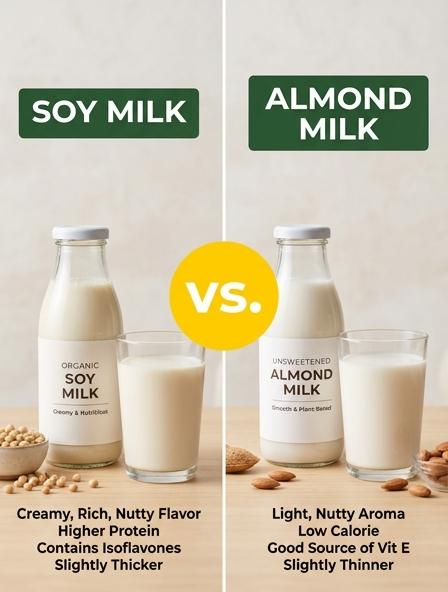
When comparing soy and almond milk for family wellness, understanding their macronutrient profiles is essential. Soy milk is a nutritional powerhouse, offering a complete protein source comparable to dairy, which supports muscle growth and cellular repair. Almond milk, while lower in protein, is a vitamin-rich alternative that is naturally low in calories and high in Vitamin E, an antioxidant vital for skin health and immune support.
- Soy Milk: High protein (approx. 7-8g per cup), contains healthy polyunsaturated fats and isoflavones.
- Almond Milk: Low calorie (approx. 30-50 per cup), high in monounsaturated fats and calcium-fortified.
For families focusing on balanced growth, soy provides the dense nutrients needed for active children, whereas almond milk serves as a light, heart-healthy option for weight management. Both offer unique benefits depending on individual dietary requirements and caloric goals.
You might reach for protein-rich soy milk to fuel your teenager's breakfast, while opting for almond milk in your afternoon smoothie for a light, nutty flavor that keeps your calorie count in check.
Heat Stability in Creamy Savory Recipes
When preparing hot, savory dishes, the protein content of your plant-based milk determines its performance under heat. Soy milk is the superior choice for stovetop cooking because its high protein density mimics the structural integrity of dairy. It emulsifies effectively with fats and maintains its viscosity even at a simmer. Conversely, almond milk has a much lower protein-to-water ratio, which often causes it to "break" or curdle when boiled, resulting in a thin and grainy consistency.
- Soy Milk: High heat tolerance, resists curdling, and provides a rich, fatty mouthfeel.
- Almond Milk: Low heat stability, prone to separation, and yields a thinner profile.
Home cooks typically choose unsweetened soy milk when whisking together a velvety vegan béchamel or a creamy mushroom soup to ensure the sauce stays perfectly smooth and cohesive until served.
Protein Concentrations for Daily Health
When evaluating plant-based beverages for nutritional density, the protein gap between soy and almond milk is significant. Soy milk is widely recognized as a high-quality, complete protein source, providing approximately 7 to 9 grams per cup-a profile comparable to bovine milk. It contains all nine essential amino acids necessary for muscle repair and metabolic function.
| Nutrient (per cup) | Soy Milk | Almond Milk |
|---|---|---|
| Protein Content | 7g - 9g | 1g |
| Protein Quality | Complete | Incomplete |
Conversely, almond milk is naturally low in protein, typically offering only 1 gram per serving. Because it lacks the structural amino acids found in legumes, it serves better as a low-calorie hydrator rather than a recovery drink. Fitness enthusiasts often stir soy milk into their post-workout smoothies to ensure a robust protein boost that supports effective muscle recovery.
Structural Performance in Homemade Baking
In the chemistry of baking, protein acts as a critical binding agent. Soy milk is the top performer for structural integrity because its protein profile closely mirrors dairy. This helps trap leavening gases, ensuring cakes rise and maintain their shape without collapsing. Almond milk, containing significantly more water and less protein, offers less support, often resulting in a more delicate or crumbly texture.
- Soy Milk: High protein content facilitates the Maillard reaction for golden-brown crusts and sturdy crumbs.
- Almond Milk: Low protein and high moisture make it ideal for recipes requiring a very light, tender finish.
You will find that soy milk is the reliable choice for a heavy, multi-layered pound cake that needs to stand tall, while almond milk excels in delicate muffins where a soft, airy bite is your priority.
Caloric Impact on Weight Management
When comparing soy milk and almond milk for weight management, the primary difference lies in energy density versus satiety. Unsweetened almond milk is significantly lower in calories, making it a favorite for those maintaining a strict caloric deficit. However, soy milk provides substantially more protein, which is vital for appetite regulation.
| Nutrient (per cup) | Unsweetened Almond Milk | Unsweetened Soy Milk |
|---|---|---|
| Calories | ~30–50 kcal | ~80–100 kcal |
| Protein | ~1g | ~7–9g |
Almond milk allows for higher volume consumption without a high caloric cost. Conversely, the protein in soy milk can prevent mid-day snacking by keeping you full for longer periods.
You might prefer almond milk in your latte to save calories for a dessert later, or choose soy milk in your breakfast smoothie to ensure you stay energized and full until your lunch break.
Flavor Compatibility in Traditional Dishes
When substituting dairy in heritage recipes, the flavor profiles of soy and almond milk behave differently. Soy milk provides a neutral, beany richness and a creamy mouthfeel that closely mimics cow's milk, making it a versatile choice for various cultural staples.
- Soy Milk: Best for savory applications like creamy ramen broths, curries, and traditional Chinese breakfast soups, as it withstands high heat without separating.
- Almond Milk: Its distinct nutty sweetness and thinner consistency are better suited for sweet porridges, spiced puddings, and Western-style baked goods.
Soy's high protein content allows it to emulsify better in sauces, whereas almond milk's toasted notes can overwhelm delicate savory spices. You might prefer using soy milk for a rich, savory miso-based soup, while reaching for almond milk to add a subtle nuttiness to your morning bowl of cinnamon-spiced oats.
Consistency and Texture for Smooth Sauces
When comparing soy and almond milk for culinary use, protein content is the deciding factor for achieving a professional viscosity. Soy milk contains natural lecithin and high protein levels, which allow it to emulsify effectively with fats. This creates a stable, velvety texture that mimics traditional heavy cream. In contrast, almond milk has a higher water content and lacks the structural proteins needed to bind thick sauces, often resulting in a thinner consistency or separation at high temperatures.
- Soy Milk: Best for roux-based sauces, gravies, and creamy reductions.
- Almond Milk: Ideal for light glazing or thin, heat-sensitive dressings.
You might prefer whisking soy milk into a rich, vegan béchamel for a decadent lasagna, whereas almond milk is your go-to for a subtle, nutty drizzle over roasted summer squash.
Browning Reactions in Oven Preparation
The success of oven-baked goods often depends on the Maillard reaction-a chemical interaction between amino acids and reducing sugars that produces a golden-brown color and complex flavors. When comparing plant-based alternatives, soy milk is the superior choice for achieving this effect due to its high protein density, which closely mimics the chemical profile of dairy milk.
- Soy Milk: High protein content facilitates deep caramelization and a crisp, savory crust.
- Almond Milk: Low protein and high water content typically result in a paler, softer finish with less structural browning.
While almond milk is excellent for light textures, it lacks the nitrogenous compounds required for intense browning at standard baking temperatures. Soy milk's solids provide the necessary building blocks for a professional-grade glaze. You will prefer using a soy milk wash on your homemade vegan brioche to ensure it develops a rich, burnished sheen that looks as good as it tastes.
Environmental Footprint of Plant Based Options
When evaluating the environmental impact of soy milk versus almond milk, the primary trade-off lies between water usage and land requirements. Soy production is known for its relatively low water consumption and its ability to fix nitrogen in the soil, reducing the need for synthetic fertilizers. However, global soy demand can drive land-use changes in sensitive ecosystems. In contrast, almond milk has a significantly lower land footprint but requires vast amounts of water, with over 80% of the world's supply grown in drought-prone California.
- Soy Milk: Excellent water efficiency and high protein yield per acre.
- Almond Milk: Low greenhouse gas emissions but intensive irrigation and pressure on bee populations.
Eco-conscious baristas often recommend soy milk for customers who want a creamy, high-protein foam without the heavy water-footprint associated with nut-based alternatives.
Fat Content and Mouthfeel in Cooking
The culinary performance of plant milks is largely dictated by their lipid profiles and protein concentrations. Soy milk naturally contains higher levels of fats and proteins, providing a rich, creamy viscosity that closely mimics dairy. This structural density allows for better emulsification and stability in cooked dishes. Conversely, almond milk is significantly lower in fat and has a higher water content, resulting in a thinner, more translucent mouthfeel that may separate when boiled.
| Metric | Soy Milk | Almond Milk |
|---|---|---|
| Texture | Velvety & Thick | Light & Crisp |
| Heat Stability | High | Moderate to Low |
You might prefer using soy milk for a decadent, creamy pasta sauce, while almond milk is what people like for a light, low-calorie splash in their morning granola.
Soy Milk vs Almond Milk source and external links
- Soy milk is a high-protein, plant-based beverage produced by soaking and grinding soybeans, often serving as a popular alternative to dairy.
- Almond milk is a creamy nut-based drink made from processed almonds and water, widely used for its low calorie content and nutty flavor.