
Soy Cream vs Soy Milk: Which is Best for Cooking, Desserts, and Daily Nutrition?
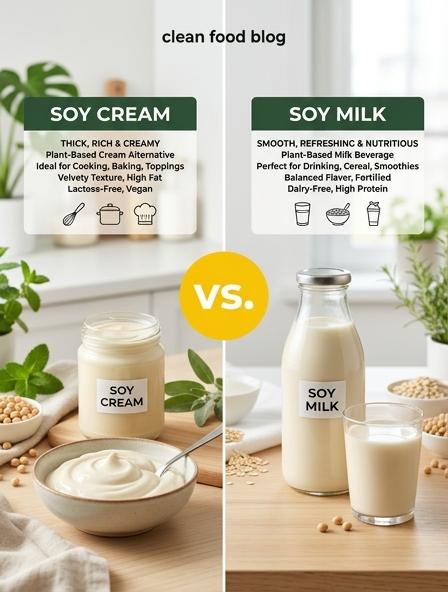
Fat Content Comparison in Soy Cream and Soy Milk
The primary distinction between soy cream and soy milk lies in their lipid concentration and culinary functionality. Soy cream is specifically formulated to mimic heavy dairy cream, resulting in a significantly higher fat content. While soy milk is a liquid beverage designed for general consumption, soy cream is a concentrated emulsion. Understanding these levels is essential for nutritional tracking and achieving the desired mouthfeel in plant-based cooking.
- Soy Cream: Typically contains 12% to 20% fat, providing the viscosity needed for thickening sauces and desserts.
- Soy Milk: Usually contains between 1.5% and 3% fat, offering a lighter consistency comparable to dairy milk.
Because of these differences, soy cream provides a much denser caloric profile and a richer, more velvety texture than its milk counterpart. You might reach for a splash of soy cream to add a luxurious finish to a savory pumpkin soup, whereas soy milk remains the preferred choice for soaking your morning oats.
Cooking Performance and Heat Stability in Savory Dishes
When substituting dairy in savory recipes, the primary distinction lies in fat concentration and emulsification. Soy cream contains a significantly higher fat-to-water ratio than soy milk, granting it superior heat stability. While soy milk is prone to curdling or "breaking" when exposed to high temperatures or acidic ingredients like lemon juice and white wine, soy cream remains structurally intact.
- Soy Cream: Resists separation in high-heat reductions and thickens sauces naturally.
- Soy Milk: Best for light adjustments and adding volume to lower-fat dishes.
Because soy cream mimics the mouthfeel of heavy dairy, it provides a richer, glossier texture in pan sauces and stews. You will appreciate how a splash of soy cream transforms a bubbling pot of tomato basil soup into a rich, orange bisque without any unappealing curdling.
Texture and Consistency Variations in Creamy Bases
The primary distinction between soy cream and soy milk lies in their viscosity and fat concentration. Soy milk is engineered for a fluid, drinkable consistency, making it thin and easily pourable. In contrast, soy cream undergoes a concentration process or includes natural thickeners to achieve a significantly higher density and richness.
- Soy Milk: Light, aqueous, and mimics the mouthfeel of 2% dairy milk.
- Soy Cream: Thick, velvet-like, and designed to maintain its structure under high heat.
These textural differences dictate their culinary roles; while soy milk is the standard choice for a morning bowl of cereal, home cooks love using soy cream to thicken a savory stroganoff sauce for that signature silky finish.
Nutritional Profiles and Caloric Density for Daily Meals
The primary distinction between soy cream and soy milk lies in their water-to-fat ratio and caloric density. Soy milk is formulated as a high-moisture beverage, typically containing between 30 and 50 calories per 100ml, making it a lean source of plant-based protein for daily hydration. In contrast, soy cream is a concentrated emulsion with a significantly higher lipid content, often exceeding 150 calories per 100ml to provide a viscous, heavy texture suitable for culinary applications.
- Soy Milk: Low in fat, high in calcium fortification, and ideal for balancing daily macronutrients.
- Soy Cream: High in healthy fats and thickening agents, offering a rich mouthfeel for gourmet recipes.
Selecting the right option depends on whether you prioritize fluid volume or textural richness in your diet. You might stir soy milk into your morning coffee for a light splash of color, but choose a dollop of soy cream when you want to transform a simple tomato soup into a velvety, indulgent bisque.
Whipping Results for Homemade Plant Based Desserts
Achieving the perfect peak in plant-based desserts depends heavily on the fat-to-water ratio. Soy cream is specifically formulated with a higher fat content, making it the ideal candidate for aeration and structure. Unlike standard soy milk, which is too thin to trap air effectively, soy cream maintains its integrity when beaten.
| Characteristic | Soy Cream | Soy Milk |
|---|---|---|
| Texture | Thick and stable | Thin and frothy |
| Best Use | Mousses and toppings | Custards and batters |
While soy milk can be frothed for lattes, it lacks the viscosity required for stiff dessert peaks. For professional results, always chill your equipment and the soy cream before whipping to maximize volume. Home bakers love folding freshly whipped soy cream into a rich chocolate mousse to achieve a velvety, cloud-like consistency that holds its shape beautifully until served.
Thickening Power in Traditional Soup and Sauce Recipes
When substituting dairy in savory cooking, the fat-to-water ratio determines the final texture. Soy cream is specifically formulated for high viscosity, offering a concentrated consistency that mimics heavy dairy cream. This makes it ideal for emulsifying sauces and providing a velvety mouthfeel. In contrast, soy milk is significantly thinner and may require additional thickening agents, such as a roux or cornstarch slurry, to prevent the dish from becoming watery.
| Property | Soy Cream | Soy Milk |
|---|---|---|
| Texture | Rich and dense | Light and fluid |
| Heat Stability | High (resists breaking) | Moderate (can curdle) |
You will love the way soy cream seamlessly binds a vegan peppercorn sauce, creating that signature glossy coating for a premium plant-based steak experience.
Flavor Influence and Taste Profiles in Family Cooking
Understanding the flavor nuances between soy cream and soy milk is essential for balancing home-cooked meals. Soy milk typically offers a lighter, fluid consistency with a mild, nutty, and sometimes noticeably "beany" profile. Conversely, soy cream is processed to be much thicker and richer, providing a neutral yet velvety mouthfeel that closely replicates dairy cream.
- Soy Milk: Subtle sweetness; ideal for thinning batters or light cereal bowls.
- Soy Cream: Dense and savory; excellent for masking vegetal notes in complex dishes.
The higher fat content in soy cream makes it superior for emulsifying sauces and enriching soups without the watery dilution associated with milk. Busy parents often prefer whisking soy cream into a Sunday morning mushroom gravy to achieve a luxurious, restaurant-quality texture that satisfies the whole family's palate.
Storage Practicality and Shelf Life for Home Pantries
Choosing between soy cream and soy milk often depends on your available storage space and usage frequency. Both products typically utilize UHT (Ultra-High Temperature) processing for a long shelf life in the pantry, but their footprints and post-opening longevity vary.
| Product Type | Unopened (Pantry) | Opened (Fridge) |
|---|---|---|
| Soy Milk | 6–12 Months | 7–10 Days |
| Soy Cream | 4–8 Months | 5–7 Days |
While soy milk is a high-volume staple that occupies significant fridge real estate, soy cream is highly concentrated and usually sold in smaller, space-saving cartons. This makes the cream an excellent backup for rich culinary needs without cluttering your shelves. You might prefer keeping a compact carton of soy cream tucked in the fridge door for a spontaneous creamy carbonara, while leaving the main shelf free for your bulk containers of daily soy milk.
Reaction to High Temperatures in Culinary Applications
The culinary performance of soy-based products under heat depends largely on their fat-to-protein ratios. Soy cream is specifically formulated for thermal stability; its higher fat content and added emulsifiers prevent it from curdling or "splitting" when reaching boiling points. This makes it a robust substitute for dairy heavy cream in reductions and hot sauces. In contrast, soy milk is more heat-sensitive due to its higher water content, often separating into unattractive clumps when exposed to intense heat or acidic ingredients.
- Soy Cream: Remains emulsified and thickens gracefully during boiling.
- Soy Milk: Prone to protein denaturation; best used for low-heat tempering.
Home cooks love whisking soy cream into a simmering wild mushroom stroganoff to achieve a rich, glossy finish that stays perfectly smooth even under a heavy boil.
Protein Levels and Dietary Benefits for Household Nutrition
Soy-based alternatives are essential for high-protein, lactose-free household nutrition. While both originate from the soybean, their processing determines their dietary impact. Soy milk acts as a primary source of complete plant protein and is often fortified with calcium, making it a direct dairy substitute for daily consumption. Conversely, soy cream is a concentrated emulsion, offering a higher fat-to-protein ratio designed for texture and richness.
- Soy Milk: High volume-to-protein ratio, ideal for bone health and daily hydration.
- Soy Cream: Nutrient-dense with a focus on healthy fats, perfect for calorie-conscious culinary enrichment.
Choosing between them depends on the meal; busy parents often prefer pouring fortified soy milk over morning granola for a quick protein boost, while home chefs reach for soy cream to create a velvety, vegan mushroom pasta that the whole family will love.
Soy Cream vs Soy Milk source and external links