
Slivered Almonds vs Roasted Almonds: Are They The Same? Texture, Flavor, and Nutrition
Textural Impact on Homemade Baked Goods
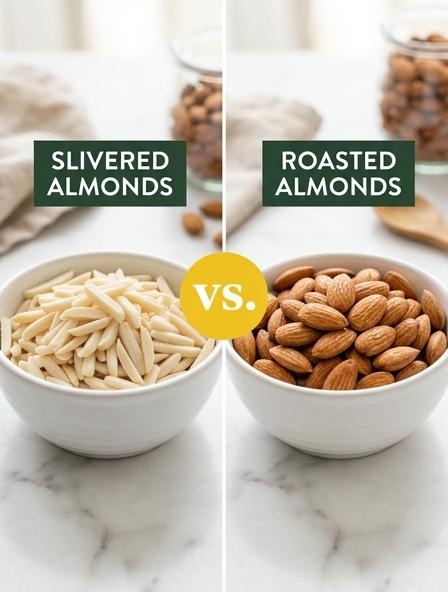
The choice between slivered and roasted almonds dictates the final mouthfeel of your bakes. Slivered almonds, typically blanched and sliced into thin matchsticks, provide a delicate, brittle snap that integrates smoothly into soft textures like sponge cakes or muffins. Conversely, roasted almonds offer a dense, aggressive crunch and a more resilient structure that survives high oven temperatures without losing its integrity.
- Slivered Almonds: Offer a tender, shatter-like crispness that blends into batters.
- Roasted Almonds: Provide a firm, toothsome bite with a deep, aromatic resonance.
Home bakers love sprinkling slivered almonds over a delicate pear tart for a refined finish, whereas those crafting thick, chewy biscotti prefer the bold, satisfying resistance of whole roasted almonds.
Flavor Profile Changes After Heat Application
The culinary distinction between slivered and roasted almonds lies in their chemical response to heat. Raw slivered almonds, typically blanched to remove their skins, provide a mild, milky, and subtly sweet foundation. In contrast, roasting introduces high temperatures that trigger the Maillard reaction, a process that creates new flavor compounds and browns the nut.
Key sensory differences include:
- Raw Slivered: Clean, floral, and tender texture.
- Roasted: Savory, toasted, and intensely aromatic.
While slivered almonds are prized for their delicate crunch in desserts, roasting deepens the essential oils, resulting in a robust nuttiness that stands up to bold spices. This thermal transformation ensures the almonds move from a background ingredient to a primary flavor centerpiece. You might enjoy sprinkling freshly toasted slivers over a lemon-parsley trout to experience how the heat amplifies the almond's natural buttery notes and creates a savory, golden crunch.
Nutritional Value and Vitamin Retention
Choosing between slivered and roasted almonds involves a trade-off between convenience and nutrient stability. Slivered almonds are generally blanched, meaning the antioxidant-rich skin is removed, yet they retain high levels of heat-sensitive Vitamin E and healthy monounsaturated fats. In contrast, the roasting process enhances flavor and crunch but can lead to a slight degradation of B-complex vitamins and the potential oxidation of delicate oils if exposed to high temperatures for too long.
| Nutrient Factor | Slivered (Raw) | Roasted |
|---|---|---|
| Vitamin E | Fully Preserved | Slightly Diminished |
| Healthy Fats | Stable | Risk of Oxidation |
You might sprinkle slivered almonds over a cold summer salad to maximize your intake of raw vitamins, while opting for the smoky depth of roasted almonds when you need a satisfying, high-energy snack for a long afternoon at the office.
Visual Contrast in Salad and Entree Presentation
The choice between slivered and roasted almonds fundamentally changes the aesthetic profile of a dish. Slivered almonds are blanched and skinless, offering a bright, creamy white hue and uniform matchstick shape. This provides a sharp, clean contrast against dark leafy greens or vibrant berry salads. In contrast, roasted almonds-whether whole or sliced-bring deep golden-brown tones and rustic textures to the plate, often retaining their skins for an earthy appearance.
- Slivered Almonds: Best for high-contrast, elegant, and modern plating.
- Roasted Almonds: Ideal for warm, artisanal, or hearty autumnal presentations.
You might find that scattering snowy slivered almonds over a dark balsamic beet salad creates a striking professional finish that makes the colors pop for your guests.
Oil Migration and Moisture Interaction in Doughs
The physical state of an almond dictates how it interacts with dough chemistry. Roasted almonds have undergone thermal processing, which breaks down cellular structures and increases oil mobility. This leads to higher oil migration into the surrounding matrix, potentially softening the crumb or creating a more fragile biscuit texture. In contrast, slivered almonds, which are typically blanched and raw, possess higher moisture content and more stable fat cells.
- Roasted: Low moisture, high oil release, promotes a crispier, oilier interface.
- Slivered: Higher moisture, minimal oil leakage, integrates seamlessly without altering fat ratios.
Because roasted almonds can "leak" fats into the dough during baking, they are the secret to achieving a deeply aromatic, buttery crunch in traditional cantuccini, whereas bakers prefer slivered almonds in delicate tea cakes to maintain a moist, uniform crumb without greasy pockets.
Browning Characteristics in Pan Cooking
The physical structure of almonds dictates how they react to dry heat in a skillet. Slivered almonds, characterized by their thin shape and lack of skin, offer a high surface-area-to-mass ratio. This results in rapid heat absorption and a uniform golden-brown finish. Because they are typically raw, they undergo a complete Maillard reaction during the cooking process, developing a sweet, toasted aroma.
In contrast, roasted almonds have already been thermally processed. Re-pan-searing them is less about initial browning and more about refreshing the volatile oils. Since they have lower moisture content, they can transition from fragrant to burnt very quickly.
- Slivered: Fast, even browning; ideal for controlled visual garnishes.
- Roasted: Higher risk of bitterness; best for a quick "warm-through" only.
You can achieve that perfect bistro-style finish by flash-toasting slivered almonds in a dry pan to add a delicate, golden crunch to a fresh summer salad.
Firmness Retention in Sauces and Moist Dishes
When comparing slivered almonds to roasted almonds in high-moisture environments, their structural integrity differs based on their processing. Slivered almonds are typically blanched and skinless; their increased surface area and lack of a fibrous coat mean they absorb liquids rapidly. This results in a softer, "creamy" bite that blends into the dish.
Roasted almonds, however, have undergone a heat-treatment that reduces internal moisture and reinforces the nut's cellular walls. This makes them more hydrophobic and resilient against wilting when folded into heavy sauces or steamed sides.
- Slivered: Absorbs moisture quickly for a tender, integrated texture.
- Roasted: Maintains a distinct "snap" even after prolonged contact with heat.
You might prefer folding toasted slivered almonds into a creamy chicken korma to achieve a delicate, buttery crunch that complements the silkiness of the sauce without being distracting.
Caloric Density and Satiety Factors
When comparing slivered and roasted almonds, the caloric density remains remarkably consistent, averaging about 160 calories per ounce. However, the physical structure of these preparations significantly influences satiety. Roasted almonds undergo a dry-heat process that creates a brittle, crunchy texture, which requires more mastication. This increased chewing time can trigger fullness signals to the brain more effectively than the softer texture of blanched slivers.
- Slivered Almonds: Typically blanched and skinless, providing a lighter mouthfeel but less resistance during consumption.
- Roasted Almonds: The roasting process breaks down cell walls, slightly increasing the bioaccessibility of fats while enhancing the savory "crunch" factor.
- Volume Perception: Slivered almonds occupy more visual space per gram, which can lead to better portion control.
Fitness enthusiasts often prefer grabbing a handful of whole roasted almonds as a pre-workout snack to enjoy a satisfying, crunchy bite that keeps hunger at bay during intense training sessions.
Long Term Freshness and Pantry Storage Stability
When evaluating the shelf life of slivered versus roasted almonds, oxidation and surface area play critical roles. Slivered almonds are typically blanched and sliced, which exposes a larger surface area to oxygen, potentially speeding up the degradation of natural oils. In contrast, while the roasting process enhances flavor, it also alters the chemical structure of the almond's fats, making them more susceptible to rancidity over time compared to raw versions.
| Almond Type | Pantry Stability | Main Spoilage Factor |
|---|---|---|
| Slivered | 4–6 Months | Oxygen exposure |
| Roasted | 3–5 Months | Heat-induced oxidation |
To extend freshness, both varieties should be kept in airtight containers in a cool, dark place. You might prefer keeping a vacuum-sealed bag of slivered almonds in the freezer for your monthly baking projects to maintain that delicate, nutty sweetness without any hint of bitterness.
Cooking Performance in High Temperature Environments
The behavior of almonds under high heat depends largely on their surface area and moisture content. Slivered almonds, being thin and typically raw, are engineered for rapid browning. Their high surface-to-volume ratio ensures they achieve a crisp texture simultaneously with the dish they accompany. In contrast, roasted almonds have already undergone thermal processing; reapplying high heat can cause the oils to smoke and the nut to quickly turn bitter or over-carbonized.
- Slivered Almonds: Ideal for crusting and baking where flavor develops during the heat cycle.
- Roasted Almonds: Best utilized as a finishing element to maintain structural integrity and pre-established flavor.
You will love how raw slivered almonds transform into a golden, buttery topping when scattered over a green bean casserole during the final ten minutes of baking.
Slivered Almonds vs Roasted Almonds source and external links
- Slivered almonds are skinless almonds that have been sliced into thin, needle-like pieces to provide a delicate crunch to salads and baked goods.
- Roasted almonds are heated until they achieve a crisp texture and an intensified nutty flavor, making them a popular and nutritious snack.