
Sherry Vinegar vs Cider Vinegar : Are They The Same? Flavor Profile, Acidity Levels, and Health Benefits
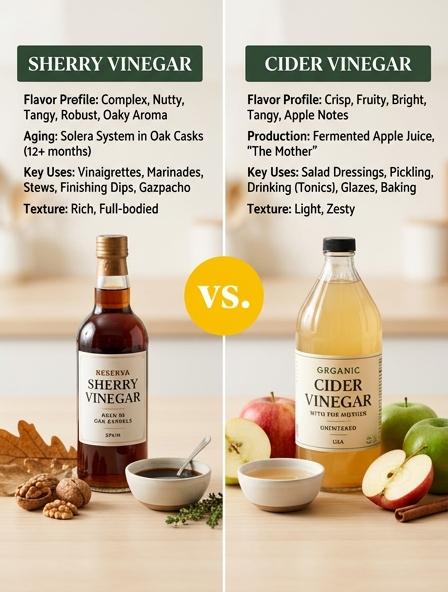
Sherry Vinegar and Cider Vinegar Flavor Profile Comparison
While both are essential pantry staples, their flavor profiles originate from vastly different sources. Sherry vinegar, aged in oak barrels using the Solera system, offers a complex, nutty depth with notes of dried fruit and caramel. It provides a sophisticated acidity that is more mellow than wine vinegar but punchier than balsamic.
In contrast, cider vinegar is prized for its bright, fruity essence and sharp, clean finish. Derived from fermented apple juice, it carries a distinct orchard-fresh aroma and a tangy bite that cuts through heavy fats.
| Feature | Sherry Vinegar | Cider Vinegar |
|---|---|---|
| Primary Note | Nutty & Toasted | Fruity & Crisp |
| Acidity Style | Rich & Balanced | Sharp & Tangy |
You might prefer the toasted complexity of sherry vinegar for a gourmet warm lentil salad, whereas cider vinegar is the go-to choice for a vibrant, zesty apple slaw.
Nutritional Profiles and Health Impact in Daily Cooking
Choosing between sherry vinegar and cider vinegar involves balancing flavor with specific wellness goals. Cider vinegar is famous for "the mother," a culture of beneficial bacteria and enzymes that supports digestive health and metabolic function. Sherry vinegar, while lacking the raw probiotics of unfiltered cider versions, contains significant acetic acid and polyphenols derived from its long oak-aging process, which can aid in blood sugar regulation and heart health.
- Cider Vinegar: Rich in malic acid and potassium; often used for weight management and glycemic control.
- Sherry Vinegar: High antioxidant content; provides a complex, lower-sodium way to enhance food flavor profiles.
Integrating these into daily meals allows for a calorie-free flavor boost that reduces the need for excessive salt or fats. You might reach for the bright tang of cider vinegar in a morning wellness tonic, whereas you'll prefer the complex, nutty depth of sherry vinegar when crafting a heart-healthy glaze for roasted Mediterranean vegetables.
Acidity Levels and Performance in High Heat Recipes
The primary distinction between sherry and cider vinegar lies in their chemical concentration and heat stability. Sherry vinegar is naturally more robust, typically featuring an acidity level of 7% to 8%. In contrast, apple cider vinegar is generally standardized to 5% acidity, giving it a softer profile that can sometimes lose its impact in high-heat environments.
- Sherry Vinegar: The traditional solera-aging process creates complex compounds that resist breaking down, allowing the vinegar to maintain its sharp, nutty bite even during intense pan-reductions.
- Cider Vinegar: Its bright, fruity esters are more volatile; prolonged boiling or high-flame searing can cause its signature apple notes to dissipate prematurely.
Imagine deglazing a hot cast-iron skillet after searing a ribeye; chefs prefer sherry vinegar because it won't simply evaporate into steam but will instead transform into a thick, savory glaze that cuts through the rich fat of the meat.
Color Changes and Visual Impact on Finished Dishes
The choice between sherry and cider vinegar significantly alters the aesthetic presentation of a meal. Sherry vinegar, aged in oak barrels, presents a deep mahogany or amber color that can darken lighter ingredients. Conversely, cider vinegar offers a pale, translucent gold hue that preserves the natural vibrancy of your base components.
- Sherry Vinegar: Best for deep-toned gastriques, red meat marinades, and heavy sauces.
- Cider Vinegar: Ideal for white-fleshed fish, light vinaigrettes, and fruit-based salads.
While sherry vinegar adds sophisticated depth, it may "stain" a bright cauliflower mash or a delicate pale slaw, making the dish appear muddy. Professional chefs often reach for cider vinegar when pickling red onions to ensure the vegetable retains a brilliant, glowing pink rather than a muted brown tone.
Marinade Properties and Meat Tenderizing Performance
Both sherry and cider vinegars act as powerful denaturants in marinades, but their chemical compositions yield different textural results. Sherry vinegar typically possesses a higher acetic acid concentration (around 7-8%) compared to apple cider vinegar (usually 5%). This higher acidity allows sherry vinegar to penetrate dense muscle fibers more aggressively, making it superior for breaking down tough connective tissues in shorter timeframes.
- Sherry Vinegar: Provides a complex, nutty depth and rapid tenderization for hearty proteins like beef or game.
- Cider Vinegar: Delivers a milder, malic acid-driven breakdown that preserves the integrity of delicate white meats.
While cider vinegar is the go-to for achieving a gentle, fruity tang in a classic overnight chicken brine, professional chefs often reach for the robust power of sherry vinegar when they need to transform a stubborn flank steak into a melt-in-your-mouth Mediterranean masterpiece.
Aging and Fermentation Effects on Culinary Depth
The culinary distinction between Sherry and Cider vinegar originates in their unique maturation processes. Sherry vinegar undergoes the Solera aging system in oak barrels, where years of controlled oxidation develop deep, nutty undertones and complex tannins. Conversely, Cider vinegar relies on the double fermentation of apple juice, focusing on raw, fruity acidity and often retaining "the mother" for enzymatic richness.
- Sherry Vinegar: Wood-aged and oxidative, offering a savory, umami-rich profile with mellowed acidity.
- Cider Vinegar: Fruit-derived and vibrant, providing a crisp, sharp, and refreshing zest to dishes.
While the wood-aged complexity of Sherry vinegar is the secret to a perfectly balanced, smoky Romesco sauce, many people like using the bright, rustic punch of cider vinegar to cut through the creaminess of a classic summer coleslaw.
Storage Longevity and Pantry Stability for Home Cooks
Both sherry and cider vinegars are exceptionally shelf-stable staples due to their high acetic acid content, which acts as a natural preservative. When kept in a cool, dark environment away from direct sunlight, an unopened bottle can last indefinitely, while opened bottles typically maintain peak quality for approximately two years.
- Sherry Vinegar: Highly resilient due to its traditional oak-aging process; it maintains its complex, nutty profile without significant degradation.
- Cider Vinegar: While stable, raw versions containing "the mother" may continue to develop cloudiness or sediment over time, which is harmless but changes the appearance.
To ensure maximum flavor retention, always keep the cap tightly sealed to prevent oxidation and evaporation. Home cooks love the reliability of reaching for a bottle of aged sherry vinegar to instantly brighten a rich lentil soup or deglaze a pan, confident that its sharp, sophisticated acidity remains perfectly intact even months after the first pour.
Heart Healthy Flavor Enhancement and Sodium Comparison
Choosing between sherry and cider vinegar is an excellent strategy for cardiovascular wellness. Both options are naturally low in sodium, typically containing less than 2mg to 5mg per tablespoon, making them ideal substitutes for table salt. Their high acidity acts as a flavor enhancer, stimulating the same taste receptors as sodium to brighten a dish without the risk of increasing blood pressure.
- Sherry Vinegar: Offers a complex, nutty depth that mimics the savory "umami" profile often sought in salted meats.
- Apple Cider Vinegar: Provides a crisp, fruity zing that elevates the freshness of raw vegetables.
While apple cider vinegar is widely praised for its probiotic potential, sherry vinegar's wood-aged profile provides a more robust mouthfeel for those reducing salt in heavy stews. Many home chefs love deglazing a pan with a splash of aged sherry vinegar to create a rich, heart-healthy reduction for roasted chicken that feels indulgent without the extra sodium.
Emulsification Differences in Dressings and Vinaigrettes
When crafting a stable emulsion, the choice between sherry vinegar and cider vinegar significantly impacts the texture and longevity of your dressing. Sherry vinegar typically boasts a higher acidity level-often reaching 7% to 8%-which facilitates a sharper chemical reaction when whisked with oils. This higher concentration of acetic acid, combined with complex dissolved solids from the wood-aging process, helps create a more robust and enduring bond than its fruit-based counterpart.
- Sherry Vinegar: Its nutty profile and high acidity anchor heavy fats like walnut or extra virgin olive oil, leading to a thick, creamy consistency.
- Cider Vinegar: With a milder 5% acidity, it produces a lighter, more fluid emulsion that is better suited for delicate salads.
While cider vinegar is prized for its bright, fruity notes, sherry vinegar's structural intensity ensures the vinaigrette remains cohesive for longer periods. You will prefer using sherry vinegar for a sophisticated shallot vinaigrette when you want a rich, velvet-like coating that clings perfectly to bitter greens without separating on the plate.
Regional Origins and Traditional Culinary Use Cases
Sherry vinegar hails from Spain's "Sherry Triangle" in Andalusia, where it is aged in traditional oak barrels via the Solera system to develop a complex, nutty depth. In contrast, apple cider vinegar originates from prominent apple-growing regions like Normandy and North America, prized for its bright, fruity profile and sharp acidity.
- Sherry Vinegar: Essential for authentic gazpacho, roasted Mediterranean vegetables, and deglazing rich meats.
- Cider Vinegar: Preferred for tangy coleslaws, pickling, and balancing heavy pork dishes or fruit-based sauces.
While both provide necessary acidity, their distinct cultural footprints dictate their specific roles in the kitchen. You might reach for the sophisticated, woody notes of Sherry vinegar to elevate a gourmet reduction, while choosing the crisp, orchard-fresh tang of cider vinegar for a refreshing summer vinaigrette that guests always rave about.
Sherry Vinegar vs Cider Vinegar source and external links
- Sherry vinegar is a gourmet wine vinegar from Spain that is aged in oak barrels to produce a complex, nutty flavor profile.
- Commonly used in dressings and marinades, cider vinegar is made from fermented apple juice and is prized for its tangy acidity.