
Sharp Cheddar vs Medium Cheddar : Comparing Flavor Intensity, Culinary Performance, and Nutritional Profile Differences
Aging Duration and Flavor Profile Intensity
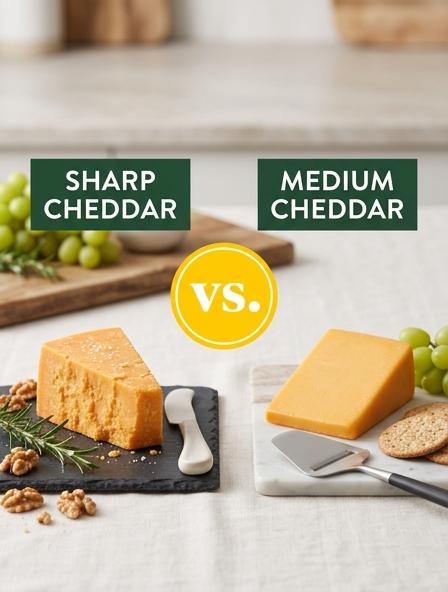
The primary distinction between medium and sharp cheddar lies in the maturation process. As cheddar ages, its moisture content decreases while enzymes break down proteins and fats, intensifying the flavor profile and altering the texture.
| Cheddar Type | Aging Period | Flavor & Texture |
|---|---|---|
| Medium | 3 to 6 Months | Creamy, buttery, and mellow. |
| Sharp | 9 to 12+ Months | Tangy, complex, and crumbly. |
Medium cheddar retains more moisture, making it exceptionally smooth and ideal for consistent melting. In contrast, sharp cheddar develops a signature "bite" and acidic notes that can stand up to strong ingredients. Longer aging durations, often exceeding 18 months, result in "extra sharp" varieties with distinct salt-like lactate crystals.
You might choose a medium cheddar for a perfectly gooey stovetop mac and cheese, whereas you would likely prefer a sharp aged cheddar to provide a bold, sophisticated punch on a festive charcuterie board.
Melting Performance in Stovetop and Oven Dishes
The primary difference in melting performance between sharp and medium cheddar stems from moisture content and aging. Medium cheddar, aged for a shorter period, retains higher moisture levels, making it the ideal candidate for a smooth, velvety melt. Conversely, sharp cheddar undergoes a longer aging process, causing proteins to break down and moisture to evaporate, which can lead to a grainier or oilier texture when heated.
- Medium Cheddar: Offers superior elasticity and consistency for stovetop cheese sauces and dips.
- Sharp Cheddar: Provides intense flavor but is prone to separation under high oven temperatures.
To achieve the perfect balance of texture and taste, many home cooks prefer whisking medium cheddar into a stovetop macaroni sauce for a creamy base, while reserving a handful of sharp cheddar to create a flavorful, browned crust in the oven.
Texture Variations in Baked Applications
The aging process significantly dictates how cheddar behaves under high heat. Sharp cheddar, aged for nine months or more, has a lower moisture content and a more brittle protein structure. In the oven, it tends to break down into oilier, concentrated flavor pockets rather than a uniform layer. Medium cheddar, typically aged for three to six months, retains more moisture, which facilitates a smoother, more elastic melt.
- Sharp Cheddar: Provides a drier, crumbly texture and a sharper "bite" in scones or savory pie crusts.
- Medium Cheddar: Offers superior stretch and a creamy consistency for surface browning.
Home cooks often choose medium cheddar when preparing a classic macaroni and cheese to ensure a silky, emulsified sauce that coats every noodle without separating.
Nutritional Profiles and Sodium Level Differences
The nutritional variations between medium and sharp cheddar are primarily influenced by aging duration. As cheddar matures from medium to sharp, it undergoes moisture loss, which slightly concentrates its caloric and fat density. Although both types offer excellent sources of calcium and protein, the sodium content can vary slightly due to the salt used to control the aging process over time.
| Nutrient (per oz) | Medium Cheddar | Sharp Cheddar |
|---|---|---|
| Sodium | ~175 mg | ~185 mg |
| Protein | ~7 g | ~7 g |
| Moisture | Higher | Lower |
While the difference in sodium is often marginal, the intensified flavor of sharp cheddar means you might consume less to feel satisfied. Culinary enthusiasts often reach for the sharp variety when crafting a gourmet charcuterie board where a little bit of high-impact flavor goes a long way.
Structural Integrity During Grating and Slicing
The physical performance of cheddar depends largely on its aging process, which dictates moisture levels and protein stability. Medium cheddar, typically aged three to six months, retains a higher moisture content and a pliable protein matrix. This elasticity allows it to be sliced thinly or grated into long, continuous strands without breaking or splintering.
- Medium Cheddar: High moisture and elastic; ideal for clean, flexible slices.
- Sharp Cheddar: Low moisture and brittle; prone to crumbling or "sharding" when cut.
Conversely, sharp cheddar undergoes a longer maturation that breaks down protein bonds, resulting in a drier, more crystalline texture. While this creates a complex flavor profile, it makes the cheese prone to fracturing under the pressure of a knife or grater. When processing sharp varieties, expect smaller, irregular pieces rather than uniform ribbons.
You may prefer medium cheddar when prepping a deli-style sandwich platter where aesthetic, unbroken slices are the top priority.
Moisture Content and Sauce Consistency Impact
The fundamental difference between sharp and medium cheddar is the aging duration, which directly influences moisture levels and culinary performance. Medium cheddar is aged for a shorter period, preserving a higher moisture content that allows it to melt into a silky, uniform consistency. Conversely, sharp cheddar undergoes extensive aging, causing it to lose water and develop a more crumbly structure. When heated into a sauce, the lower moisture and broken-down proteins in sharp cheddar can lead to oil separation or a slightly gritty texture compared to its younger counterpart.
- Medium Cheddar: High moisture, excellent meltability, creates a creamy mouthfeel.
- Sharp Cheddar: Low moisture, complex tang, prone to graininess when melted.
You might choose medium cheddar for a flawlessly smooth nacho cheese sauce, while opting for aged sharp cheddar to provide a robust flavor kick on top of a hot bowl of chili.
Aroma Development During High Heat Cooking
When subjected to high heat, the aromatic profiles of sharp and medium cheddar diverge significantly due to their chemical maturity. Sharp cheddar, having aged longer, contains a higher concentration of volatile organic compounds, such as carboxylic acids and sulfur-containing molecules. Heat accelerates the volatilization of these compounds, creating a pungent, nutty, and complex fragrance that can dominate a kitchen. Medium cheddar, with its shorter aging cycle and higher moisture content, releases a more restrained, buttery, and lactic scent that provides a gentle olfactory backdrop rather than a focal point.
- Sharp Cheddar: Releases bold, tangy, and savory aromatic notes under intense heat.
- Medium Cheddar: Produces a mild, creamy, and subtle aroma that blends well with other ingredients.
You might prefer the aggressive, room-filling scent of sharp cheddar when broiling a gourmet tuna melt to ensure the cheese's character remains distinct against the savory notes of the fish.
Shelf Life and Storage Stability in Home Refrigerators
When comparing sharp cheddar and medium cheddar, the aging process significantly influences storage stability. Sharp cheddar is aged longer, which reduces its moisture content and increases acidity. These characteristics act as natural barriers to spoilage, often allowing sharp varieties to outlast medium cheddar in a residential refrigerator.
- Medium Cheddar: Higher moisture content; typically maintains quality for 2 to 4 weeks after opening.
- Sharp Cheddar: Lower moisture and firmer texture; often stays fresh for 4 to 6 weeks when properly sealed.
For optimal preservation, both should be stored at temperatures below 40°F and wrapped tightly to prevent air exposure. Home cooks often reach for a block of extra sharp cheddar when meal prepping for the month, knowing its low moisture levels provide the reliable longevity needed for consistent snacking and topping throughout the weeks.
Caloric Density and Fat Distribution for Healthy Meals
When comparing sharp and medium cheddar, the caloric density remains remarkably similar, typically averaging 110 to 115 calories per ounce. Since the primary difference lies in the aging process rather than the base ingredients, both varieties contain approximately 9 grams of fat per serving. However, for those focused on healthy meal preparation, the "flavor-to-calorie ratio" is the key differentiator.
- Medium Cheddar: Short aging period, smooth texture, and mild creamy notes.
- Sharp Cheddar: Aged longer for a complex, acidic, and pungent profile.
While fat distribution is consistent across both types, sharp cheddar's concentrated flavor allows for better portion control. By choosing a more aged variety, you can use a smaller quantity to achieve a robust savory depth without inflating the total fat content of your dish. Home cooks often prefer grating a small amount of extra-sharp cheddar over a lean turkey chili to enjoy a rich, cheesy experience while keeping daily macros in check.
Palate Sensation and Aftertaste in Family Recipes
The culinary impact of cheddar depends heavily on its maturation period. Sharp cheddar, aged for nine months or more, develops a complex, acidic profile that creates a distinct tingle on the sides of the palate. Conversely, medium cheddar, typically aged for three to six months, maintains a higher moisture content, offering a creamy, buttery sensation with a mild finish that complements rather than dominates other ingredients.
| Characteristic | Medium Cheddar | Sharp Cheddar |
|---|---|---|
| Palate Feel | Smooth and Mellow | Tangy and Bold |
| Aftertaste | Quick, Clean Finish | Lingering, Sharp Bite |
Home cooks often reach for a well-aged sharp cheddar to provide a bold, memorable kick to a holiday macaroni and cheese, ensuring every bite leaves a rich, savory impression.
Sharp Cheddar vs Medium Cheddar source and external links
- Known for its bold and pungent flavor profile, Sharp Cheddar is typically aged for nine months to a year to develop its signature bite.
- Offering a balanced and smooth texture, Medium Cheddar is usually aged for about three to six months to achieve a mellow yet distinct taste.