
Sea Salt vs Regular Salt: Comparing Mineral Composition, Culinary Texture, and Processing Differences
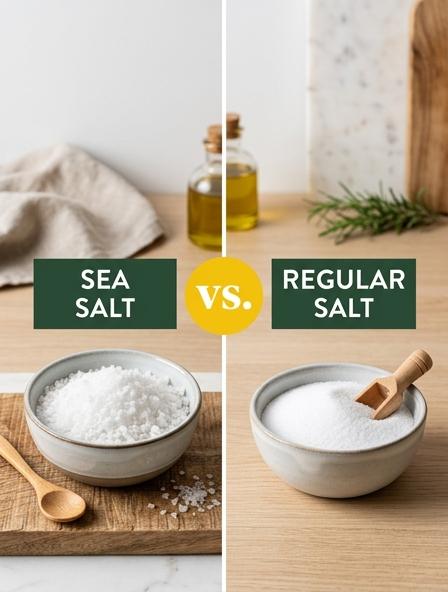
Nutritional Differences and Mineral Composition
While often marketed as a healthier alternative, sea salt and regular table salt are nutritionally similar in their core component: sodium chloride. Both contain approximately 40% sodium by weight. The primary distinction lies in their processing and the resulting trace mineral profiles. Sea salt is produced through the evaporation of ocean water, leaving behind small amounts of minerals like magnesium, potassium, and calcium. In contrast, table salt is mined from underground deposits and heavily refined to remove impurities and minerals.
| Feature | Sea Salt | Regular Table Salt |
|---|---|---|
| Processing | Minimal evaporation | Highly refined and kiln-dried |
| Trace Minerals | Magnesium, Potassium, Calcium | Mostly stripped away |
| Additives | Rarely used | Anti-caking agents and iodine |
Health-conscious foodies often choose coarse sea salt for finishing roasted vegetables to enjoy its earthy mineral notes, while those living in iodine-deficient regions rely on standard table salt for essential daily nutrition.
Granule Size and Mouthfeel in Finished Dishes
The physical structure of salt significantly impacts the sensory experience of a meal. While regular table salt features fine, uniform grains designed to dissolve rapidly, sea salt is harvested to preserve its larger, often irregular crystal shapes. These structural differences influence how flavor is perceived on the palate.
- Table Salt: Small, dense granules provide consistent, even salinity throughout a dish.
- Sea Salt: Larger flakes or coarse crystals offer concentrated "bursts" of flavor and a distinct tactile crunch.
This variation dictates the "mouthfeel"-the physical sensation of food in the mouth. Because large sea salt crystals take longer to dissolve than fine table salt, they create a rhythmic contrast against softer textures, enhancing the complexity of the dish rather than simply making it salty.
Food enthusiasts love finishing a dark chocolate ganache with a sprinkle of flaky sea salt to provide a delightful crunch that cuts through the intense sweetness.
Production Origin and Environmental Sustainability
The primary distinction between sea salt and regular salt lies in their extraction methods and ecological footprints. Regular table salt is typically sourced from underground salt deposits through solution mining, an industrial process that requires significant energy to pump water and evaporate the resulting brine. Conversely, sea salt is obtained directly from the evaporation of seawater.
- Solar Evaporation: A natural method using sun and wind to harvest sea salt, often resulting in a lower carbon footprint.
- Deep-shaft Mining: A mechanical process used for table salt that can impact local geology and landscape integrity.
While table salt undergoes heavy refining to remove trace minerals, sea salt production often prioritizes minimal processing. Many eco-conscious home cooks prefer hand-harvested sea salt to support traditional, low-intervention practices while adding a clean, briny crunch to a finished plate of roasted seasonal vegetables.
Rate of Solubility in Cold and Hot Liquids
The solubility of sea salt versus regular salt is primarily driven by liquid temperature and crystal surface area. High temperatures increase kinetic energy, allowing water molecules to break down ionic bonds more rapidly. In cold liquids, this process slows significantly, often leaving larger crystals intact at the bottom of the container.
While both are chemically similar, their physical structures impact how they dissolve:
- Regular Table Salt: Fine, uniform grains provide a high surface-area-to-volume ratio, leading to near-instant dissolution in both hot and cold bases.
- Sea Salt: Coarser flakes or large crystals require more time and agitation, especially in chilled environments, to fully integrate.
In boiling pasta water, both types dissolve efficiently, but professional chefs typically reach for fine salt when whisking a cold champagne vinaigrette to ensure a smooth, grit-free emulsion that coats greens evenly.
Natural Savory Notes and Flavor Strength
Sea salt is prized for its complex flavor profile, derived from the trace minerals left behind during seawater evaporation. Unlike regular table salt, which is heavily processed and stripped of its natural character, sea salt contains elements like magnesium, calcium, and potassium that contribute subtle earthy or savory notes. The physical structure also plays a significant role in how we perceive strength:
- Sea Salt: Larger crystals create distinct "bursts" of salinity and a briny depth.
- Regular Salt: Fine grains provide a uniform, sharp, and aggressive saltiness that dissolves instantly.
Because sea salt is less refined, it maintains a complexity that enhances the natural umami in fresh ingredients. Imagine finishing a seared ribeye with a sprinkle of flaky sea salt to experience a crunchy texture and mineral depth that ordinary table salt simply cannot replicate.
Presence of Anti Caking Agents and Additives
A major distinction between sea salt and regular table salt lies in their processing and the inclusion of additives. Table salt is heavily refined to create a uniform, fine texture. To prevent clumping in humid environments, manufacturers typically add anti-caking agents like sodium aluminosilicate or magnesium carbonate. In contrast, sea salt is harvested through evaporation and undergoes minimal processing, often remaining free from synthetic chemicals.
- Table Salt: Frequently contains ferrocyanide and added iodine for thyroid health.
- Sea Salt: Generally contains no additives but retains natural trace minerals like magnesium and potassium.
Imagine a home cook sprinkling coarse sea salt over a fresh caprese salad to enjoy a clean, crunchy texture without the subtle chemical aftertaste often associated with standard table salt.
Grocery Budget Impact for Daily Preparation
When evaluating the financial impact of sea salt versus regular table salt on your grocery budget, the primary differences lie in processing and volume. Regular table salt is highly refined and mass-produced, making it the most cost-effective option for bulk kitchen tasks like boiling pasta water or seasoning large batches of soup. In contrast, sea salt involves more labor-intensive evaporation processes, often resulting in a significantly higher price point per ounce.
- Table Salt: Low cost, best for high-volume daily cooking and baking.
- Sea Salt: Premium pricing, ideal as a finishing touch to maximize flavor value.
By utilizing inexpensive table salt for foundational preparation and reserving high-quality sea salt for final presentation, you can maintain a gourmet culinary standard without inflating your monthly food expenses. You might reach for the budget-friendly table salt when salting a large pot of potato water, but sprinkle just a pinch of flaky sea salt over a fresh avocado toast to elevate your breakfast experience.
Refining Processes and Trace Nutrient Levels
The fundamental difference between sea salt and regular salt lies in their manufacturing origins and mineral density. Table salt is typically mined from underground salt deposits and undergoes extensive refining to remove impurities. This industrial process strips away trace minerals but often introduces additives like anti-caking agents and supplemental iodine.
In contrast, sea salt is harvested directly through the evaporation of ocean water or saltwater lakes. This minimal processing allows it to retain a complex profile of essential elements. Common trace nutrients found in sea salt include:
- Magnesium: Supports muscle function and electrolyte balance.
- Potassium: Aids in maintaining healthy blood pressure.
- Calcium: Essential for bone health and cellular signaling.
While both varieties contain similar levels of sodium by weight, home cooks often reach for flaky sea salt as a finishing touch to add a crunchy texture and a burst of mineral richness to a freshly sliced heirloom tomato salad.
Volume to Weight Conversion for Precise Recipes
When substituting sea salt for regular table salt, understanding density is critical. Regular table salt consists of fine, uniform grains that pack tightly together. Conversely, sea salt often features large, flaky, or irregular crystals that create significant air pockets within a measuring spoon. Because of this structural difference, a tablespoon of coarse sea salt actually weighs less than a tablespoon of dense table salt.
| Salt Type (1 tsp) | Approximate Weight |
|---|---|
| Table Salt | 6 grams |
| Fine Sea Salt | 5 grams |
| Coarse Sea Salt | 4 grams |
Imagine perfecting a delicate sourdough loaf; weighing your salt ensures the crust is perfectly seasoned and the fermentation is controlled, avoiding the flavor inconsistencies caused by varied crystal sizes.
Purity Levels and Potential Contaminant Exposure
The primary distinction between sea salt and regular table salt lies in their refinement processes. Table salt is heavily processed to remove impurities, resulting in a product that is nearly 99% sodium chloride. While this ensures a consistent chemical profile, it often requires the addition of anti-caking agents like calcium silicate.
Conversely, sea salt is produced through natural evaporation, which preserves trace minerals but leaves it susceptible to environmental pollutants. Recent studies highlight specific concerns regarding the health of our oceans:
- Microplastics: Tiny plastic particles often found in sea salts sourced from polluted waters.
- Heavy Metals: Trace amounts of lead or mercury may remain due to lack of intensive filtering.
- Natural Minerals: Higher levels of magnesium, potassium, and calcium compared to refined salt.
Imagine a gourmet chef finishing a seared scallops dish with a sprinkle of Maldon sea salt; they value the complex mineral flavor and artisanal crunch over the sterilized uniformity of common table salt.
Sea Salt vs Regular Salt source and external links
- Sea salt is produced through the evaporation of ocean water or saltwater lakes, often retaining trace minerals that influence its flavor and texture.
- Regular salt is typically mined from underground deposits and heavily processed to create a fine-grained seasoning that often includes added iodine.