
Sea Salt vs Kosher Salt: Which is Best for Heart Health, Flavor Nuance, and Culinary Texture?
Sodium Concentration and Heart Health
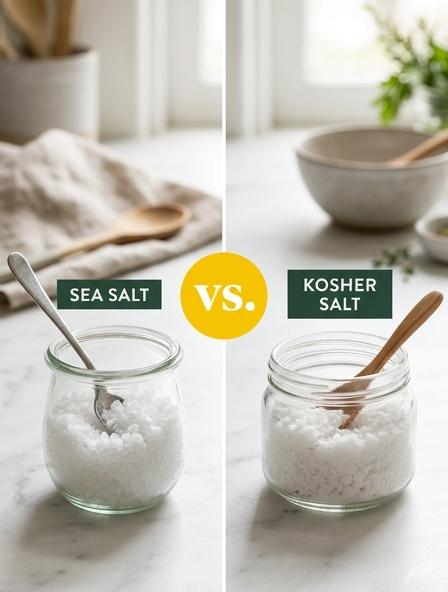
When comparing sea salt and kosher salt, many consumers assume one is inherently better for cardiovascular health. In reality, both types are composed of approximately 40% sodium by weight. The physiological impact on blood pressure remains identical if consumed in equal masses. The primary distinction lies in crystal density and volume:
- Sea Salt: Often fine-grained, meaning more salt fits into a single teaspoon, potentially leading to higher sodium intake per spoonful.
- Kosher Salt: Large, flaky crystals occupy more physical space, resulting in less actual sodium per volume compared to fine-grain salts.
From a heart-health perspective, neither salt offers a chemical advantage; the benefit comes entirely from measurement accuracy. Many health-conscious home cooks prefer using a "pinch" of coarse kosher salt when seasoning roasted vegetables because the tactile flakes allow for better visual control, helping to prevent the accidental over-salting that often occurs with fine sea salt.
Crystal Geometry and Dissolving Speed
The structural morphology of these salts dictates how they interact with moisture and heat. Sea salt crystals vary significantly based on their origin, often appearing as fine grains or delicate, hollow pyramids. Conversely, kosher salt is characterized by its coarse, raked, and flattened geometry, which is specifically engineered for its adherence properties.
This architectural difference directly impacts their solubility rates:
- Kosher Salt: Its large, craggy surface area allows for efficient, predictable dissolving in moist environments.
- Fine Sea Salt: Dissolves almost instantly due to a high surface-to-volume ratio.
- Flaky Sea Salt: Features a complex, tiered structure that melts slowly, providing a localized burst of flavor.
While kosher salt is prized for consistent brining, sea salt's geometry is a byproduct of natural evaporation. You might prefer finishing a rich chocolate ganache with flaky sea salt for a slow-dissolving crunch, whereas a chef reaches for kosher salt to ensure even distribution throughout a boiling pasta sauce.
Trace Mineral Content and Flavor Nuance
The primary distinction between sea salt and kosher salt lies in their origin and mineral composition. Sea salt is harvested through the evaporation of ocean water, which allows it to retain trace minerals like magnesium, potassium, and calcium. These impurities provide a complex, briny flavor profile and a variety of textures ranging from fine grains to crunchy flakes.
- Sea Salt: Rich in minerals that offer subtle "earthy" or "oceanic" undertones.
- Kosher Salt: Primarily sodium chloride, offering a pure, neutral taste without the bitterness of iodine.
While kosher salt is favored by chefs for its clean finish and large, easy-to-pinch crystals, sea salt is celebrated for its ability to add depth to a dish. The choice often depends on whether you want a straightforward salty punch or a nuanced mineral finish.
You might choose a coarse sea salt to finish a rich chocolate ganache, where the mineral complexity creates a sophisticated contrast to the sugar.
Textural Properties for Prepared Dishes
The physical structure of salt significantly influences the mouthfeel and presentation of a meal. While both originate from saline sources, their crystallization processes result in distinct textures that dictate their culinary utility.
- Kosher Salt: Features large, coarse, and flat grains that provide excellent grip for hand-seasoning and adhere efficiently to raw protein surfaces.
- Sea Salt: Ranges from fine grains to delicate, pyramid-shaped flakes that offer a sharp "crunch" and high visual appeal.
Because kosher salt crystals are larger and often hollow, they dissolve more predictably in boiling water or sauces. In contrast, the irregular, jagged shapes of sea salt are prized for finishing, as they remain intact longer to provide a tactile experience. You might prefer the satisfying crunch of flaky sea salt scattered over a warm chocolate chip cookie or a medium-rare steak to provide a burst of flavor and texture right before the first bite.
Weight and Volume Measurement Variations
Understanding the physical differences between sea salt and kosher salt is crucial for culinary accuracy. The primary variation stems from crystal density; sea salt typically features fine, compact grains, while kosher salt consists of large, irregular, or hollow flakes. Consequently, volume-based measurements are not interchangeable between the two.
One tablespoon of fine sea salt contains significantly more mass-and therefore more "saltiness"-than one tablespoon of kosher salt. Because kosher salt flakes don't pack together tightly, they create air pockets in a measuring spoon. To maintain flavor consistency, refer to these general density guidelines:
- Sea Salt (Fine): High density; one teaspoon weighs approximately 6 grams.
- Kosher Salt: Lower density; one teaspoon weighs approximately 3 to 5 grams depending on the brand.
You may find that using a digital kitchen scale is the most reliable way to ensure your delicate baking recipes or fermented brines maintain the perfect salinity every time.
Harvesting Origins and Environmental Impact
Sea salt and kosher salt differ significantly in their sourcing and ecological footprints. Sea salt is primarily harvested from coastal evaporation ponds using sun and wind, a process that relies on renewable energy but remains susceptible to ocean pollutants. In contrast, most commercial kosher salt is extracted from ancient underground land deposits through more energy-intensive mining techniques.
| Feature | Sea Salt | Kosher Salt |
|---|---|---|
| Primary Source | Modern Oceans | Underground Mines |
| Harvest Method | Solar Evaporation | Solution Mining |
While environmentally conscious shoppers often favor the low-impact solar method of sea salt, professional chefs rely on the consistent, mine-extracted grains of kosher salt for precise seasoning during the heavy brining of a holiday turkey.
Solubility Rates in Temperature Variations
The solubility of salt is primarily influenced by crystal surface area and the kinetic energy of the solvent. Kosher salt, known for its large, hollow, or flat flakes, dissolves quickly in boiling liquids but may linger in cold applications. Conversely, the solubility of sea salt depends on its grain size; while fine sea salt dissolves almost instantly, coarse varieties require significant heat and agitation to break down.
| Salt Type | Dissolution Speed (Hot) | Dissolution Speed (Cold) |
|---|---|---|
| Kosher Salt | Fast | Moderate |
| Coarse Sea Salt | Moderate | Slow |
Professional chefs often reach for kosher salt when seasoning a boiling pasta pot for immediate integration, whereas enthusiasts prefer finishing a chilled carpaccio with coarse sea salt so the crystals stay intact for a deliberate, crunchy burst of ocean flavor.
Surface Adhesion on Fresh Produce and Proteins
The primary difference in surface adhesion between sea salt and kosher salt lies in grain morphology. Kosher salt is specifically engineered with a coarse, flat, or pyramidal structure. This increased surface area allows the crystals to "grip" the moisture on raw proteins and fresh produce effectively.
While fine sea salt often bounces off dry surfaces or dissolves too rapidly, the craggy texture of kosher salt ensures it stays in place during preparation. This is why professional cooks prefer it for tasks like:
- Dry-brining poultry to achieve a crispy skin.
- Seasoning sliced tomatoes to draw out juices.
- Coating steaks to create an even, savory crust.
Professional pitmasters reach for kosher salt when prepping a brisket because those large, jagged flakes cling to the meat's surface, ensuring every bite carries a perfectly balanced seasoning after hours in the smoker.
Budget Considerations for Kitchen Pantries
When stocking a functional pantry, balancing cost with culinary utility is essential. Kosher salt is widely regarded as the most budget-friendly option for high-volume tasks. Because it is industrially produced, it offers a lower price point per ounce, making it ideal for seasoning pasta water or brining large cuts of meat. Conversely, sea salt prices vary significantly based on the harvesting method; while basic fine sea salt is affordable, artisanal varieties like Fleur de Sel carry a premium price tag.
- Kosher Salt: Best value for everyday seasoning and bulk preparation.
- Fine Sea Salt: Mid-range pricing, often used as a direct substitute for table salt.
- Flaky Sea Salt: Highest cost, reserved strictly for finishing touches.
Many home cooks save money by using affordable kosher salt for the heavy lifting in a stew while reserving a single box of expensive Maldon sea salt to add a final, crunchy pop to gourmet chocolate chip cookies.
Processing Standards and Chemical Purity
The distinction between sea salt and kosher salt lies in their extraction and refinement. Sea salt is produced through the natural evaporation of ocean water or saltwater lakes. This minimal processing allows it to retain trace minerals like potassium, iron, and zinc, which contribute to its complex flavor profile and varying colors.
In contrast, kosher salt is typically mined from underground salt deposits and undergoes a more rigorous refining process to ensure high chemical purity. While both are primarily sodium chloride, their purity levels vary based on these environmental sources and additives.
- Sea Salt: Minimally processed; contains oceanic minerals and potential micro-impurities.
- Kosher Salt: Highly refined; usually free of iodine and designed for consistent chemical density.
Home cooks often reach for kosher salt when dry-brining a chicken because its coarse, flat grains adhere perfectly to the skin, drawing out moisture for a much crispier finish.
Sea Salt vs Kosher Salt source and external links
- Sea salt is produced through the evaporation of ocean water or saltwater lakes, often retaining trace minerals that add complexity to its flavor. Learn more about Sea salt.
- Kosher salt is a coarse-grained salt without common additives like iodine, making it a preferred choice for seasoning meat and professional cooking. Read more about Kosher salt.