
Sea Salt vs Iodized Salt: Which is Best for Mineral Nutrition, Culinary Flavor, and Food Preservation?
Mineral Content and Nutritional Differences in Common Seasonings
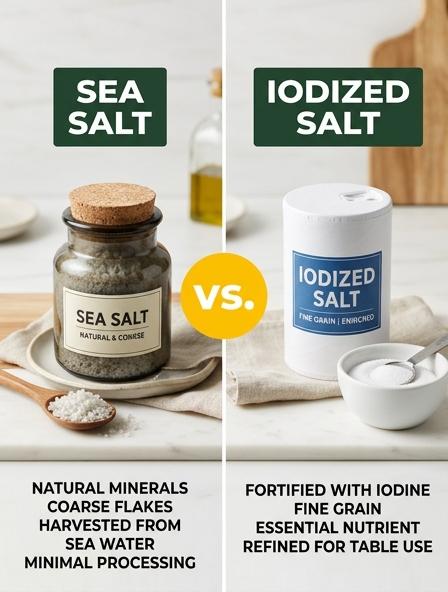
While sea salt and iodized salt are chemically similar, their nutritional profiles differ based on processing methods. Sea salt is harvested through the evaporation of ocean water, a process that allows it to retain trace minerals like magnesium, potassium, and calcium. Conversely, iodized salt is typically mined and refined to remove impurities, then fortified with iodine to support thyroid health.
- Sea Salt: Contains natural trace minerals and offers a variety of textures.
- Iodized Salt: Provides a consistent source of iodine, essential for preventing goiters.
Both seasonings contain roughly the same amount of sodium by weight. The primary distinction lies in the presence of iodine versus the complex mineral notes and textures found in sea salt varieties. Choosing the right one depends on your specific dietary requirements and the flavor profile of your dish.
You might reach for flaky sea salt when finishing a grilled ribeye steak to add a distinct crunch and burst of minerals that table salt simply cannot replicate.
Texture and Mouthfeel Variations in Diverse Grain Sizes
The physical structure of sea salt versus iodized salt significantly impacts the culinary experience. Iodized salt is typically refined into small, uniform cubic crystals, ensuring a consistent texture that dissolves rapidly in liquids or doughs. Conversely, sea salt is harvested through evaporation, resulting in a spectrum of grain sizes from fine to large, crunchy flakes.
- Fine Grains: Dissolve quickly, providing uniform salinity in soups and sauces.
- Coarse Flakes: Offer a distinct "crunch" and a concentrated burst of flavor when used as a finish.
Because of these structural differences, the mouthfeel varies from a subtle, even saltiness to a sharp, tactile sensation. Home chefs often prefer sprinkling a few jagged flakes of sea salt over a fresh chocolate chip cookie to create a sophisticated contrast between the sweet dough and the sharp mineral crunch.
Solubility and Dissolving Speed in Boiling and Simmering
The speed at which salt dissolves in hot liquids is primarily dictated by its surface area and grain size. While both sea salt and iodized salt consist mainly of sodium chloride, their physical structures react differently to heat.
| Salt Type | Texture | Dissolving Speed |
|---|---|---|
| Iodized Salt | Fine Grain | Instantaneous |
| Sea Salt | Coarse/Flaky | Gradual |
In boiling water, high kinetic energy forces crystals to break down rapidly. Fine-grained iodized salt disappears almost immediately upon contact. Coarser sea salt requires more agitation or prolonged simmering to fully integrate into the liquid. You might prefer the rapid dispersion of iodized salt when seasoning a fast-moving pasta boil, whereas the slow-melting nature of sea salt is often favored by chefs for controlled seasoning in a long-simmering bone broth.
Impact of Nutrient Fortification on Daily Wellness
The choice between sea salt and iodized salt significantly influences metabolic health. Iodized salt is a primary example of successful nutrient fortification, designed to prevent iodine deficiency, which is essential for thyroid hormone production and cognitive development. In contrast, sea salt is produced through evaporation and retains trace minerals like magnesium and potassium, though it typically lacks the concentrated iodine levels necessary for preventing goiters.
- Iodized Salt: Crucial for regulating metabolism and supporting prenatal health.
- Sea Salt: Preferred for its crunchy texture and minimal processing.
Understanding these differences allows for better dietary management. While sea salt offers a more complex flavor profile for gourmet cooking, fortified salt serves as a vital public health tool to ensure baseline wellness across populations. Balancing both types can provide the sensory experience of artisanal minerals alongside the protective benefits of essential nutrients.
You might reach for the mineral-rich sea salt to finish a gourmet salad, but rely on iodized salt for everyday seasoning to ensure your family maintains optimal thyroid function.
Natural Extraction Versus Controlled Manufacturing Processes
The primary difference between sea salt and iodized salt lies in their origin and refinement. Sea salt is harvested through the natural solar evaporation of seawater in large outdoor ponds. This traditional extraction method allows the salt to retain trace minerals like magnesium, calcium, and potassium, which contribute to its varied texture and complex flavor.
In contrast, iodized salt is typically sourced from underground salt mines and undergoes a rigorous, controlled manufacturing process. This refining removes most minerals to create a pure sodium chloride product. During processing, manufacturers add specific additives:
- Potassium Iodide: Added to prevent iodine deficiency.
- Anti-caking agents: Included to prevent clumping in humid conditions.
While sea salt offers a rustic appeal, home cooks often reach for iodized salt when baking delicate pastries to ensure the fine grains dissolve quickly and distribute flavor evenly throughout the dough.
Influence of Anti Caking Agents on Food Purity
When comparing sea salt and iodized salt, the presence of anti-caking agents is a major differentiator regarding food purity. Most commercial iodized salts contain additives like sodium aluminosilicate or silicon dioxide to prevent clumping and ensure a smooth pour. While functional, these synthetic compounds are often viewed as impurities by those seeking a clean label.
- Iodized Salt: Typically processed with ferrocyanides or silicates to maintain a fine, free-flowing texture.
- Sea Salt: Often harvested through natural evaporation, frequently remaining free from flow agents and chemical stabilizers.
The choice between these salts often hinges on the balance between convenience and mineral integrity. You might choose unrefined sea salt flakes when finishing a gourmet caprese salad because you value the crunch and absence of chemical additives found in standard table salt.
Flavor Intensity and Taste Profiles in Main Course Dishes
The sensory impact of salt on main courses depends largely on mineral content and crystal structure. Sea salt, harvested through natural evaporation, retains trace minerals like magnesium and potassium, which contribute a complex, briny depth. Its irregular flakes provide localized bursts of flavor rather than a uniform saltiness. Conversely, iodized salt is highly refined with a consistent, fine-grain texture. While it provides reliable seasoning, the addition of potassium iodide can sometimes introduce a subtle metallic aftertaste, especially in delicate protein dishes.
- Sea Salt: Offers a clean, sharp finish with varying textures.
- Iodized Salt: Delivers a quick-dissolving, concentrated saltiness.
Home cooks often prefer finishing a thick-cut grilled salmon with a sprinkle of coarse sea salt to create a rhythmic crunch that highlights the natural fats of the fish.
Efficacy in Home Fermentation and Curing Methods
Selecting the right salt is crucial for successful food preservation. In home fermentation, sea salt is the gold standard because it lacks the anti-caking agents and potassium iodide found in standard table salt. These additives can inhibit the growth of beneficial Lactobacillus bacteria and often result in cloudy brine or darkened produce. For dry curing, the mineral-rich profile of sea salt facilitates superior moisture extraction and flavor development without the metallic finish iodine can impart.
- Brine Clarity: Sea salt prevents the sediment buildup common with iodized varieties.
- Fermentation Speed: Pure sea salt ensures a more predictable and active microbial environment.
- Texture: Non-iodized salts help maintain the structural integrity and "crunch" of preserved vegetables.
Home fermentation enthusiasts often reach for high-quality sea salt when preparing a batch of spicy kimchi to ensure the cabbage stays perfectly crunchy and the brine remains crystal clear.
The Role of Trace Elements in Family Nutrition
Trace elements are essential micronutrients that support various metabolic functions within the family unit. When comparing salts, sea salt is frequently valued for its minimal processing, retaining tiny amounts of magnesium, calcium, and potassium. However, these levels are often too low to meet daily requirements alone. Conversely, iodized salt serves as a fortified source of iodine, which is vital for thyroid health and preventing developmental delays in children.
Key differences in their nutritional contributions include:
- Sea Salt: Offers complex flavor profiles and natural, albeit minute, trace minerals from evaporated seawater.
- Iodized Salt: Provides a standardized, reliable source of iodine to maintain healthy hormonal balance.
Understanding these roles allows parents to make informed dietary choices for long-term wellness. You might sprinkle flaky sea salt over a fresh heirloom tomato salad for an artisanal touch, while using iodized salt in your weekly batch of homemade soup to ensure everyone gets the essential iodine needed for cognitive energy.
Visual Presentation and Finishing Effects on Plated Meals
The aesthetic distinction between sea salt and iodized salt is a primary consideration for culinary presentation. Iodized salt consists of uniform, fine grains designed to dissolve quickly, making it virtually invisible once applied. In contrast, sea salt is celebrated for its diverse physical properties that enhance the "plating" phase of a meal.
- Texture: Sea salt offers various granulometries, from crunchy coarse crystals to delicate, paper-thin flakes.
- Color: Depending on the mineral source, sea salts can provide pops of pink, grey, or even black.
- Reflectivity: Large salt flakes catch the light, creating a gourmet visual appeal that fine table salt cannot replicate.
Choosing the right salt ensures that the seasoning contributes to both the flavor profile and the artistic arrangement of the dish. You might sprinkle a few crystals of fleur de sel over a dark chocolate ganache to create a sophisticated visual contrast and a satisfying crunch that guests find irresistible.
Sea Salt vs Iodized Salt source and external links
- Produced through the evaporation of ocean water, sea salt often contains trace minerals that contribute to its unique flavor and coarse texture; learn more about Sea Salt.
- Iodized salt is table salt that has been fortified with the essential nutrient iodine to help prevent thyroid-related health issues; read more about Iodized Salt.