
Rocambole vs Porcelain Garlic: The Differences in Flavor Intensity, Storage Longevity, and Clove Structure.
Flavor Profile and Heat Intensity
Distinguishing between Rocambole and Porcelain garlic requires an understanding of their chemical complexity and pungency levels. Rocambole is widely celebrated by chefs for its deep, full-bodied, and nuanced flavor that many describe as the "true" garlic taste. It offers a sophisticated balance of sweetness and savory depth with a moderate, lingering heat.
In contrast, Porcelain garlic is the undisputed heavyweight of intensity. Due to its high allicin content, it delivers a sharp, sulfurous bite and an immediate heat that can be quite aggressive. While its flavor profile is less complex than Rocambole, its strength remains consistent even after high-heat cooking.
- Rocambole: Rich, earthy, complex, and moderately hot.
- Porcelain: Pungent, piercingly hot, and sulfur-forward.
You will likely reach for the complex Rocambole when crafting a delicate raw pesto, but you should choose the fiery Porcelain when you need a powerful garlic punch that won't fade in a long-simmered pasta sauce.
Clove Structure and Peeling Efficiency
Understanding the physical differences between Rocambole and Porcelain garlic is essential for kitchen efficiency. Rocambole bulbs typically feature a double layer of 8 to 12 cloves. Their standout characteristic is their loose, "easy-peel" skins, which often flake off with minimal effort. In contrast, Porcelain garlic produces a single layer of 4 to 6 remarkably large cloves protected by thick, parchment-like skins that adhere tightly to the flesh.
| Feature | Rocambole | Porcelain |
|---|---|---|
| Clove Count | 8-12 (Multi-layered) | 4-6 (Single layer) |
| Peeling Ease | Very Easy | Difficult/Tight |
You will appreciate the loose-skinned Rocambole when you are rushing to prep a dozen cloves for a rich pasta sauce and want to avoid the frustration of sticky, stubborn husks.
Storage Longevity and Shelf Life
When evaluating Rocambole versus Porcelain garlic, storage endurance is a key distinction. Porcelain varieties are the clear winners for long-term keeping, thanks to their thick, tightly wrapped skins that minimize moisture loss. Rocamboles, while exceptionally flavorful, feature thinner, looser tunics that lead to faster dehydration and a shorter dormant period.
- Porcelain Garlic: Typically remains viable for 8 to 10 months when kept in a cool, dry place.
- Rocambole Garlic: Best used within 4 to 6 months before the bulbs begin to shrivel or sprout.
This difference dictates how you should manage your kitchen inventory and harvest usage throughout the year. You will likely prefer stocking up on Porcelain garlic if you want to ensure you have firm, pungent cloves available for your hearty winter stews long after other varieties have softened.
Nutritional Value and Allicin Content
Both Rocambole and Porcelain garlic varieties are nutritional powerhouses, providing essential minerals like manganese, selenium, and vitamin B6. However, they differ significantly in their concentration of allicin, the compound responsible for garlic's therapeutic antimicrobial and anti-inflammatory properties.
- Porcelain Garlic: Renowned for having some of the highest allicin levels among all hardneck varieties, offering a potent medicinal punch.
- Rocambole Garlic: While slightly lower in raw allicin than Porcelains, it contains a rich profile of various organosulfur compounds that contribute to its legendary flavor and cardiovascular benefits.
In terms of bioactivity, Porcelain's high sulfur content translates to a sharper heat, whereas Rocambole's nutrients are packaged in a more complex chemical profile. Health-conscious eaters often choose crushed Porcelain garlic for a raw, potent fire-cider infusion to naturally bolster the immune system during the cold season.
Performance in High-Heat Cooking
Choosing between Rocambole and Porcelain garlic for high-heat applications depends on whether you prioritize flavor complexity or structural intensity. Porcelain garlic is the powerhouse of the hardneck variety, boasting high allicin content and large cloves. These characteristics allow it to maintain a bold, pungent presence even after intense roasting or long-term simmering.
In contrast, Rocambole is celebrated for its deep, buttery nuances, but these volatile flavors are more sensitive to temperature. While Rocambole offers a superior gourmet profile, its sugars can caramelize too quickly, potentially turning bitter if scorched. To maximize their culinary potential, consider their heat tolerance:
- Porcelain: High sulfur stability; ideal for roasting and heavy stews.
- Rocambole: Delicate oils; best for light sautéing or adding at the end of cooking.
Home cooks love using Porcelain for a slow-roasted garlic mash that stays savory, while saving the nuanced Rocambole for a quick, aromatic finish on a seared ribeye steak.
Aromatic Impact on Soups and Stews
Selecting the right garlic variety significantly alters the flavor architecture of long-simmered dishes. Rocambole is prized by chefs for its complex, rich, and slightly sweet undertones. It infuses broths with a nuanced depth that complements delicate ingredients without overpowering them.
In contrast, Porcelain garlic is known for its high allicin content, delivering a potent, sulfurous punch. While Rocambole provides elegance, Porcelain offers the raw power needed to stand up to heavy meats and dense root vegetables.
- Rocambole: Enhances complexity in clear bouillons and cream-based soups.
- Porcelain: Maintains a strong garlic presence in thick stews and spicy chilis.
You might find that Rocambole elevates a refined garlic velouté, but when you are simmering a robust Hungarian goulash, the intense aromatic bite of Porcelain is exactly what the recipe demands.
Texture Changes During Roasting and Baking
Roasting transforms the physical structure of Rocambole and Porcelain garlic in distinct ways due to their differing moisture and sugar contents. Rocambole garlic, known for its thin skins, softens rapidly under heat. Its cloves break down into an exceptionally buttery, jam-like consistency that is prized for its spreadability. Conversely, Porcelain garlic possesses large, dense cloves protected by thick, papery layers. While it also becomes tender, Porcelain tends to maintain its structural integrity longer, resulting in a silky yet substantial mouthfeel compared to the loose texture of Rocambole.
- Rocambole: Melts into a smooth paste, ideal for blending into compound butters.
- Porcelain: Retains a creamy, plump shape, perfect for garnishing roasted meats.
You will find that squeezing a bulb of roasted Rocambole directly onto a warm, crusty baguette provides the perfect melt-in-your-mouth experience that garlic lovers crave.
Visual Appearance and Clove Size
Identifying the differences between Rocambole and Porcelain garlic starts with their external wrappers and internal clove architecture. Although both are hardneck subspecies, their physical traits cater to different gardening and culinary preferences.
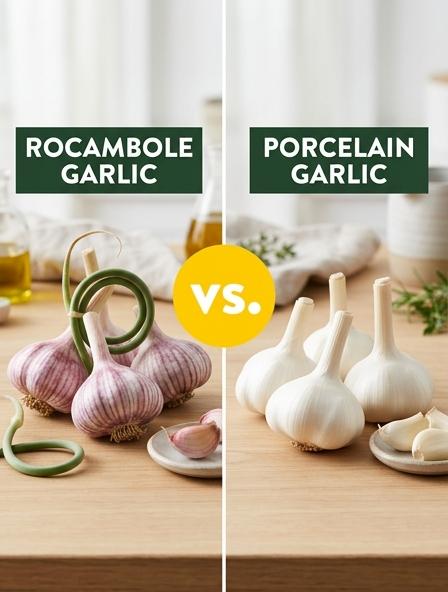
- Rocambole: These bulbs typically feature loose, brownish or purple-streaked skins. They contain 8 to 12 cloves per bulb, often arranged in a unique double-layered circular pattern.
- Porcelain: Characterized by thick, parchment-like, brilliant white outer skins. They produce fewer but significantly larger cloves, usually ranging from 4 to 6 per bulb.
While Rocamboles offer a rustic aesthetic with more segments per head, Porcelains are prized for their impressive individual clove mass and symmetry. The contrast in skin durability also affects handling; Porcelain's thicker wrappers provide a sturdier feel compared to the delicate, easy-to-peel skins of the Rocambole.
You will likely reach for the massive, uniform cloves of a Porcelain garlic when you want to minimize peeling time for a large batch of roasted garlic spread.
Preparation Speed and Skin Characteristics
The physical structure of garlic skins significantly dictates both preparation speed and storage longevity. Rocambole garlic is famous for its "easy-peel" nature; its skins are thin, loose, and often have a brownish tint, allowing the cloves to be released with minimal effort. Conversely, Porcelain garlic is encased in thick, parchment-like white wrappers that are tightly bonded to the cloves, requiring more force and time to strip away.
- Rocambole: Features delicate, brittle skins that facilitate rapid peeling but lead to a shorter shelf life.
- Porcelain: Features robust, multi-layered skins that protect the bulb during long-term storage but slow down kitchen prep.
While Porcelain offers durability, most high-volume chefs prefer the Rocambole variety when they need to quickly peel and mince dozens of cloves for a large batch of fresh pesto or a signature garlic confit.
Essential Oil Concentration and Aftertaste
The culinary distinction between Rocambole and Porcelain garlic is rooted in their chemical compositions. Rocambole varieties are celebrated for their exceptionally high essential oil concentration. These oils produce a rich, multidimensional flavor profile that is often described as "true garlic," leaving a deep and persistent aftertaste on the palate.
Porcelain garlic, while also potent, typically possesses higher allicin content but fewer complex volatile oils. This results in a sharp, sulfurous heat that hits the tongue immediately but dissipates more rapidly than the Rocambole's lingering essence.
- Rocambole: High oil density leads to a savory, long-lasting finish.
- Porcelain: Intense initial pungency with a cleaner, shorter aftertaste.
You might reach for the Rocambole when preparing a slow-cooked lamb shank, wanting those robust, oily aromatic compounds to infuse the meat and provide a savory resonance that lasts well after the final bite.
Rocambole vs Porcelain Garlic source and external links
- Rocambole is a prized hardneck variety known for its deep, complex flavor and loose skins that make the cloves exceptionally easy to peel. Learn more about Rocambole garlic.
- Porcelain garlic is distinguished by its satiny white outer wrappers and large, symmetrical cloves that deliver a powerful, pungent heat. Explore the characteristics of Porcelain garlic.