
Roasted Poblano Peppers vs Green Peppers: Comparing Flavor, Heat Level, and Texture Differences
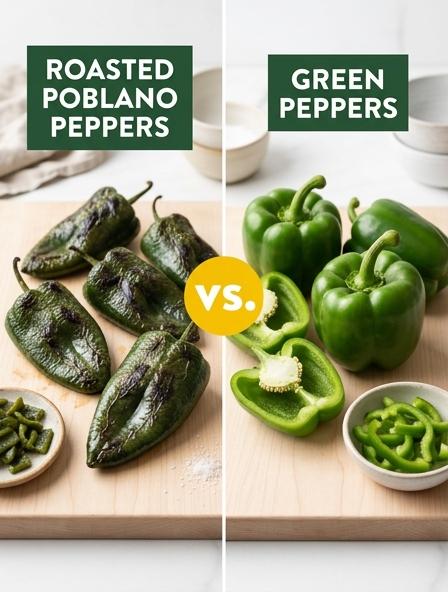
Flavor profile differences in family recipes
Choosing between roasted poblano peppers and standard green bell peppers can fundamentally alter the character of a family heirloom recipe. While both offer a vibrant green hue, their chemical compositions and flavor depths vary significantly:
- Green Bell Peppers: Characterized by a crisp, grassy, and slightly bitter profile. They contain no capsaicin, making them a neutral base for stuffing.
- Roasted Poblano Peppers: These offer a rich, earthy, and smoky essence. The roasting process caramelizes natural sugars, balancing a mild heat that ranges from 1,000 to 2,000 Scoville units.
In traditional dishes like casseroles or fajitas, green peppers provide a bright, fresh crunch. However, the thick walls of a poblano become velvety when charred, adding a sophisticated umami layer that green peppers lack. You might choose to swap your usual green peppers for roasted poblanos in a family chili recipe to introduce a complex, smoky undertone that transforms a simple weekday meal into a gourmet experience.
Nutritional contrast of charred and raw skins
The nutritional profile of peppers shifts significantly depending on whether the skin is consumed raw or charred. Raw green peppers retain the highest concentrations of heat-sensitive Vitamin C and folic acid, providing a crisp texture and maximum hydration. However, the waxy cellulose in raw skins can be difficult for some to digest.
In contrast, roasting poblano peppers to the point of charring breaks down these tough cell walls. While some Vitamin C is lost to heat, this process increases the bioavailability of fat-soluble nutrients and specific antioxidants. Key differences include:
- Vitamin Retention: Raw skins offer superior Vitamin C; charred peppers offer more accessible Vitamin A.
- Digestibility: Peeling charred skins removes lectins and tough fibers that cause bloating.
- Flavor Compounds: Roasting triggers the Maillard reaction, concentrating natural sugars.
Home cooks often choose the smoky depth of a charred poblano when crafting a rich cream sauce, while reaching for the raw crunch of a green pepper to brighten up a summer salad.
Heat Level Variations for Different Palates
The choice between roasted poblano peppers and green bell peppers often comes down to a preference for piquancy. Green bell peppers are entirely heat-free, ranking at 0 on the Scoville scale, making them a safe, sweet option for sensitive palates. Conversely, poblanos introduce a mild-to-medium warmth, typically ranging from 1,000 to 2,000 Scoville Heat Units.
- Green Bell Peppers: Zero heat; crisp and refreshing.
- Poblano Peppers: Mild heat; earthy and smoky when roasted.
While poblanos are generally approachable, their heat can be unpredictable, occasionally delivering a sharper bite. Roasting these peppers doesn't just soften the texture; it concentrates the capsaicin and caramelizes sugars, creating a complex flavor profile that green peppers cannot replicate.
Many home chefs reach for roasted poblanos when they want to elevate a Sunday morning brunch by folding them into scrambled eggs for a sophisticated, smoky glow that satisfies spice lovers without overwhelming the table.
Performance changes in ovens and stovetops
When subjected to high-heat environments, the physical structure and moisture content of poblano and green peppers dictate their culinary performance. Poblano peppers feature a thick, waxy skin that blisters and separates efficiently under a direct stovetop flame, facilitating easy peeling and a deep, smoky infusion. Conversely, green bell peppers have thinner skins and higher water content, which often leads to steaming rather than charring in an oven.
- Direct Flame: Poblanos maintain structural integrity while the skin chars; green peppers soften rapidly and can become mushy.
- Oven Roasting: Poblanos develop a rich, earthy sweetness through Maillard reaction, whereas green peppers primarily lose crispness and become mild.
The heat-induced breakdown of cellular walls also differs; poblanos remain "meaty" enough for stuffing, while green peppers are better suited for quick sautéing to preserve their bright color. You can experience the superior char of the poblano when you blister it over a gas burner to create the authentic, smoky base required for a classic Chile Relleno.
Texture transitions during the cooking process
The structural evolution of peppers during cooking depends heavily on their skin thickness and moisture content. While both varieties soften under heat, their final consistency serves different culinary purposes.
- Poblano Peppers: High heat causes the thick, waxy skin to blister and separate. Once peeled, the flesh transitions into a silky, velvety texture that is supple yet strong enough to hold heavy fillings.
- Green Bell Peppers: With a higher water ratio and thinner skin, these transition from a firm crunch to a tender-crisp state. If overcooked, they tend to become watery or mushy rather than creamy.
Roasting concentrates the natural sugars in poblanos, resulting in a luxurious mouthfeel that balances heat with softness. You will appreciate the way a charred poblano maintains its integrity in a creamy rajas dish, providing a sophisticated, tender bite that a standard green bell pepper simply cannot match.
Digestive impact of skin preparation methods
The primary difference in digestibility between roasted poblano peppers and green bell peppers lies in their outer skin. Green peppers are frequently consumed raw, containing high levels of cellulose and insoluble fiber that can cause bloating or gas in sensitive individuals. Conversely, roasting poblanos allows the tough, waxy skin to be removed entirely.
- Raw Green Peppers: Retention of the waxy cuticle can slow down gastric emptying.
- Roasted Poblanos: High-heat blistering breaks down complex fibers and simplifies mechanical digestion.
By charring and peeling the poblano, you eliminate the most irritating components of the vegetable while intensifying its flavor profile. Home cooks often prefer this meticulous peeling method when preparing traditional Chiles Rellenos to ensure a silky, melt-in-the-mouth texture that remains gentle on the stomach even after a rich, indulgent dinner.
Aroma Development in Charred and Fresh States
The olfactory profiles of roasted poblano peppers and green bell peppers diverge significantly based on their preparation. In their raw state, green peppers emit a bright, grassy, and slightly pungent scent driven by pyrazines. Poblanos share this vegetal base but possess a deeper, earthier undertone even before heat is applied. The aromatic transformation occurs most dramatically during roasting:
- Fresh Green Peppers: Crisp, herbaceous, and mildly bitter.
- Roasted Poblanos: Smoky, savory, and rich with toasted notes.
When subjected to an open flame, the poblano's thick skin blisters, triggering a complex Maillard reaction. This process transforms its mild sweetness into a sultry, wood-fired aroma that permeates the flesh. While green peppers soften when cooked, they rarely achieve the same smoky depth or aromatic complexity found in a charred poblano. You might prefer the intense, roasted perfume of a charred poblano when crafting a signature salsa verde that demands a sophisticated, smoky finish over a simple, garden-fresh crunch.
Color and Visual Impact on the Plate
The visual distinction between roasted poblanos and green bell peppers is immediate and sets a specific tone for any dish. While both belong to the green color spectrum, their aesthetic contributions vary significantly:
- Roasted Poblanos: Feature a deep, moody forest green. The roasting process adds rustic texture with charred, blackened blisters that signal a smoky, gourmet flavor profile.
- Green Peppers: Offer a bright, vibrant, and uniform grass-green hue. Their glossy skin provides a clean, high-contrast pop of color that looks fresh and approachable.
Poblanos generally offer a more sophisticated, "earthy" look, whereas green bell peppers provide a classic, crisp appearance. Because the poblano is heart-shaped and flatter, it creates a wide canvas for presentation compared to the blocky, lobed structure of the bell pepper. Home chefs often prefer the rustic elegance of a roasted poblano when plating a steak topper, as the dark, smoky ribbons create a stunning visual contrast against a seared, medium-rare protein.
Prep time requirements for home cooks
When choosing between roasted poblanos and standard green bell peppers, prep time is the primary differentiator for home cooks. Green peppers are "grab-and-go" ingredients; they require only a quick wash, seeding, and slicing, taking less than two minutes to prepare for the pan.
In contrast, roasted poblanos demand a multi-step technique to unlock their signature smoky flavor. Because their outer skin is tough and waxy, it must be blistered and then removed before consumption. The typical workflow includes:
- Charring: Broiling or grilling until the skin blackens (5-10 minutes).
- Sweating: Resting peppers in a sealed bag to loosen the skin (10 minutes).
- Peeling: Hand-rubbing the charred skin off and removing seeds (2-5 minutes).
You might reach for a green pepper when you need a fast crunch for a Tuesday night stir-fry, but you will find the twenty-minute investment in roasting poblanos essential for the rich, velvety depth required in an authentic salsa or cream-based sauce.
Storage Longevity and Budget Value
Choosing between roasted poblano peppers and green bell peppers involves balancing upfront costs with shelf-life efficiency. Green bell peppers are typically the most budget-friendly produce item, maintaining their crispness in the refrigerator for up to two weeks. Poblanos generally carry a higher price point per pound but offer a more complex flavor profile.
| Metric | Green Bell Peppers | Roasted Poblanos |
|---|---|---|
| Fridge Life | 10–14 Days | 3–5 Days |
| Freezer Quality | Low (becomes mushy) | High (retains smoky essence) |
| Relative Cost | $ (Economical) | $$ (Mid-range) |
While green peppers are superior for short-term raw storage, roasted poblanos provide better long-term value for meal preppers because they freeze beautifully once charred and peeled. You can buy a bulk bag of poblanos during a sale to roast and freeze, ensuring you have a gourmet, smoky base ready for a spontaneous weeknight taco feast.
Roasted Poblano Peppers vs Green Peppers source and external links
- Roasting Roasted Poblano Peppers enhances their natural smokiness and makes it simple to peel away the skin for use in sauces or rellenos.
- Commonly used in stir-fries and salads, Green Peppers provide a crisp texture and a slightly bitter, earthy flavor compared to their riper counterparts.