
Red Curry Sauce vs Red Curry Paste: The Differences in Flavor Concentration, Preparation Speed, and Recipe Customization
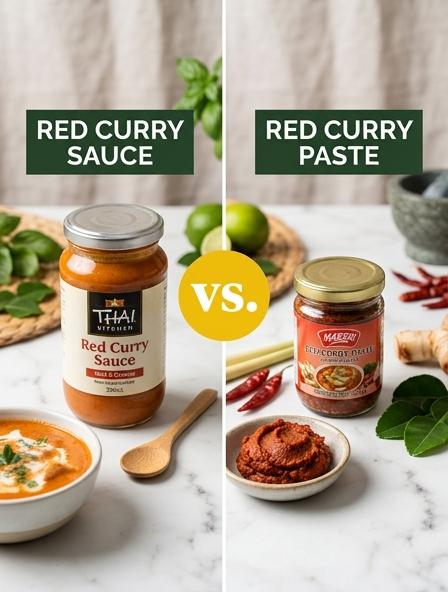
Flavor Concentration and Heat Intensity in Paste and Sauce
Red curry paste is a potent concentrate of crushed aromatics, including dried red chilies, galangal, and lemongrass. Since it remains undiluted, the heat intensity is exceptionally high, providing a sharp and pungent base. Conversely, red curry sauce is a ready-to-use liquid where the paste is already balanced with coconut milk and sugar, resulting in a milder heat profile and a smooth, creamy texture.
- Red Curry Paste: Intense flavor, customizable spice, and requires "blooming" in oil.
- Red Curry Sauce: Diluted, consistent flavor, and provides a quick cooking shortcut.
You will likely prefer the concentrated paste when crafting a bold, customized curry from scratch for a dinner party, while the sauce is the go-to solution for a quick, mild weekday meal that requires zero prep time.
Sodium Content and Nutritional Profiles of Thai Curry Bases
The nutritional divergence between red curry sauce and red curry paste lies primarily in concentration and additives. Red curry paste is a dense, fibrous blend of aromatic herbs like lemongrass, galangal, and chili peppers. While it is high in sodium per tablespoon, it contains very little fat or sugar. Conversely, red curry sauce is a "ready-to-use" product where the paste is diluted with coconut milk and often supplemented with palm sugar and oils, significantly increasing the caloric and saturated fat content.
- Red Curry Paste: Low calorie, zero fat, but very high sodium concentration.
- Red Curry Sauce: High calorie, contains medium-chain triglycerides from coconut, and moderate sodium per serving.
When monitoring heart health, the paste offers more control over added ingredients, whereas the sauce provides a balanced, though more processed, macro-profile. You might prefer the concentrated paste to meticulously manage your sodium levels during meal prep, while the ready-made sauce is perfect for when you crave that classic, creamy Thai flavor without the hassle of balancing liquids.
Impact on Final Dish Consistency and Texture
The choice between red curry paste and sauce fundamentally alters the mouthfeel of your meal. Red curry paste is a concentrated blend of fibrous aromatics like lemongrass and galangal. When sautéed in oil, it creates a traditional "broken" sauce where coconut fat separates, resulting in a rich, multi-layered texture with a slight rustic grit.
In contrast, pre-made sauces are engineered for a homogenized, silky consistency. These products often contain stabilizers to maintain a uniform pour, lacking the complex oil-sheen typical of authentic preparations. Compare the two below:
- Red Curry Paste: Dense and concentrated; allows for customized thickness and a textured, artisanal finish.
- Red Curry Sauce: Fluid and smooth; provides a consistent, velvety body without extra effort.
You might choose the ready-to-use sauce for a perfectly smooth, light weekday simmer, whereas many home cooks prefer the thick, oily richness of a sautéed paste for an authentic, restaurant-quality Sunday dinner.
Shelf Life and Pantry Storage for Different Packaging Styles
Choosing between red curry sauce and paste often depends on your cooking frequency and storage capacity. Red curry paste, typically found in small cans or resealable tubs, is a concentrated base with a long shelf life. Unopened, it stays shelf-stable for up to two years; once opened, it remains potent in the refrigerator for about six months. In contrast, red curry sauce is a ready-to-use liquid often sold in glass jars or cartons. Because these sauces contain coconut milk, their post-opening longevity is significantly shorter.
- Concentrated Paste: 1–2 years (unopened); 3–6 months (refrigerated).
- Ready-to-Use Sauce: 1 year (unopened); 5–7 days (refrigerated).
To maximize freshness, always ensure lids are tightly sealed to prevent the aromatic chili oils from oxidizing. You might prefer the long-term value of a tub of paste for customized spicy stir-frys, or you may favor the convenience of a jarred sauce for a rapid weeknight dinner that serves a family of four in minutes.
Preparation Speed and Convenience for Weeknight Meals
Choosing between red curry sauce and red curry paste usually depends on your available time and desire for culinary control. Red curry sauce is a pre-blended, "ready-to-heat" solution that includes coconut milk and seasonings, making it the faster option for high-speed cooking. Conversely, red curry paste is a concentrated aromatic base that requires extra steps, such as frying the paste and balancing it with canned coconut milk and sweeteners.
- Red Curry Sauce: Ideal for one-pot meals; no additional seasoning required.
- Red Curry Paste: Best for customized spice levels; requires separate pantry staples.
Imagine arriving home late after a long shift; you simply pour a jar of pre-mixed red curry sauce over frozen vegetables and shrimp for a steaming, restaurant-quality meal in under ten minutes.
Preservative Use in Processed versus Concentrated Options
When comparing red curry paste and sauce, the level of processing significantly impacts the presence of additives. Red curry paste is a concentrated base; its low water activity and high salt content function as natural preservation methods, often requiring zero artificial chemicals. Conversely, red curry sauce is a ready-to-use liquid typically blended with coconut milk. This high-moisture environment is more susceptible to microbial growth, requiring manufacturers to add stabilizers, acidity regulators, and preservatives like sodium benzoate to ensure shelf safety.
- Concentrated Paste: Uses high salinity and dry spices to maintain a long shelf life naturally.
- Processed Sauce: Often contains emulsifiers and thickeners to keep the coconut milk from separating over time.
You will likely choose the concentrated paste if you enjoy the ritual of frying aromatics in oil, as it provides a fresher taste without the chemical aftertaste found in some pre-bottled sauces.
Cost per Serving Comparison for Family Batch Cooking
When preparing large-scale family meals, the price difference between red curry paste and pre-made sauce is substantial. Red curry paste is a concentrated ingredient, meaning a single four-ounce jar can provide the base for dozens of servings. Conversely, pre-mixed red curry sauces are "ready-to-use" liquids that include coconut milk and stabilizers, requiring multiple bottles to feed a large group.
| Product Type | Cost per Serving | Best Use Case |
|---|---|---|
| Red Curry Paste | Very Low | Budget-friendly batch cooking |
| Red Curry Sauce | Moderate to High | Quick, single-meal convenience |
Budget-conscious home cooks often prefer stocking up on bulk tubs of paste and separate cans of coconut milk to reduce total meal costs by over 60% compared to using premium jarred sauces.
Sautéing Performance and Aroma Release in the Pan
The culinary transformation in the pan differs significantly based on moisture content and concentration. Red curry paste is a dense blend of aromatics designed to be "bloomed" in hot oil or thick coconut cream. This sautéing process is essential for releasing fat-soluble volatile oils from dried chilies, lemongrass, and galangal, creating a punchy, fragrant base. Red curry sauce, however, is a finished liquid emulsion. Because it already contains water and coconut milk, it will simmer or boil rather than fry, resulting in a more subdued aromatic profile during the cooking process.
| Factor | Red Curry Paste | Red Curry Sauce |
|---|---|---|
| Pan Action | Sautéing/Frying | Simmering/Heating |
| Aroma Release | High (Intense) | Moderate (Mild) |
You might prefer starting with a paste when you want to control the aromatic intensity of a traditional Thai feast, or opt for the sauce when you need a fast, splatter-free meal on a busy weeknight.
Customization of Heat and Creaminess in Thai Dishes
Mastering the balance between red curry sauce and paste allows for precise control over a dish's final profile. While paste provides a raw, fiery concentration of chilies and herbs, a pre-mixed sauce is already diluted with coconut milk for immediate use. Customizing these elements involves a strategic adjustment of fats and aromatics:
- Heat Control: Using a pure paste allows you to sauté the spices in oil to release maximum heat, whereas a sauce offers a fixed, milder piquancy.
- Texture and Creaminess: Incorporating extra coconut cream into a paste-based curry creates a thick, velvety mouthfeel that buffers spice levels.
- Flavor Buffers: Adding palm sugar or lime juice can further mellow heat or brighten a heavy, creamy sauce.
Home cooks often prefer starting with a concentrated paste when hosting dinner parties, as it allows them to whisk in extra coconut milk for guests who prefer a velvety, mild finish.
Temperature Stability During Simmering and Frying
The thermal resilience of red curry components depends heavily on their composition. Red curry paste and pre-mixed sauces respond differently when exposed to direct heat:
- Red Curry Paste: Built for high-heat frying. Searing the paste in oil "blooms" the dried chilies and aromatics, intensifying the flavor profile without breaking down the structure.
- Red Curry Sauce: Contains coconut milk and stabilizers. Excessive boiling or high-heat frying can cause the emulsion to "split," where the coconut fat separates from the liquid, resulting in a curdled appearance.
While the paste is chemically stable enough to be toasted in a hot wok, the sauce is formulated for gentle simmering to maintain a creamy, homogeneous texture. Busy home cooks often prefer the pre-mixed sauce for a foolproof, quick-simmered vegetable curry, whereas culinary enthusiasts reach for the paste to achieve that authentic, oil-separated finish found in traditional Thai kitchens.
Red Curry Sauce vs Red Curry Paste source and external links
- Red curry sauce is a ready-to-use, creamy blend of coconut milk and aromatics designed for quick and easy Thai-style cooking; learn more about Red Curry Sauce.
- Red curry paste is a concentrated, spicy foundation made from ground chilies, lemongrass, and galangal used to build deep flavor in various dishes; find details on Red Curry Paste.