
Red Chili Powder vs Chili Powder: The Differences in Heat Intensity, Ingredient Composition, and Flavor Profiles.
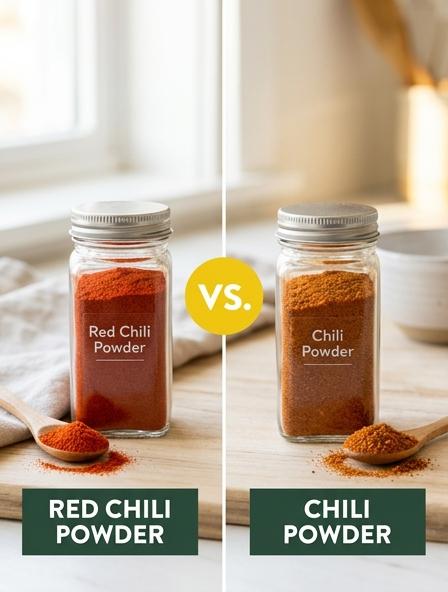
Heat Intensity and Scoville Variation in Pure Versus Blended Spices
The fundamental difference in heat intensity stems from botanical purity versus culinary blending. Red chili powder is typically a 100% pure product made from ground dried chilies, such as cayenne or bird's eye, resulting in a high concentration of capsaicin. In contrast, "chili powder" is a spice blend where the heat is significantly diluted by non-pungent additives like cumin, garlic powder, and oregano.
This composition directly impacts the Scoville Heat Units (SHU):
- Pure Red Chili Powder: Ranges from 30,000 to 50,000+ SHU for intense, sharp heat.
- Chili Powder Blend: Generally stays between 500 and 1,500 SHU for a mild, earthy profile.
Because pure powders provide raw fire without additional flavoring agents, they require careful measurement to avoid overpowering a dish. You might reach for the pure red powder to add a piercing kick to an authentic Indian curry, whereas the blended variety is what people like for a rich, mild flavor in a classic pot of Texas-style chili.
Sodium Levels and Hidden Additives in Pre-Mixed Seasonings
The distinction between pure red chili powder and commercial chili powder blends is vital for health-conscious cooking. Pure red chili powder contains only ground dried chilies, offering intense heat without extra ingredients. Conversely, store-bought "chili powder" is a pre-mixed seasoning that often contains significant amounts of hidden additives.
When reading labels, you will frequently find the following components in blends:
- Salt: Used as a cheap filler and flavor enhancer, significantly raising sodium levels.
- Anti-caking agents: Chemicals like silicon dioxide prevent the powder from clumping in the jar.
- Secondary Spices: Garlic powder, onion powder, and cumin are added to create a "taco" or "chili" flavor profile.
Choosing pure red chili powder provides total control over your recipe's nutritional profile, which is essential for those monitoring blood pressure. Home chefs love using pure red chili powder to create a custom, low-sodium dry rub for a Saturday night barbecue that doesn't leave guests feeling bloated from hidden salts.
Impact on Final Dish Color and Sauce Consistency
The choice between these spices significantly alters both the aesthetics and mouthfeel of your cooking. Pure red chili powder provides a vibrant, fiery crimson hue and maintains a thin, fluid sauce consistency. Conversely, standard chili powder blends include earthy additives like cumin and garlic powder, which result in a darker, brick-red tone and a slightly thicker, grainier body.
| Feature | Red Chili Powder | Chili Powder (Blend) |
|---|---|---|
| Color Profile | Bright, saturated red | Deep, brownish-red |
| Sauce Body | Light and clean | Dense and textured |
Home cooks often prefer the bold, sunset-orange glow of pure red chili powder in authentic curries, whereas a hearty bowl of Texas chili benefits from the dark, thickened base created by a traditional spice blend.
Flavor Profiles of Single Pepper Grinds Compared to Complex Mixes
The fundamental distinction between red chili powder and standard chili powder lies in their ingredient composition. Red chili powder is typically a single pepper grind, delivering a pure, linear heat profile that emphasizes the specific characteristics of one cultivar, such as Cayenne or Kashmiri peppers.
- Red Chili Powder: Intense heat, vibrant color, and a sharp, singular flavor.
- Chili Powder (Blend): An aromatic, savory mix containing cumin, garlic, oregano, and salt.
While a single pepper grind provides raw pungency and a clean finish, the complex chili powder blend is engineered for depth and earthiness. This makes the blend a culinary "all-in-one" solution for building a flavor base, whereas the single grind acts as a precision tool for heat control. You might reach for pure red chili powder when you want to spike a traditional Indian curry with fire, or choose the spice blend when slow-cooking a smoky, Tex-Mex beef chili for a crowd.
Nutritional Value and Antioxidant Concentration in Ground Spice Bases
The nutritional profile of these spices depends largely on their purity. Pure red chili powder is a potent source of capsaicin, an alkaloid known for its thermogenic properties and anti-inflammatory effects. Because it consists solely of ground peppers, it maintains a higher concentration of Vitamin A, Vitamin C, and carotenoids per gram.
- Red Chili Powder: Superior capsaicinoids and beta-carotene levels for metabolic support.
- Chili Powder Blend: A diverse range of polyphenols derived from secondary spices like cumin and oregano.
While the blend offers a wider variety of phytochemicals due to its multi-ingredient nature, the antioxidant density of pure red chili powder is significantly higher for targeted cellular protection and heat. You might prefer the concentrated potency of pure red chili powder when formulating a metabolic-boosting dry rub, whereas the aromatic blend is your best choice for creating a complex, nutrient-diverse base in a slow-cooked pot of Sunday chili.
Potency Retention and Shelf Life of Common Pantry Items
Understanding the difference between Red Chili Powder and Chili Powder blends is essential for maintaining flavor integrity. Pure red chili powder consists solely of ground peppers, meaning its capsaicin levels and vibrant pigments degrade faster when exposed to oxygen. Blended chili powders, which contain secondary ingredients like cumin and salt, may appear more stable but lose their aromatic complexity over time.
- Red Chili Powder: High heat intensity; best used within 6 months for peak pungency.
- Chili Powder Blend: Complex flavor profile; maintains culinary utility for 12–18 months.
- Indicators of Decay: Faded color, clumping, and a lack of sharp, peppery aroma.
To maximize shelf life, store these spices in airtight, opaque containers away from the stovetop's heat. You might prefer the intense, focused heat of a fresh red chili powder for an authentic vindaloo, while relying on a mellow chili blend to provide the foundational earthiness your signature Sunday beef chili requires.
Effect of Particle Size on Texture and Dissolution in Cooking
Particle size determines how quickly a spice releases its flavor and integrates into a dish. Pure red chili powder is often pulverized into a micro-fine dust, providing a high surface area that allows for near-instant dissolution in fats and liquids. Conversely, standard chili powder blends may feature a variegated texture due to the inclusion of ground cumin, oregano, and salt, which vary in density and solubility.
- Red Chili Powder: Fine grind ensures a smooth, uniform dispersion of heat and deep crimson color.
- Chili Powder Blends: Coarser granules provide a rustic mouthfeel and may require longer simmering to fully meld.
The solubility of these particles is crucial for viscosity; home cooks often prefer the ultra-fine consistency of red chili powder when whisking together a silky enchilada sauce to ensure a seamless, grit-free finish.
Balancing Heat Levels for Family-Friendly Meals
Understanding the difference between red chili powder and a standard chili powder blend is essential for managing spice levels in a family kitchen. Pure red chili powder consists solely of ground peppers, delivering a concentrated, sharp heat that can easily overwhelm sensitive palates. Conversely, "chili powder" is typically a spice seasoning containing cumin, garlic, and oregano, providing a robust, savory flavor with significantly less fire.
- Red Chili Powder: High potency; best used in small increments to add vibrant color and intense heat.
- Chili Powder Blend: Milder profile; ideal for building deep, earthy foundations in stews and tacos.
To achieve the perfect balance, professional home cooks often substitute half the required red chili powder with a mild blend to ensure the dish remains kid-friendly. For a weekend chili cook-off, many families prefer using a mild spice blend for the main pot while keeping a jar of pure red chili powder on the table for those who want to customize their own heat level.
Regional Culinary Applications and Traditional Recipe Roles
Understanding the regional roles of these spices is essential for authentic cooking. Red chili powder, particularly the Indian Lal Mirch, is a pure, potent spice used to provide intense heat and a vibrant red color to curries, chutneys, and marinades. In contrast, "Chili Powder" is a Western seasoning blend incorporating cumin, garlic, and oregano, designed to create a balanced, earthy flavor profile.
- Red Chili Powder: Integral to Indian, Thai, and Korean cuisines for high-heat intensity.
- Chili Powder (Blend): A cornerstone of Tex-Mex and American cooking, primarily used for stews and taco seasonings.
While pure red chili powder focuses on capsaicin-driven fire, the blended variety emphasizes a complex, savory aroma that defines Southwestern comfort food. You might reach for the pure red chili powder to add a sharp kick to a traditional Madras curry, whereas the blended version is your go-to for achieving that classic, smoky depth in a slow-cooked pot of Texas-style chili.
Cost Comparison and Usage Efficiency in Daily Cooking
Analyzing the cost-effectiveness of red chili powder versus chili powder depends primarily on potency and volume. Pure red chili powder consists solely of ground peppers, making it highly concentrated. Because a tiny amount delivers intense heat, a single bottle often lasts significantly longer than its blended counterpart. In contrast, standard chili powder is a mix of spices like cumin and oregano, which dilutes the heat and requires larger quantities to achieve a robust flavor profile.
| Factor | Red Chili Powder | Chili Powder Blend |
|---|---|---|
| Concentration | High (Pure heat) | Lower (Spice mix) |
| Usage Rate | Small pinches | Multiple tablespoons |
| Value | High efficiency | Bulk consumption |
You can optimize your kitchen budget by using a dash of potent red chili powder to provide heat in a slow-cooker curry while reserving the milder spice blend for coating large batches of roasted chicken wings.
Red Chili Powder vs Chili Powder source and external links
- Red chili powder is a potent spice made solely from ground dried chilies that is primarily used to add significant heat and a vibrant red color to various dishes. Red Chili Powder
- Chili powder is a common seasoning blend that combines ground chili peppers with other aromatic spices like cumin, oregano, and garlic powder. Chili Powder