
Red Chili Powder vs Cayenne : Are They The Same? Heat Intensity, Ingredient Blends, and Nutritional Values
Heat Intensity and Palate Sensitivity
Understanding the Scoville scale is vital when distinguishing between these two staples. Cayenne pepper is a pure spice derived from dried peppers, typically reaching 30,000 to 50,000 Scoville Heat Units (SHU). It delivers a sharp, biting heat that impacts the back of the throat instantly. Conversely, standard red chili powder is often a blend, resulting in a more moderate profile.
- Cayenne: High intensity, pure capsaicin punch, and 100% ground peppers.
- Red Chili Powder: Mild to medium heat, typically diluted with cumin, oregano, and garlic.
The difference in palate sensitivity is significant; while cayenne focuses on a clean, fiery pungency, chili powder offers an earthy, multi-dimensional warmth. Because chili powder contains various aromatics, it is generally more approachable for those sensitive to high heat levels. Choosing between them depends on whether the goal is to increase temperature or enhance complexity.
You might reach for the cayenne when a pot of seafood gumbo needs a precise spike of heat, whereas the red chili powder is your go-to for building the rich, mellow foundations of a classic family chili night.
Variations Between Multi-Ingredient Blends and Pure Pepper Varieties
Distinguishing between red chili powder and cayenne is essential for culinary precision. While they look similar, their compositions and heat levels differ significantly:
- Red Chili Powder: A complex seasoning blend containing ground chilies mixed with aromatics like cumin, garlic powder, and oregano. It offers a savory profile with mild to moderate heat.
- Cayenne Pepper: A pure, single-ingredient spice made from dried cayenne peppers. It delivers intense, concentrated heat and a neutral pepper flavor profile.
The primary distinction lies in potency; cayenne is roughly eight times hotter than standard chili blends. Understanding this prevents over-spicing dishes that require the earthy richness of a blend versus the sharp, clean kick of a pure pepper variety.
Imagine crafting a signature beef chili: you reach for the red chili powder to build a deep, aromatic flavor base, then add a precise pinch of cayenne at the end to achieve that perfect, tongue-tingling finish your guests will love.
Color Saturation and Visual Presentation in Dishes
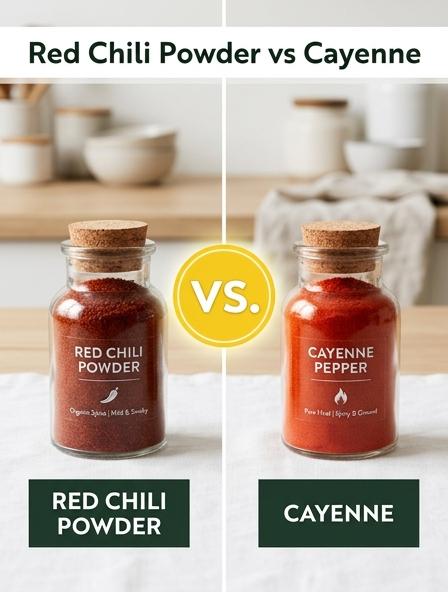
The visual impact of these spices depends largely on their purity and composition. Ground cayenne is known for its high-chroma, vibrant orange-red hue, providing a bright "pop" of color that signals intense heat. In contrast, standard red chili powder is typically a blend of darker peppers, like ancho, combined with earthy spices like cumin and oregano. This results in a deeper, more muted brick-red or mahogany tone that adds a rustic appearance to food.
| Spice Type | Visual Profile | Aesthetic Result |
|---|---|---|
| Cayenne | Vibrant Orange-Red | Bright and Fiery |
| Chili Powder | Deep Brick-Red | Rich and Earthy |
You might prefer the neon-bright intensity of cayenne for a spicy buffalo wing sauce, whereas chili powder is the go-to for achieving that signature dark, authentic mahogany glow in a slow-cooked pot of Texas-style beef chili.
Vitamin Content and Nutritional Values
When comparing red chili powder and cayenne, the nutritional density often depends on purity. Cayenne pepper is a powerhouse of essential nutrients, specifically high in Vitamin A (beta-carotene), which supports vision and immune function. It also contains significant amounts of Vitamin C, B6, and Vitamin E. In contrast, commercial red chili powder is frequently a blend of ground chilies and other spices like cumin or oregano, which can dilute the concentration of these specific vitamins.
- Cayenne: Higher concentration of capsaicin and Vitamin A.
- Red Chili Powder: Provides a broader mineral profile due to blended ingredients.
- Antioxidants: Both spices contain flavonoids that help combat oxidative stress.
While both spices offer metabolic benefits, cayenne is generally more potent per gram. You might choose a pinch of cayenne to fortify a morning wellness shot with antioxidants or reach for the red chili powder to add a complex, vitamin-rich base to a hearty pot of Sunday chili.
Performance in Marinades and Dry Seasonings
Choosing between red chili powder and cayenne depends on whether you prioritize flavor complexity or pure heat. Red chili powder is often a blend of ground chilies mixed with cumin, garlic, and oregano, making it an excellent base for building a robust flavor profile in dry seasonings. Cayenne, however, is a single-ingredient spice that offers a neutral but intense heat, perfect for precision adjustments.
- Red Chili Powder: Best for bulky dry rubs where earthy depth and color are required.
- Cayenne Pepper: Ideal for liquid marinades where you want to add a sharp kick without altering the aromatic balance.
In marinades, cayenne's fine texture allows it to distribute evenly, providing a consistent burn. Red chili powder's coarser, blended nature helps create a savory "crust" on grilled meats, contributing to both texture and taste.
You might use a heavy hand of chili powder to develop a rich, smoky bark on a beef brisket, but opt for a tiny pinch of cayenne in a honey-lime marinade to give your grilled shrimp a hidden heat that doesn't mask the citrus.
Metabolic Impact and Anti Inflammatory Properties
Both red chili powder and cayenne pepper leverage capsaicin to trigger thermogenesis, a metabolic process that elevates the body's core temperature and promotes fat oxidation. While "red chili powder" is often a culinary blend containing milder peppers and spices, pure cayenne pepper provides a concentrated dose of capsaicinoids. This potency is essential for inhibiting substance P, a neuropeptide associated with systemic inflammation and pain signaling.
- Thermogenesis: Cayenne's high heat levels significantly boost calorie-burning potential.
- Cytokine Regulation: Capsaicin helps suppress pro-inflammatory markers in the body.
- Bioavailability: Pure cayenne offers more consistent medicinal benefits than diluted chili blends.
Choosing between them often depends on your tolerance for heat versus your desire for a metabolic edge. You might sprinkle a pinch of sharp cayenne into your post-workout smoothie to soothe muscle soreness and keep your fat-burning furnace active long after you've left the gym.
Additive Presence and Sodium Levels in Store Bought Items
When comparing these two pantry staples, the most significant difference lies in ingredient purity. Pure cayenne pepper is typically 100% ground dried chilies with no fillers. Conversely, commercial chili powder is a complex spice blend that often contains significant amounts of salt and anti-caking agents.
- Cayenne: Usually salt-free, preservative-free, and contains only capsicum.
- Chili Powder: Often includes added sodium, garlic powder, oregano, and silicon dioxide.
Carefully checking labels is essential for those monitoring their blood pressure or looking for clean labels. You might opt for pure cayenne to control every nuance of heat in a delicate dry rub, while reaching for a standard chili powder blend when you need a quick, salty flavor base for a massive pot of game-day chili.
Fragrance Profiles and Aroma During Cooking
The olfactory difference between red chili powder and cayenne is rooted in their ingredient composition. Most red chili powders are blends containing cumin, garlic, and oregano, which release a rich, earthy, and savory fragrance when heated. In contrast, cayenne pepper is a single-ingredient spice, offering a sharp, neutral, and pungent aroma that focuses strictly on heat rather than aromatic complexity.
- Red Chili Powder: Deep, smoky, and complex notes that suggest a slow-cooked meal.
- Cayenne Pepper: Piercing, clean, and slightly acrid scent that signals intense capsaicin.
While cooking, red chili powder creates that classic "taco-night" atmosphere that fills the whole house, but many home cooks prefer a subtle dash of cayenne in a white sauce to provide a hidden spicy kick without interfering with the delicate scent of butter and cream.
Solubility and Consistency in Sauces
The physical composition of red chili powder and cayenne pepper dictates how they integrate into liquids. Cayenne is typically ground into an ultra-fine, uniform powder, offering high solubility. It dissolves almost completely into thin liquids, providing a hit of "clean" heat without altering the sauce's viscosity or leaving a grainy residue.
Conversely, many commercial red chili powders are spice blends containing ground chilies, cumin, and oregano. These components have varying particle sizes and oil contents, which can affect the final mouthfeel of a dish.
- Cayenne: Best for smooth glazes, clear broths, and emulsified hot sauces.
- Red Chili Powder: Ideal for hearty chilis, stews, and thick barbecue sauces where added body is desired.
You might prefer whisking fine cayenne into a translucent buffalo wing sauce to ensure a perfectly smooth, fiery glaze that coats the wings without any distracting grit.
Potency and Shelf Life Stability
The chemical stability of these spices differs significantly due to their composition. Cayenne pepper is a pure ground spice, providing a concentrated heat level of 30,000 to 50,000 Scoville Heat Units. Because it lacks additives, its potency remains predictable over time. In contrast, red chili powder is a blend containing ingredients like cumin, garlic powder, and oregano, which can lead to a faster decline in flavor complexity as different volatile oils oxidize at varying rates.
- Cayenne: High capsaicin retention; typically stays potent for 2–3 years.
- Red Chili Powder: Complex flavor fades faster; best used within 12–18 months.
To preserve quality, keep both spices in airtight containers away from direct sunlight and stovetop heat. You might find that a pinch of aged cayenne still packs a reliable punch in a spicy dry rub, whereas an old bottle of chili powder may lose its aromatic earthiness before it loses its color.
Red Chili Powder vs Cayenne source and external links
- Red chili powder is a versatile spice blend used to add heat and vibrant color to a wide variety of global cuisines, which you can learn more about on this Red chili powder information page.
- Known for its intense heat and medicinal properties, Cayenne pepper is a pungent spice derived from grinding dried peppers of the Capsicum annuum species.