
Raw Sugar vs Coconut Sugar: Comparing Nutrition, Baking Performance, and Health Impact Differences
Nutritional Differences Between Raw Sugar and Coconut Sugar
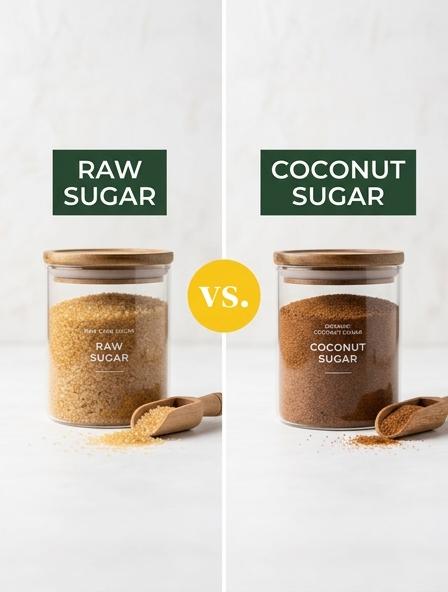
While both serve as caloric sweeteners, raw sugar and coconut sugar differ significantly in their nutrient density and metabolic impact. Raw sugar, such as turbinado, is essentially sucrose that retains a hint of molasses. In contrast, coconut sugar is dehydrated palm sap, which preserves small amounts of minerals and antioxidants.
| Feature | Raw Sugar | Coconut Sugar |
|---|---|---|
| Glycemic Index | High (approx. 65) | Low-Medium (approx. 35-54) |
| Nutrients | Minimal trace minerals | Iron, Zinc, Calcium, Potassium |
| Key Fiber | None | Inulin (prebiotic) |
The inclusion of inulin fiber in coconut sugar may help slow glucose absorption, whereas raw sugar causes a more rapid insulin spike. You might opt for coconut sugar when whisking together a homemade marinade to provide a rich, caramel-like depth of flavor and a steadier energy release for your family dinner.
Performance of Raw Sugar and Coconut Sugar in Baked Goods
When substituting sweeteners in baking, understanding their physical properties is essential for achieving the desired crumb and color. Raw sugar, like turbinado, features large crystals that provide a distinct crunch and a mild molasses flavor. Coconut sugar, while similar in sweetness, has a finer texture and a lower melting point, often leading to a denser, moister result with deep caramel notes.
| Feature | Raw Sugar | Coconut Sugar |
|---|---|---|
| Texture | Coarse/Crunchy | Fine/Granular |
| Browning | Moderate | High/Darker |
| Flavor | Light Toffee | Rich Butterscotch |
While both can be used interchangeably at a 1:1 ratio, coconut sugar's hygroscopic nature can make bakes dry out faster. Many home bakers prefer using raw sugar specifically as a sparkling finish on top of apple galettes to provide a professional, high-contrast crunch.
Flavor Comparison of Raw Sugar and Coconut Sugar in Recipes
Choosing between raw sugar and coconut sugar significantly impacts the final taste profile of your culinary creations. While both serve as popular alternatives to refined white sugar, their flavor characteristics are distinct:
- Raw Sugar: Provides a clean, neutral sweetness with subtle molasses undertones and a satisfying crystalline crunch.
- Coconut Sugar: Offers a deeper, more complex flavor reminiscent of toasted caramel, butterscotch, and warm earthiness.
Because coconut sugar is less sweet than raw sugar, it adds a rustic richness to recipes without being overpowering. However, it can darken the appearance of light-colored bakes. Raw sugar is often preferred for maintaining the original color and brightness of ingredients like lemon or vanilla. You might reach for coconut sugar when crafting a batch of dense, fudgy brownies to enhance the cocoa's depth, while raw sugar is the better choice for a sparkling fruit tart glaze where a clean finish is desired.
Glycemic Index and Health Impact of Raw Sugar and Coconut Sugar
Comparing raw sugar and coconut sugar reveals significant differences in metabolic response. Raw sugar, primarily sucrose, typically has a glycemic index (GI) of around 65, causing rapid blood glucose spikes. In contrast, coconut sugar offers a lower GI, often cited between 35 and 54, partly due to its inulin content, a prebiotic fiber that slows glucose absorption.
- Nutrient Density: Coconut sugar retains trace amounts of iron, zinc, and calcium, whereas raw sugar is largely empty calories.
- Insulin Response: The lower GI of coconut sugar helps manage insulin sensitivity more effectively than refined alternatives.
While coconut sugar presents a more favorable profile for glucose management, both remain caloric sweeteners that require mindful consumption. Choosing between them often depends on whether you prioritize metabolic speed or specific flavor notes like caramel or molasses.
You might prefer swapping raw sugar for coconut sugar in your morning oatmeal or coffee to enjoy a deeper flavor profile while maintaining steadier energy levels throughout your busy workday.
Moisture Levels and Texture in Raw Sugar and Coconut Sugar
The moisture content of a sweetener dictates the final crumb and mouthfeel of baked goods. Raw sugar and coconut sugar differ primarily in their hygroscopic properties and crystal size:
- Raw Sugar: Features large, golden crystals with very low moisture. It remains stable under heat, offering a persistent "crunch."
- Coconut Sugar: Possesses a finer, porous texture and higher natural moisture. It is highly hygroscopic, meaning it absorbs water from the air.
Because coconut sugar behaves similarly to brown sugar, it creates a softer, denser texture. In contrast, the coarse granules of raw sugar do not dissolve as easily, making them ideal for structural integrity and surface decoration. Choosing between them depends on whether your recipe requires a brittle snap or a tender, moist finish.
You will love the sparkling, crystalline lid raw sugar creates on a classic brûlée, whereas coconut sugar is your go-to for achieving that perfect, melt-in-the-mouth moisture in a batch of dark chocolate chip cookies.
Caramelization Effects of Raw Sugar and Coconut Sugar
The caramelization process differs significantly between raw sugar and coconut sugar due to their chemical structures and melting points. Raw sugar, primarily composed of sucrose, requires higher temperatures to break down, resulting in a classic, clear, amber-colored syrup with a stable, glassy finish. In contrast, coconut sugar contains trace minerals and shorter-chain sugars that cause it to brown and reach a "caramel" state much faster and at lower heat.
- Raw Sugar: High heat tolerance; produces a neutral, sweet caramelization ideal for hard candies.
- Coconut Sugar: Low melting point; develops deep, toasted, and nutty flavor profiles rapidly.
While raw sugar offers a predictable golden hue, coconut sugar provides a rich, dark complexity that can easily transition from caramelized to burnt if not monitored closely. You might prefer using coconut sugar when whisking together a thick, dairy-free butterscotch sauce that demands a natural, molasses-like depth and a soft, pourable consistency.
Color and Presentation Impact of Raw Sugar and Coconut Sugar
The choice between raw sugar and coconut sugar fundamentally changes the visual profile of your dishes. Raw sugar, such as turbinado or demerara, is characterized by its light golden hue and large, translucent crystals. It adds a subtle sparkle and maintains the clarity of light-colored liquids. Conversely, coconut sugar is significantly darker, featuring a deep, earthy brown tone similar to cocoa powder. This intense pigmentation will darken batters, creams, and sauces, providing a more rustic and opaque finish.
- Raw Sugar: Offers a glittering, crystalline aesthetic and light tan tint.
- Coconut Sugar: Provides a rich, toasted brown color and a fine, matte texture.
Bakers often choose raw sugar to create a shimmering, golden crust on fruit galettes, while health-conscious chefs prefer coconut sugar to give plant-based brownies a naturally dark, fudgy appearance that diners love.
Raw Sugar and Coconut Sugar Production Methods and Sustainability
The distinction between raw sugar and coconut sugar begins with their extraction processes. Raw sugar is derived from sugarcane juice, which is boiled and centrifuged to retain a thin layer of molasses. Coconut sugar, however, is produced by tapping the nectar of coconut palm flower buds, which is then heated until the water evaporates, leaving behind golden granules.
- Raw Sugar: Typically involves industrial-scale monoculture, which can lead to soil depletion and high water consumption.
- Coconut Sugar: Palms can produce sugar for 20 years, require little water, and support biodiverse ecosystems.
From an environmental standpoint, the Food and Agriculture Organization (FAO) has recognized coconut sugar as the most sustainable sweetener globally because palm trees produce significantly more sugar per acre than cane. You might choose coconut sugar when looking for a sustainable, low-glycemic alternative that adds a deep, caramel-like richness to your morning coffee or vegan dessert recipes.
Vitamin and Mineral Concentration in Raw Sugar and Coconut Sugar
While both sweeteners are primarily sucrose, their micronutrient density varies due to processing methods. Raw sugar is a partially refined product that retains small amounts of molasses, providing trace levels of calcium, iron, and potassium. However, coconut sugar, which is minimally processed from the sap of coconut palms, generally boasts a higher concentration of minerals.
- Coconut Sugar: Contains measurable amounts of iron, zinc, calcium, and potassium, along with antioxidants and the prebiotic fiber inulin.
- Raw Sugar: Primarily provides energy through carbohydrates with only negligible mineral remnants from the sugarcane plant.
Despite these differences, both remain caloric sweeteners and should be consumed in moderation to maintain a balanced diet. You might choose coconut sugar over raw sugar when whipping up a batch of vegan brownies to achieve a deeper caramel undertone while benefiting from its slightly lower glycemic impact.
Weight and Measurement Differences of Raw Sugar and Coconut Sugar
When comparing raw sugar and coconut sugar, the primary difference lies in their density and crystal structure. Raw sugar, such as turbinado, typically consists of large, coarse crystals. In contrast, coconut sugar features a finer, more granular texture similar to traditional brown sugar. While most recipes suggest a 1:1 substitution by volume, their weights can fluctuate significantly.
- Raw Sugar: The large crystals create more air gaps, meaning a cup might weigh less than expected.
- Coconut Sugar: The finer grains pack more densely, often resulting in a heavier weight per cup.
Because of these structural differences, a cup of coconut sugar usually weighs approximately 180 to 200 grams, whereas coarse raw sugar can vary depending on the brand's grain size. Professional bakers often prefer weighing these sweeteners on a digital scale to ensure the perfect moisture balance and crunch when perfecting a batch of chewy ginger cookies.
Raw Sugar vs Coconut Sugar source and external links
- Raw sugar is a minimally processed sweetener that retains some natural molasses, giving it a characteristic golden color and mild caramel flavor.
- Produced from the sap of coconut palm tree blossoms, coconut sugar is a natural sweetener often used as a plant-based alternative to traditional granulated sugar.