
Provolone Cheese vs Mozzarella : The Differences in Flavor Profiles, Culinary Performance, and Nutritional Value.
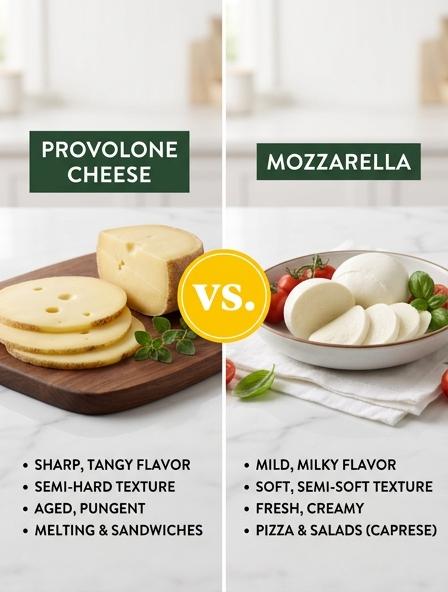
Melting Points and Heat Resistance in Baked Dishes
Understanding the thermal properties of Provolone and Mozzarella is essential for achieving the perfect texture in oven-baked recipes. Mozzarella features a lower melting point and high moisture content, which creates its signature elastic stretch and rapid browning. Conversely, Provolone possesses higher heat resistance, particularly the aged varieties, allowing it to maintain its structural integrity longer before liquefying.
| Characteristic | Mozzarella | Provolone |
|---|---|---|
| Melting Point | Low (~130°F) | Medium (~150°F) |
| Moisture Level | High | Moderate |
| Browning Rate | Fast | Slower |
While Mozzarella provides the iconic "cheese pull," Provolone offers a stable, creamy melt that resists becoming overly greasy at high temperatures. Home chefs often layer sharp Provolone inside a meatball sub to provide a flavorful, melt-resistant barrier, while topping it with Mozzarella for that golden, bubbly finish that everyone craves.
Nutritional Profiles and Caloric Density for Family Meals
Choosing between provolone and mozzarella often depends on your family's specific caloric needs and dietary goals. Mozzarella is typically lower in calories and fat because of its higher water content, serving as an excellent lean protein source for lighter dinners. Provolone, being a semi-hard aged cheese, is more calorically dense but offers a higher concentration of essential minerals and protein per ounce.
| Nutrient (per 28g) | Part-Skim Mozzarella | Provolone |
|---|---|---|
| Calories | ~72-85 kcal | ~100 kcal |
| Protein | ~7g | ~7.5g |
| Calcium | ~15% DV | ~20% DV |
While mozzarella remains the gold standard for a lower-calorie homemade Margherita pizza, many families prefer the sharp richness of provolone to provide a more filling, high-protein boost to a toasted roast beef sandwich.
Flavor Intensity and Aging Process Impacts on Palate
The primary distinction between Provolone and Mozzarella lies in their maturation. While both are pasta filata (stretched-curd) cheeses, their aging processes create vastly different sensory experiences. Mozzarella is a fresh cheese, typically consumed shortly after production to preserve its mild, milky, and buttery profile.
Provolone, however, is intentionally aged to develop complexity. Its flavor intensity is directly tied to the duration of this maturation period:
- Mozzarella: Unaged, offering a subtle, creamy taste and high moisture.
- Provolone Dolce: Aged 2–3 months for a smooth, mild, and semi-sweet flavor.
- Provolone Piccante: Aged 4–12 months, resulting in a sharp, pungent, and piquant bite.
While a home cook might reach for fresh Mozzarella to top a delicate Margherita pizza, a sandwich enthusiast often prefers the bold, savory kick of aged Provolone to elevate a classic warm Italian sub.
Stretching Capability and Elasticity for Pizza Toppings
When evaluating the performance of pizza toppings, mozzarella is the undisputed champion of elasticity. Its "pasta filata" production involves stretching the curd, which aligns protein fibers to create the iconic, long-reaching "cheese pull." Provolone is also a stretched-curd cheese, but its elasticity is generally lower than mozzarella's, especially as it ages and the protein matrix becomes more stable and brittle.
- Mozzarella: High moisture and superior elongation for dramatic, fibrous strands.
- Provolone: Moderate stretch with a creamier melt and better resistance to browning.
While mozzarella offers the bouncy texture traditionalists love, provolone provides a more cohesive melt that holds its shape better under heavy toppings. You will likely find that a 50/50 blend of these two cheeses is the professional secret to achieving a pizza that boasts both a social-media-worthy stretch and a complex, sharp flavor profile.
Sodium Content and Health Considerations for Daily Cooking
When balancing flavor and nutrition in daily meals, the sodium profile of your cheese choice is a primary health consideration. Mozzarella is generally the leaner, heart-healthier option, whereas Provolone undergoes an aging process that significantly increases its salt concentration.
- Mozzarella: Typically contains 400–600mg of sodium per 100g, making it ideal for salt-sensitive diets.
- Provolone: Averages 800–900mg of sodium per 100g, providing a sharper taste but requiring stricter portion control.
While Provolone offers slightly higher levels of calcium and protein, the lower salt profile of Mozzarella makes it superior for those managing hypertension or water retention. For a lighter mid-week meal, many health-conscious cooks love layering fresh Mozzarella over heirloom tomatoes and basil for a classic Caprese salad that prioritizes fresh flavor over heavy sodium intake.
Browning Characteristics and Crust Formation Under Heat
The visual and textural transformation of cheese during baking is driven by the Maillard reaction and oil release. While both cheeses are prized for their melting capabilities, they behave differently under high heat:
- Mozzarella: Known for its high moisture and galactose content, it produces the iconic "leopard spotting"-small, localized dark blisters-while maintaining a soft, elastic pull.
- Provolone: With lower moisture and a higher fat-to-protein ratio, Provolone tends to brown more uniformly across the surface, creating a thicker, slightly crispier crust.
Because Provolone browns faster and more intensely than Mozzarella, it is frequently used as a top layer or in blends to achieve a deep golden hue without overcooking the rest of the dish.
You might choose a sharp Provolone for a toasted deli sandwich to achieve that satisfying, bubbly crunch that stands up to a hearty baguette.
Storage Life and Preservation in Home Refrigeration
When comparing the longevity of Provolone and Mozzarella, moisture content is the primary factor. Provolone is a semi-hard cheese that undergoes an aging process, allowing it to withstand longer storage periods than its softer counterparts. Conversely, the high water content in fresh Mozzarella makes it highly perishable.
- Provolone: Unopened packages stay fresh for up to 4 months; opened slices typically last 2 to 3 weeks when wrapped tightly.
- Fresh Mozzarella: Should be consumed within 5 to 7 days of opening to ensure safety and texture.
- Low-Moisture Mozzarella: This firm variety bridges the gap, lasting roughly 3 weeks after the seal is broken.
To maximize shelf life, store these cheeses in the vegetable crisper drawer where humidity is stable. You will find that stocking aged Provolone is perfect for long-term meal planning, while fresh Mozzarella is best reserved for immediate use in a Saturday night Caprese salad.
Slicability and Grating Efficiency for Meal Prep
When prepping in bulk, texture dictates efficiency. Provolone is a semi-hard cheese with a compact structure, making it exceptionally easy to slice into uniform pieces or grate without it turning into a mushy mess. Its aging process reduces moisture, ensuring it holds its shape against a box grater or mandoline.
In contrast, Mozzarella-especially fresh varieties-has a high water content and a supple, elastic curd. This makes manual grating difficult unless the cheese is partially frozen first. Low-moisture Mozzarella is easier to handle than fresh, but still lacks the rigid density of Provolone.
- Provolone: Firm enough for ultra-thin deli slices and clean, non-stick shredding.
- Mozzarella: Best for thick slices or tearing; tends to clump when grated finely.
You will appreciate the structural integrity of Provolone when you need to quickly shred a large block for a weekend meal-prep bake without the cheese sticking to the grater blades.
Fat Composition and Oil Release During Melting
The primary difference in melting behavior between Provolone and Mozzarella lies in their fat-to-protein ratios and moisture levels. Provolone, particularly aged varieties, possesses a higher fat content and lower moisture than fresh Mozzarella. When exposed to high heat, the protein matrix in Provolone collapses more significantly, leading to a phenomenon known as "oiling off."
- Mozzarella: High moisture and lower fat content results in a superior stretch with minimal oil release.
- Provolone: Higher lipid concentration creates a significant oil release, contributing to a rich, buttery mouthfeel.
While Mozzarella provides the structural integrity and famous "cheese pull," Provolone adds the depth of flavor and those glistening oil pockets that enhance the overall richness of a dish. For the ultimate gourmet pizza, many enthusiasts blend the two, ensuring a perfect stretch from the Mozzarella while the Provolone provides a flavorful, shimmering golden finish that elevates every bite.
Cost Effectiveness and Versatility for Weekly Grocery Planning
Optimizing your grocery budget requires balancing price with culinary flexibility. Mozzarella is generally the more cost-effective choice, especially when purchased in low-moisture blocks, making it a staple for bulk cooking like lasagna, pizza, and casseroles. Provolone, while often slightly more expensive due to its aging process, provides a sharper flavor profile that adds depth to dishes without requiring additional expensive spices or condiments.
| Feature | Mozzarella | Provolone |
|---|---|---|
| Price Range | Budget-Friendly | Moderate |
| Key Strength | Superior Meltability | Piquant Flavor |
| Best For | Pasta & Pizza | Deli Sandwiches |
You might choose bulk mozzarella for a family-sized baked ziti on Monday, then rely on a few slices of sharp provolone to elevate your Thursday night steak sandwiches with a gourmet, smoky kick.
Provolone Cheese vs Mozzarella source and external links
- Provolone Cheese is an Italian semi-hard cheese aged for varying lengths of time to achieve a flavor profile that ranges from mild and sweet to sharp and piquant.
- Mozzarella is a traditionally southern Italian curd cheese made by the stretch-and-pull method, widely celebrated for its mild flavor and excellent melting properties.