
Porcini Mushroom vs Truffle: Which is Best for Aromatic Intensity, Kitchen Budget, and Culinary Versatility?
Aromatic Intensity and Scent Profiles
The olfactory distinction between porcini mushrooms and truffles is a study in subtlety versus power. Porcini mushrooms offer a warm, approachable fragrance characterized by deep nuttiness and the damp, sweet scent of a pine forest. Their aroma is robust but comforting, acting as a foundational element in cooking.
In contrast, truffles possess an aggressive, complex aromatic intensity that is often described as intoxicating or even primal. While porcini are woodsy, truffles lean toward pungent, musky, and garlicky notes. The following highlights their primary scent characteristics:
- Porcini: Earthy, toasted hazelnut, and sourdough.
- Black Truffle: Damp earth, cocoa, and dried fruit.
- White Truffle: Sharp garlic, methane, and honeyed musk.
Imagine a chef shaving paper-thin slices of fresh white truffle over a simple bowl of buttered tagliatelle, instantly releasing a heady perfume that transforms the entire room into a gourmet sanctuary.
Price Points and Kitchen Budget Impact
The financial commitment required for these ingredients varies significantly, impacting how they are utilized in a professional or home kitchen. While porcini mushrooms are a premium product, they remain relatively accessible, especially when purchased in their dried form. Truffles, however, are high-stakes luxury commodities with prices that fluctuate based on seasonal scarcity, often reaching thousands of dollars per pound.
| Ingredient | Market Position | Usage Impact |
|---|---|---|
| Porcini | Gourmet Staple | Centerpiece ingredient |
| Truffle | Ultra-Luxury | Finishing garnish |
You might opt for a generous handful of porcinis to add meaty depth to a rustic Sunday stew, while reserving a few precious grams of shaved white truffle to transform a simple plate of buttered tagliatelle into an unforgettable anniversary masterpiece.
Texture and Mouthfeel in Finished Dishes
The culinary distinction between porcini mushrooms and truffles is most apparent in their physical presence on the palate. Porcini are celebrated for their meaty, succulent texture. When cooked, they become silky and tender while retaining enough structure to provide a satisfying, substantial bite. Conversely, truffles are rarely consumed for bulk; they offer a firm, slightly brittle crunch when shaved raw or an integrated richness when infused into fats.
- Porcini: Thick, velvety, and buttery; they add volume and a "chew" to the plate.
- Truffles: Paper-thin, crisp, and ephemeral; designed to provide a delicate topographical accent.
Home cooks often prefer the hearty, mushroomy chunks of sautéed porcini folded into a rustic risotto, while gourmet enthusiasts crave the way paper-thin truffle shavings provide a momentary, crisp contrast before melting into a warm plate of handmade tagliatelle.
Sourcing Realities and Seasonal Availability
The primary distinction between porcini mushrooms and truffles lies in their elusive growth patterns and harvesting methods. Both are mycorrhizal, meaning they form symbiotic relationships with tree roots, making commercial cultivation extremely difficult. Porcini (Boletus edulis) typically emerge in temperate forests during late summer and autumn, often appearing after heavy rains.
Truffles are far more restrictive, growing entirely underground. While porcini are spotted by the keen eyes of foragers, truffles require the sensitive noses of trained dogs or pigs. Their availability is strictly dictated by the calendar:
- Porcini: Peak season occurs from September to November.
- White Truffles: Rare gems harvested from October to December.
- Black Truffles: Available in winter varieties (the "black diamond") and lighter summer versions.
You might find yourself browsing a rustic Italian farmer's market in late October, weighing the choice between a basket of meaty, freshly-picked porcini or a single, aromatic white truffle to grate over your evening risotto.
Heat Application and Flavor Stability
The culinary utility of porcini mushrooms versus truffles is largely defined by their reaction to thermal energy. Porcini mushrooms are physically resilient; their meaty texture and umami-rich flavor profile actually intensify through sautéing, roasting, or braising. In contrast, truffles are highly volatile. Their signature musk is composed of delicate compounds that evaporate almost instantly when subjected to high heat, making them unsuitable for long cooking processes.
| Feature | Porcini Mushrooms | Truffles |
|---|---|---|
| Heat Tolerance | High; flavor concentrates | Low; aroma dissipates |
| Application | Stews, sauces, and roasts | Garnish, infusions, and shaving |
You might choose to slow-simmer dried porcinis into a hearty autumn soup to build a robust base, whereas you would save a fresh truffle to shave over warm risotto at the very last second to capture its fleeting, earthy perfume.
Nutritional Density and Dietary Benefits
Both porcini mushrooms and truffles are nutritional powerhouses, yet they offer distinct dietary advantages. Porcini mushrooms (Boletus edulis) are high in dietary fiber and plant-based protein, providing essential minerals like selenium and potassium that support heart health. In contrast, truffles are prized for their exceptional antioxidant profile, containing bioactive compounds that help reduce inflammation and oxidative stress.
- Porcini: Excellent source of B vitamins and ergosterol for immune support.
- Truffles: High concentration of Vitamin C, phosphorus, and calcium in small servings.
While both are low in calories and fat-free, porcini provide more substantial volume for those seeking satiety, whereas truffles offer a dense hit of micronutrients. You might find a health-conscious runner refueling with a hearty porcini stir-fry for sustained energy, while a fine-dining enthusiast prefers the delicate, antioxidant-rich shavings of a black truffle over pasta to indulge in a guilt-free, luxury flavor experience.
Storage Requirements and Shelf Life
Both porcini mushrooms and truffles are highly perishable, requiring specific environments to maintain their potency. Porcini have a short fresh window, whereas truffles are extremely volatile due to rapid aroma loss.
- Porcini: Fresh specimens last 2–3 days in a paper bag in the refrigerator. They are excellent for drying, which preserves their concentrated flavor for months.
- Truffles: These should be wrapped in paper towels inside an airtight glass jar. They lose significant aroma daily, typically lasting only 5–7 days.
While porcini adapt well to freezing or dehydration, truffles are best consumed immediately to capture their fleeting chemical complexity. Effective moisture management is essential to prevent mold and decay in both varieties.
You might appreciate the pantry-stable reliability of dried porcini for a spontaneous winter risotto, but you should treat a fresh truffle as a time-sensitive luxury to be shaved over pasta the very evening it arrives.
Culinary Versatility in Home Cooking
When comparing kitchen utility, porcini mushrooms are the versatile workhorses of the fungi world. Their meaty texture and nutty, umami-rich profile allow them to act as a substantial meat substitute or a hearty addition to stews and sauces. Unlike truffles, porcini can be sautéed, roasted, or braised without losing their integrity. Truffles, however, are prized as luxury finishing agents; their volatile aromatics are best preserved by shaving them raw over warm dishes rather than cooking them.
- Porcini: Ideal for risottos, pasta sauces, and grilled side dishes.
- Truffles: Best used to infuse fats like butter, oils, or eggs with intense aroma.
Home chefs love the rustic comfort of a slow-simmered porcini ragu for a Sunday family dinner, whereas they might reserve a single black truffle to shave over soft-scrambled eggs for a sophisticated, once-in-a-lifetime brunch experience.
Visual Appeal and Aesthetic Presentation
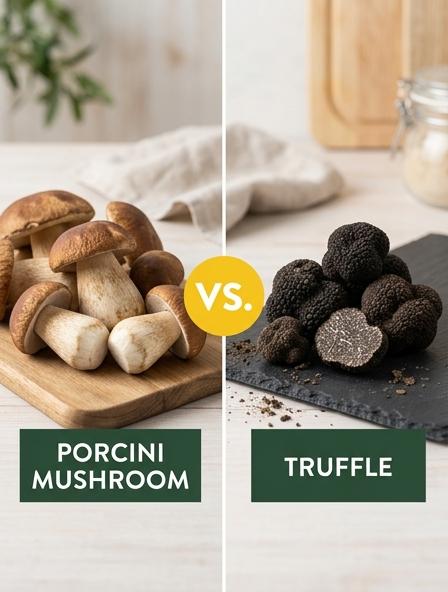
The visual distinction between porcini mushrooms and truffles defines their unique culinary identities. Porcini mushrooms (Boletus edulis) embody the classic woodland aesthetic, featuring thick, sturdy stalks and broad, chestnut-colored caps. In contrast, truffles are subterranean tubers with a rugged, irregular exterior that resembles small stones or clumps of earth.
| Feature | Porcini Mushroom | Truffle (Black/White) |
|---|---|---|
| Physical Form | Classic cap and stem | Amorphous, knobby tuber |
| Internal Pattern | Uniform, fleshy white | Intricate, marble-like veins |
| Plating Style | Hearty chunks or halves | Paper-thin, translucent shavings |
While the porcini offers a rustic and substantial presence on the plate, the truffle is prized for the delicate, lace-like patterns revealed when sliced. You might prefer the bold, "fairytale" look of a whole sautéed porcini in a country-style ragu, or you may opt for the sophisticated elegance of white truffle shavings cascading over a minimalist butter pasta.
Preparation Complexity and Kitchen Performance
The culinary utility of porcini versus truffles is defined by their relationship with heat. Porcini mushrooms are versatile "workhorses" in the kitchen; their dense, meaty texture allows them to be grilled, sautéed, or braised without losing structural integrity. They provide a foundational earthy flavor to stocks and sauces.
In contrast, truffles are prized for their volatile aromatics, which dissipate quickly when exposed to high temperatures. They require minimal "cooking" but high precision, usually involving a specialized slicer or microplane.
- Porcini: High heat tolerance; requires cleaning of gills and stalks; adds volume to dishes.
- Truffles: Heat-sensitive; used exclusively as a finishing element; adds intense olfactory depth.
Home cooks often prefer the approachable nature of pan-searing porcini in butter for a robust side dish, while dinner party hosts love the theater of shaving raw black truffles over a simple carbonara to instantly transform a humble meal into a luxury event.
Porcini Mushroom vs Truffle source and external links
- The Porcini Mushroom is a highly sought-after edible fungus known for its rich, nutty flavor and thick, meaty cap.
- A Truffle is a strong-smelling subterranean fungus that is widely prized as a luxury gourmet delicacy in fine dining.