
Plum Tomato vs Roma Tomato: Which is Best for Thick Sauces, Home Canning, and Oven Roasting?
Sauce Consistency and Water Content in Paste Varieties
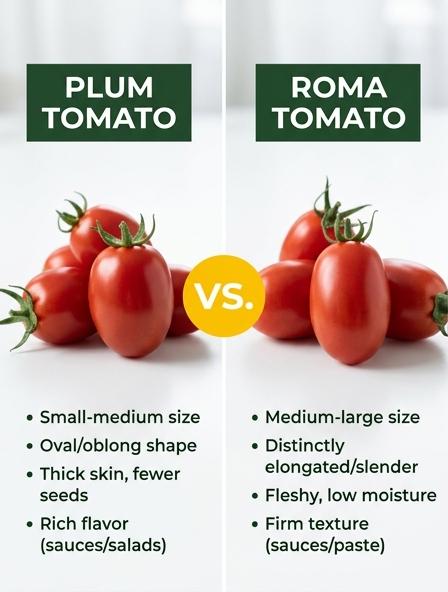
When comparing Plum and Roma tomatoes, the primary culinary advantage lies in their low moisture levels. As quintessential "paste" varieties, they possess thick, meaty walls and significantly fewer seed cavities than standard slicing tomatoes. This high solids-to-liquid ratio ensures a dense, velvety sauce consistency without requiring hours of evaporation or heavy reduction.
- Low Water Content: Minimizes cooking time and prevents watery separation on the plate.
- High Pectin Levels: Naturally thickens sauces for a rich, smooth mouthfeel.
- Structural Integrity: Holds shape well during roasting before being processed into a purée.
Roma tomatoes, the most famous cultivar of the plum family, are specifically bred for this uniform texture and predictable yield. Home cooks love roasting a batch of halved Romas with garlic and olive oil, then blending them into a thick, restaurant-quality marinara that clings perfectly to every strand of pasta.
Flavor Profiles and Aromatic Changes During Simmering
Plum tomatoes, with the Roma being the most famous cultivar, are prized for their high pectin content and low seed count. When raw, these tomatoes possess a mild, balanced acidity. However, the true transformation occurs during the simmering process. As heat is applied, the dense flesh breaks down, concentrating natural sugars and intensifying the savory umami notes that define Italian-style sauces.
- Texture: High solid-to-liquid ratio ensures a thick, velvety consistency.
- Aromatics: Simmering converts "green" volatile compounds into deep, fruity, and caramelized scents.
- Concentration: Reduced water content allows flavors to peak faster than with juicier beefsteak varieties.
Imagine the rich, sweet fragrance filling your kitchen as a pot of Roma tomatoes reduces into a thick marinara, the perfect base for a slow-cooked Sunday gravy that many families cherish for its deep, traditional taste.
Dietary Fiber and Nutrient Density of Dense Cultivars
Plum and Roma tomatoes are characterized by their low moisture content and thick fruit walls, features that significantly boost their nutrient density. Because these cultivars contain less water than standard slicing tomatoes, they provide a higher concentration of beneficial compounds per gram. These dense varieties are excellent sources of dietary fiber, which aids in digestion and promotes satiety. Additionally, their meaty texture houses significant levels of essential micronutrients:
- Lycopene: A powerful antioxidant linked to heart health.
- Vitamin C: Essential for immune function and skin integrity.
- Potassium: Critical for maintaining healthy blood pressure levels.
The structural integrity and high fiber content of these tomatoes make them the go-to choice for fitness enthusiasts who meal-prep thick, nutrient-dense salsas that stay fresh and chunky throughout the work week.
Flesh Thickness and Seed Counts for Homemade Purees
When crafting the perfect homemade puree, the structural differences between Plum and Roma tomatoes are vital. While "Plum" is the overarching category, the Roma variety is the specific cultivar prized for its dense, "meaty" interior. Both are characterized by significantly lower moisture levels than beefsteak varieties, but Romas are engineered for processing due to these specific traits:
- Thick Cell Walls: Provides a robust, pulpy texture that holds up during long reduction cycles.
- Minimal Seed Cavities: Fewer seeds and less locular juice mean less bitterness and easier straining.
- High Soluble Solids: Results in a naturally thicker consistency without excessive boiling.
Home cooks often reach for a crate of Romas when preparing a large batch of traditional Sunday gravy, as the high flesh-to-seed ratio ensures a velvety, rich sauce that clings perfectly to pasta without becoming watery on the plate.
Peeling Efficiency and Surface Texture for Preservation
When preserving tomatoes, the relationship between skin thickness and flesh density is critical for achieving a professional-grade texture. Plum tomatoes, including the popular Roma variety, are characterized by their smooth, uniform surface and firm outer walls. These structural traits make them superior for blanching; their skins are resilient enough to hold the fruit's shape during boiling but possess a cellular structure that detaches cleanly when shocked in ice water.
| Trait | Roma Tomato | General Plum Varieties |
|---|---|---|
| Skin Type | Thick and smooth | Varies (Thin to Medium) |
| Peeling Ease | Excellent (Slides off) | Good to Moderate |
Because these tomatoes have fewer seed cavities and a lower water-to-flesh ratio, the integrity of the fruit remains intact throughout the peeling process. Home cooks love the satisfying moment when a quick ice bath causes the skins of blanched Romas to split and slide off in one piece, ensuring a perfectly textured batch of winter salsa.
Culinary Performance in High Temperature Oven Roasting
When subjected to high-temperature oven roasting, plum and Roma tomatoes are top performers due to their dense flesh and low moisture content. As a specific variety of the plum category, the Roma possesses thick cell walls and a low seed count, which prevents the fruit from disintegrating or becoming watery under intense heat.
Key benefits of roasting these varieties include:
- Concentrated Flavor: Reduced water levels intensify natural sugars and acidity.
- Structural Integrity: They retain their shape, making them ideal for tray bakes.
- Caramelization: High pectin levels promote a rich, savory char on the skin.
Home cooks frequently choose halved Roma tomatoes for slow-roasting with garlic and thyme to create a deeply flavored, jammy base for artisan focaccia or concentrated homemade pasta sauces.
Sugar Content and Natural Acidity in Summer Harvests
During the peak of the summer harvest, plum tomatoes-including the specific Roma cultivar-develop a concentrated flavor profile characterized by a high sugar-to-water ratio. Because these varieties contain fewer seed compartments and less locular juice than slicing tomatoes, their natural sugars (measured as Brix levels) and organic acids are more dense. This chemical balance is essential for achieving a rich, savory "umami" taste after cooking.
- Roma Tomatoes: Typically offer a consistent, mild acidity that balances their firm, meaty texture.
- Plum Hybrids: May vary in sweetness depending on the specific variety and soil potassium levels.
The synergy between natural acidity and accumulated sugars ensures the fruit maintains its structural integrity during heat processing while providing a bright, tangy finish. You might find that slow-roasting a tray of halved Romas is the best way to caramelize those concentrated summer sugars into a jammy, intense base for a gourmet pizza sauce.
Room Temperature Stability and Pantry Shelf Life
Plum and Roma tomatoes offer excellent shelf stability due to their thick skins and low moisture content. Unlike delicate heirlooms, these fleshy fruits resist bruising and dehydration, making them ideal for room-temperature storage. Keeping them in the pantry rather than the fridge preserves their enzymatic activity, ensuring the flavor remains rich rather than mealy.
- Roma Shelf Life: 5–7 days at room temperature.
- Plum Varieties: 4–8 days depending on ripeness at purchase.
- Storage Tip: Store stem-side down to minimize moisture loss through the scar.
You will appreciate how these tomatoes remain firm and sliceable on your counter all week, ensuring you always have the perfect base for a quick Tuesday night pomodoro sauce.
Physical Integrity and Texture in Layered Baked Dishes
When evaluating plum versus Roma tomatoes for structural baking, their low moisture content is the deciding factor. While "plum" refers to the broader category of oval-shaped cultivars, the Roma variety is specifically prized for its thick fruit walls and minimal seed cavities. In layered dishes like eggplant parmigiana or vegetable tians, these tomatoes maintain their physical integrity under high heat rather than collapsing into a liquid slurry.
- High Solids Content: Ensures the layers remain distinct and firm.
- Reduced Pectin Breakdown: Helps the slices retain a "meaty" toothsome texture.
- Lower Seed-to-Pulp Ratio: Prevents excess water from making crusts or pasta layers soggy.
Because these tomatoes concentrate their sugars without releasing excessive juice, they are the superior choice for tiered casseroles. You will love how Roma slices hold their shape in a savory galette, providing a professional, clean-cut appearance that keeps your pastry crisp and your guests impressed.
Lycopene Levels and Bioavailability in Cooked Applications
When comparing plum and Roma tomatoes, their nutritional value is most effectively unlocked through heat. Both varieties are dense in lycopene, a powerful antioxidant linked to heart health. Thermal processing breaks down the sturdy cell walls inherent in these meaty fruits, significantly increasing lycopene's bioavailability for the human body.
| Nutritional Factor | Roma Tomato | Plum Tomato Variety |
|---|---|---|
| Pulp Density | Very High | High |
| Lycopene Concentration | Concentrated during reduction | High in meat-heavy cultivars |
Because Roma tomatoes have a superior pulp-to-liquid ratio, they concentrate nutrients more efficiently during reduction than juicier varieties. This makes them the premier choice for creating nutrient-dense culinary bases like pastes and sun-dried treats. Home chefs often choose to slow-roast a tray of halved Romas with olive oil and garlic to create a concentrated, bioavailable sauce that maximizes both flavor and heart-healthy antioxidants.
Plum Tomato vs Roma Tomato source and external links
- Plum tomatoes are oval-shaped fruits primarily used for making sauces and pastes due to their low moisture content and few seeds.
- The Roma tomato is a popular variety of plum tomato known for its firm texture and thick skin, making it an ideal choice for canning and stews.