
Pinto Bean vs Navy Bean : Comparing Nutrition, Texture, and Cooking Performance Differences
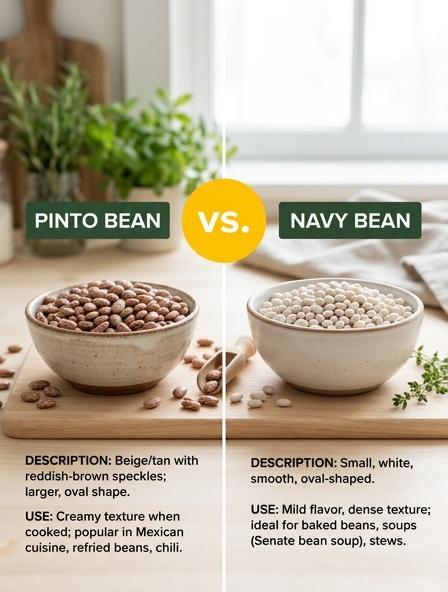
Pinto and Navy Bean Texture Comparison in Slow Cooking
In the controlled environment of a slow cooker, pinto and navy beans behave differently due to their size and starch content. Pinto beans are larger and maintain a creamy, buttery interior while generally keeping their oval shape intact. In contrast, navy beans-often referred to as pea beans-are smaller and more delicate. During long cooking cycles, navy beans tend to break down more readily, releasing starches that act as a natural thickener for the surrounding liquid.
- Pinto Beans: Retain a soft, tender bite; excellent for chunky textures.
- Navy Beans: Transform into a smooth, velvety consistency; ideal for pureed bases.
While pinto beans are the go-to for a robust slow-cooked Tex-Mex chili, many people love using navy beans in a classic ham and bean soup where the legumes dissolve just enough to create a rich, comforting broth that clings to every spoonful.
Nutritional Profiles and Mineral Content of Both Varieties
Pinto and navy beans are nutritional powerhouses, offering dense concentrations of plant-based protein, complex carbohydrates, and essential micronutrients. While their caloric profiles are similar, their mineral distributions vary. Navy beans are particularly notable for their exceptionally high fiber content and manganese levels, which support bone health and metabolic function. Conversely, pinto beans provide a robust supply of folate and molybdenum, essential for DNA synthesis and detoxification processes.
| Nutrient Focus | Pinto Bean | Navy Bean |
|---|---|---|
| Key Minerals | Folate, Magnesium | Manganese, Copper |
| Fiber Density | High | Very High |
Home cooks often reach for the creamy pinto bean to create a protein-rich base for zesty Mexican burritos, while those aiming for a fiber-heavy, heart-healthy meal frequently choose the small navy bean for a classic, slow-simmered navy bean soup.
Cooking Duration and Softening Rates for Dry Legumes
When comparing pinto beans vs navy beans, cooking duration is a primary differentiator. Navy beans, characterized by their smaller size and thinner skins, typically exhibit faster softening rates. Pinto beans are denser and require more time to achieve a buttery consistency.
- Navy Beans: Approximately 60 to 90 minutes after soaking.
- Pinto Beans: Usually 90 to 120 minutes after soaking.
Hydration plays a critical role in these timelines. Utilizing an overnight soak reduces the boiling period for both legumes by roughly 25%, ensuring uniform texture and better digestibility. While pinto beans maintain their structural integrity longer under heat, navy beans soften more rapidly, often acting as a natural thickener for liquids.
You may find yourself reaching for navy beans when a quick, velvety soup is needed for a weeknight dinner, while opting for the longer-simmering pinto bean to develop the deep, earthy flavors essential for authentic slow-cooked barbecue sides.
Flavor Intensity and Impact in Hearty Soups
The choice between pinto and navy beans fundamentally shifts the flavor profile of a soup. Pinto beans are known for their robust, earthy, and slightly nutty notes, providing a rich depth that can stand up to heavy spices. In contrast, navy beans offer a much milder, almost neutral flavor, making them an ideal "flavor sponge" that highlights the aromatic herbs and vegetables in the broth.
| Feature | Pinto Bean | Navy Bean |
|---|---|---|
| Flavor Profile | Earthy & Bold | Mild & Delicate |
| Texture Impact | Creamy & Dense | Velvety & Smooth |
You might choose the hearty pinto bean for a rustic, spicy southwestern stew where you want the legume to be a focal point, or reach for navy beans when simmering a classic, smoky ham and bean soup where a subtle, creamy background is desired.
Fiber and Protein Density for Healthy Meal Planning
When optimizing your diet for longevity, understanding the nutrient density of pinto and navy beans is essential. Both legumes are exceptional sources of plant-based protein, yet they differ slightly in their fiber profiles. Navy beans are often considered the "fiber kings," providing approximately 19 grams per cooked cup, which is slightly higher than the 15 grams found in pinto beans.
- Navy Beans: Higher fiber density, making them superior for glycemic control and digestive regularity.
- Pinto Beans: Excellent protein-to-calorie ratio, rich in essential minerals like manganese and phosphorus.
Incorporating these beans into a weekly rotation ensures a steady intake of complex carbohydrates and essential amino acids. While navy beans offer a slight edge in total dietary fiber, pinto beans provide a robust, creamy texture that pairs well with various spices. You might choose to simmer navy beans into a Mediterranean-style stew when you want a high-fiber lunch that prevents a mid-afternoon energy crash.
Mashing Performance and Creaminess for Side Dishes
When comparing pinto and navy beans for mashed side dishes, the primary difference lies in the final texture. Navy beans are frequently favored for their exceptionally soft skins and high starch content, which allows them to break down into a silky, velvety puree. Pinto beans, while also creamy, offer a denser and more substantial mouthfeel, often retaining a slightly rustic grit even after being thoroughly smashed.
- Navy Beans: Deliver a smooth, uniform consistency ideal for white bean spreads.
- Pinto Beans: Provide a hearty, earthy base that excels in chunky, traditional preparations.
You might choose the pinto bean for a robust, pan-fried mash to accompany tacos, while the navy bean is your best bet for a light, garlic-infused whipped side dish that mimics the texture of mashed potatoes.
Visual Appearance and Shape Retention in Finished Plates
The visual impact of a dish is heavily influenced by a bean's ability to withstand heat. Pinto beans, which start with a speckled exterior, cook down into a solid, medium-brown color. They possess a softer texture that often results in a creamy consistency, causing them to lose their distinct oval silhouette as they break down into the cooking liquid.
- Pinto Beans: Earthy pinkish-brown tone; tends to merge into sauces and gravies.
- Navy Beans: Stark white; maintains a firm, small, and uniform structure.
In contrast, navy beans are celebrated for their remarkable shape retention. Despite their small size, they stay whole and firm even after hours of simmering, providing a consistent texture across the plate. Their bright white appearance offers a sharp contrast against vibrant vegetable medleys or dark tomato bases.
You may find yourself choosing navy beans when crafting a slow-cooked cassoulet to ensure every bite features perfectly defined, whole beans rather than a uniform mash.
Impact on Sauce Thickness and Liquid Consistency
The starch content and skin density of pinto and navy beans dictate the final viscosity of soups, stews, and sauces. Navy beans are smaller and have thinner skins, allowing them to break down more easily during extended cooking. This disintegration releases high amounts of starch, which acts as a natural thickener, creating a smooth, velvety consistency. Pinto beans are larger and more robust; while they produce a creamy mouthfeel, they generally maintain their shape unless manually mashed, resulting in a liquid that remains more fluid than that of navy beans.
| Bean Variety | Consistency Profile | Thickening Power |
|---|---|---|
| Navy Bean | Dissolves into a rich, uniform gravy. | High |
| Pinto Bean | Creates a silky broth while staying intact. | Moderate |
Home cooks typically reach for navy beans to achieve the dense, syrupy texture of classic Boston baked beans, while pinto beans are preferred for brothy Tex-Mex pinto beans served with cornbread.
Vitamin Profiles and Daily Nutritional Value
Pinto and navy beans are nutrient-dense legumes that significantly contribute to your daily value of essential B vitamins. While both support heart health and energy metabolism, their specific concentrations vary slightly. Navy beans are widely recognized for their exceptional folate (B9) content, which is vital for cell repair and cardiovascular health. Pinto beans, conversely, offer a slightly higher concentration of Vitamin B6, essential for brain development and immune function.
- Folate (B9): Higher in Navy beans, aiding in DNA synthesis.
- Vitamin B6: More abundant in Pinto beans for nervous system support.
- Thiamin (B1): Richly present in both to help the body convert nutrients into energy.
Health-conscious diners often reach for folate-rich navy beans to support heart health in light summer salads, while many families love the reliable B-vitamin profile pinto beans provide in a classic, comforting bowl of slow-cooked chili.
Storage Longevity and Pantry Preparation Requirements
Both pinto and navy beans are essential for long-term food storage. When kept in a cool, dry pantry, dried beans maintain peak quality for 2 to 3 years. For emergency preparedness, sealing them in airtight containers with oxygen absorbers extends their viability for over a decade. While their shelf lives are similar, their preparation requirements vary slightly:
- Pinto Beans: Featuring thicker skins, they typically require 60 to 90 minutes of simmering and benefit most from a long overnight soak to achieve a creamy consistency.
- Navy Beans: Their smaller size allows for a shorter cook time of 45 to 60 minutes, and they maintain structural integrity better during high-pressure canning.
Regardless of the variety, pre-soaking is critical to neutralize lectins and improve digestibility. You might reach for the quick-cooking navy bean when preparing a spontaneous pot of savory white chili, whereas the pinto bean remains the gold standard for a slow-simmered batch of traditional, hearty refried beans.
Pinto Bean vs Navy Bean source and external links
- The pinto bean is a popular variety of common bean distinguished by its mottled skin and creamy texture when cooked. Read more about the Pinto Bean.
- The navy bean is a small, white legume that is widely used in commercial canning and is the primary ingredient in traditional baked beans. Read more about the Navy Bean.