
Pink Peppercorns vs Red Peppercorns: Comparing Flavor, Botanical, and Culinary Differences
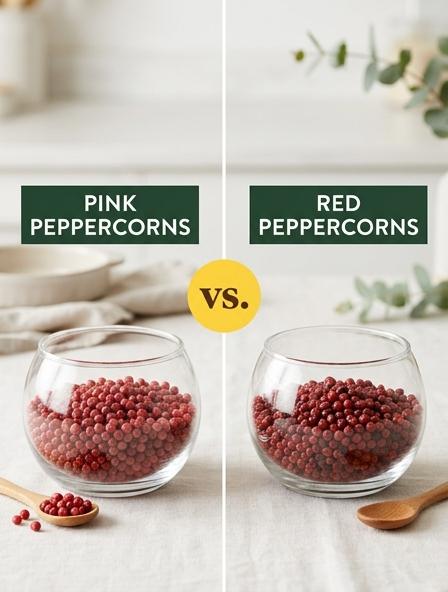
Flavor Profiles and Heat Levels Comparison
Understanding the distinction between pink and red peppercorns is vital for balancing culinary flavors. Pink peppercorns are actually dried berries from the Brazilian pepper tree, offering a delicate, fruity, and resinous profile with minimal heat. In contrast, authentic red peppercorns are fully ripened Piper nigrum berries, delivering a complex, pungent spice paired with a deep, earthy sweetness.
- Pink Peppercorns: Sweet, floral, and citrusy; very mild heat.
- Red Peppercorns: Robust, biting, and savory; moderate to high heat.
The botanical difference dictates their usage: pink berries provide a light aromatic touch, while red peppercorns provide the traditional "kick" associated with true pepper. You might reach for the floral notes of pink peppercorns when garnishing a delicate scallop ceviche, whereas the intense heat of red peppercorns is the preferred choice for a bold, peppercorn-crusted prime rib.
Nutritional Value and Health Impact for Home Cooking
While they share a vibrant hue, pink and red peppercorns offer distinct nutritional profiles. Pink peppercorns are dried berries from the cashew family, containing anthocyanins that provide anti-inflammatory benefits; however, they carry an allergen risk for those sensitive to tree nuts. In contrast, true red peppercorns are fully ripened Piper nigrum fruits. These are packed with piperine, which enhances metabolic function and improves the bioavailability of other nutrients in your meals.
| Feature | Pink Peppercorns | Red Peppercorns |
|---|---|---|
| Origin | Schinus molle (Berries) | Piper nigrum (Fruit) |
| Health Benefit | Antioxidant support | Digestive aid |
You might prefer crushing delicate pink peppercorns over a summer salad for a mild, fruity zest, while choosing robust red peppercorns for slow-cooked stews to utilize their intense heat and digestive-boosting properties.
Culinary Performance in Hot and Cold Recipe Applications
Understanding the distinction between pink and red peppercorns is vital for flavor precision. Pink peppercorns, derived from the Brazilian pepper tree, offer a delicate, resinous sweetness that is easily destroyed by high heat. In contrast, true red peppercorns-fully ripened Piper nigrum berries-possess a robust pungency that withstands intensive cooking.
- Hot Dishes: Red peppercorns excel in slow-cooked braises and pan-sauces, maintaining their spicy integrity. Pink berries should only be used as a finishing garnish to prevent them from becoming bitter or losing their floral aroma.
- Cold Dishes: Pink peppercorns are the superior choice for vinaigrettes, seafood crudo, or fruit-based desserts due to their fragile skins and subtle notes of citrus and pine.
You might prefer crushing pink peppercorns over a fresh goat cheese salad for a burst of color and mild sweetness, whereas a hearty steak au poivre demands the intense, lingering heat of genuine red peppercorns.
Botanical Origins and Safety Considerations for Families
Understanding the botanical distinction between pink and red peppercorns is essential for kitchen safety and flavor profiling. While they share a similar hue, they originate from entirely different plant families:
- Red Peppercorns: These are the fully ripened, unpeeled berries of the Piper nigrum vine, making them true peppercorns.
- Pink Peppercorns: These are dried berries from the Schinus terebinthifolius (Brazilian pepper tree), which is unrelated to true pepper.
For families, the most critical safety consideration involves allergies. Pink peppercorns belong to the Anacardiaceae family, the same group as cashews and pistachios. Consequently, they can trigger allergic reactions in individuals with tree nut sensitivities. True red peppercorns do not pose this specific risk, making them a safer alternative for inclusive household cooking.
Imagine garnishing a delicate white fish fillet with true red peppercorns to provide a sophisticated, fruity heat that safely delights every guest at your dinner table.
Visual Appeal and Plating Impact on Finished Dishes
The aesthetic distinction between pink and red peppercorns significantly influences the final presentation of a gourmet plate. Pink peppercorns, which are actually dried berries from the rose pepper tree, offer a vibrant, rose-colored hue and a delicate, papery texture that provides a whimsical "pop" of color. In contrast, true red peppercorns-fully ripened Piper nigrum berries-deliver a deep, mahogany-red tone and a robust, wrinkled appearance similar to black pepper.
- Pink Peppercorns: Bright pink, smooth, and airy; ideal for light-colored sauces, seafood, or desserts.
- Red Peppercorns: Dark crimson, textured, and dense; perfect for highlighting premium steaks or hearty Mediterranean stews.
Professional chefs often scatter whole pink peppercorns over a creamy goat cheese tart or a white fish crudo to create a stunning color contrast that looks as sophisticated as it tastes.
Shelf Life and Freshness Retention in the Pantry
Understanding the longevity of these spices is essential for maintaining a vibrant flavor profile. Pink peppercorns are actually dried berries with a high oil content, making them more susceptible to rancidity and flavor loss than true peppers. Conversely, authentic red peppercorns are fully ripened Piper nigrum berries that are typically freeze-dried or preserved to stabilize their volatile compounds.
| Peppercorn Type | Optimal Shelf Life | Storage Requirement |
|---|---|---|
| Pink Berries | 6 - 12 Months | Cool, dark, airtight |
| True Red | 1 - 2 Years | Moisture-free environment |
To preserve their delicate structural integrity, home chefs prefer storing pink peppercorns in small glass jars, ready to be hand-crushed over a fresh strawberry and balsamic glaze for a sophisticated dessert finish.
Texture Differences and Spice Mill Compatibility
Understanding the physical properties of pink and red peppercorns is crucial for spice mill longevity. While they share a vibrant hue, their structural integrity differs significantly:
- Pink Peppercorns: These are delicate, dried berries from the Brazilian pepper tree. Their papery husks and high oil content make them too soft for standard grinders, often causing clogs or residue buildup.
- Red Peppercorns: These are authentic, fully ripened Piper nigrum fruits. They possess a dense, hard exterior that requires the mechanical force of a spice mill to break down effectively.
| Feature | Pink Peppercorns | Red Peppercorns |
|---|---|---|
| Texture | Soft and Papery | Hard and Brittle |
| Grinder Safe | No (Best crushed by hand) | Yes (Standard spice mill) |
Imagine effortlessly finishing a seared duck breast by hand-crushing pink berries to preserve their floral aroma without gumming up your favorite ceramic grinder.
Antioxidant Content and Digestive Health Benefits
While they share a similar color, pink and red peppercorns provide different biological advantages. Pink peppercorns, harvested from the Schinus molle tree, are packed with anthocyanins and bioflavonoids that combat oxidative stress. True red peppercorns are fully ripened Piper nigrum berries, containing high concentrations of piperine, which significantly enhances nutrient absorption.
- Pink Peppercorns: Offer anti-inflammatory properties and act as a gentle digestive stimulant.
- Red Peppercorns: Promote the secretion of hydrochloric acid in the stomach, aiding in the efficient breakdown of proteins.
Both varieties support gut motility and metabolic health. Red peppercorns are particularly effective at increasing the bioavailability of vitamins, while the essential oils in pink peppercorns help reduce bloating. Incorporating both into your spice rack ensures a broad spectrum of phenolic compounds.
You might enjoy sprinkling crushed pink peppercorns over a fresh arugula and citrus salad to balance spicy greens with fruity, gut-friendly antioxidants.
Market Availability and Price Points for Household Budgets
Understanding the cost difference between pink and red peppercorns is essential for managing a kitchen budget. Pink peppercorns, which are actually dried berries from the Brazilian pepper tree, are widely available in most supermarkets and are relatively affordable. In contrast, true red peppercorns (fully ripened Piper nigrum) are a rare gourmet commodity. Because they require a longer ripening time on the vine and a specialized preservation process, they command a significantly higher price point.
- Pink Peppercorns: Readily available in spice aisles; cost-effective for frequent use.
- Red Peppercorns: Hard to find outside of specialty importers; sold at a premium.
For most household shoppers, pink peppercorns are the go-to choice for adding a splash of color to a weekday salmon dish, while the elusive red peppercorns are typically reserved as a luxury splurge for a sophisticated, peppercorn-crusted filet mignon during a special celebration.
Pairing Characteristics for Meat Poultry and Seafood
While pink peppercorns are dried berries from the Brazilian pepper tree, true red peppercorns are fully ripened Piper nigrum fruits. Their culinary applications differ significantly due to their distinct chemical compositions. Pink peppercorns offer a floral, citrusy sweetness that enhances delicate seafood and lean poultry without overwhelming the palate. Conversely, authentic red peppercorns provide a pungent, complex heat with fermented undertones, making them ideal for heavy meats and game.
| Protein Type | Best Peppercorn Choice | Key Flavor Note |
|---|---|---|
| White Fish & Shellfish | Pink | Resinous & Sweet |
| Steak & Venison | Red | Sharp & Fruity Heat |
| Chicken & Turkey | Pink/Red Blend | Balanced Aromaticism |
You might sprinkle crushed pink peppercorns over a pan-seared scallop to highlight its natural sweetness with a sophisticated, rosy finish.
Pink Peppercorns vs Red Peppercorns source and external links
- Derived from the Brazilian pepper tree, pink peppercorns are dried berries known for their delicate, sweet, and fruity flavor profile.
- True red peppercorns are the fully ripened, unpeeled berries of the pepper vine that offer a unique combination of pungency and floral sweetness.