
Peppermint Leaves vs Basil Leaves: Which is Best for Culinary Versatility, Wellness Impact, and Flavor Longevity?
Aromatic Profile Variations in Daily Recipes
Peppermint and basil offer contrasting sensory experiences due to their unique chemical compositions. Peppermint is defined by high menthol content, providing a sharp, cooling, and pungent aroma that cuts through richness. In contrast, basil features a warm, peppery, and slightly clove-like profile driven by compounds like estragole and linalool. While both belong to the mint family, their culinary applications rarely overlap due to these distinct fragrance notes.
- Peppermint: Best for infusions, desserts, and brightening heavy meat dishes.
- Basil: Essential for savory Mediterranean recipes, tomato-based sauces, and pesto.
Choosing the correct herb ensures the aromatic depth aligns with your meal's flavor foundation. You might reach for fresh peppermint to craft a revitalizing morning tea or garden salad, whereas you would prefer hand-torn basil to elevate the sweet acidity of a traditional Caprese salad.
Flavor Stability and Heat Performance in Cooked Dishes
When comparing peppermint and basil, their reaction to thermal processing determines the final aromatic profile of a dish. Both herbs rely on volatile oils that dissipate under prolonged heat, though they behave differently in the pan.
- Peppermint: The menthol compounds are relatively resilient, but high temperatures can eventually strip the "cool" top notes, leaving behind a more medicinal, earthy undertone.
- Basil: Highly delicate; its sweet, peppery oils evaporate almost instantly when boiled. Overcooking basil often results in a loss of color and a muted, slightly bitter taste.
To maximize flavor, professionals suggest adding these herbs during the final stage of cooking or as a finishing touch. You might enjoy folding fresh basil into a warm pomodoro sauce just seconds before serving to ensure the floral aroma remains vibrant and pungent for your guests.
Nutritional Profiles and Wellness Impact on the Body
Both peppermint and basil provide dense micronutrients, yet they target different physiological needs. Basil is an exceptional source of Vitamin K, vital for bone health and blood clotting, and contains potent antioxidants like lutein to support eye health. Peppermint is unique for its high menthol content, which acts as a natural antispasmodic to soothe the digestive system and clear respiratory pathways.
- Basil: High in Vitamin K, manganese, and anti-inflammatory eugenol.
- Peppermint: Rich in Vitamin A, iron, and digestive-friendly menthol.
While basil helps reduce oxidative stress within the cardiovascular system, peppermint excels at alleviating functional gastrointestinal discomfort. Many people enjoy layering fresh basil onto a caprese salad for a heart-healthy lunch, or steeping peppermint leaves into a warm tea to settle the stomach after a heavy dinner.
Suitability for Sweet and Savory Culinary Applications
Peppermint and basil offer distinct aromatic profiles that define their kitchen utility. Peppermint is renowned for its high menthol content, delivering a cooling sensation that excels in sweet applications like chocolates, teas, and fruit-based desserts. In contrast, basil provides a warm, peppery essence with notes of anise, serving as a pillar for savory Mediterranean and Southeast Asian cuisines.
While each has a primary domain, their versatility allows for creative crossovers:
- Peppermint: Adds a refreshing lift to savory Middle Eastern salads and roasted meats.
- Basil: Pairs surprisingly well with sweet strawberries or citrus-infused syrups.
Home cooks often love infusing a rich chocolate ganache with peppermint for a sharp finish, or topping a classic Margherita pizza with fresh basil to let the residual heat release its aromatic oils.
Physical Characteristics and Visual Presentation on the Plate
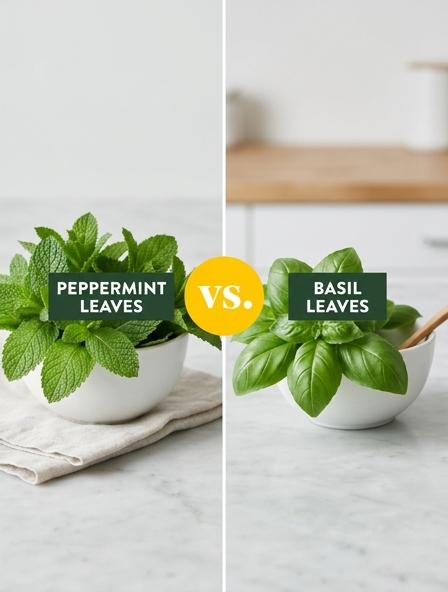
Distinguishing peppermint from basil begins with observing their leaf architecture and surface texture. Peppermint leaves typically feature sharply serrated (toothed) edges, a deeply veined surface, and a lance-shaped, pointed tip. In contrast, basil leaves-specifically the common Genovese variety-are smooth-edged, oval, and possess a characteristic glossy sheen that reflects light elegantly.
- Peppermint: Notable for its matte, textured finish and rigid, square-shaped stems.
- Basil: Recognized by its convex, slightly domed shape and soft, succulent feel.
While peppermint adds a rugged, refreshing aesthetic to summer fruit platters, many home cooks love placing a whole, silky basil leaf atop a slice of fresh Caprese salad to create a professional culinary look.
Essential Oil Concentration and Scent Strength
The aromatic potency of peppermint and basil leaves is defined by their unique essential oil concentrations. Peppermint (Mentha piperita) is renowned for its high menthol content, typically ranging between 30% and 50%, which delivers an immediate, sharp, and cooling sensory experience. Conversely, basil (Ocimum basilicum) possesses a more nuanced and delicate aromatic profile, primarily composed of linalool, eugenol, and estragole.
- Peppermint: High volatile oil concentration with a pungent, penetrating fragrance.
- Basil: Moderate oil concentration featuring sweet, peppery, and clove-like undertones.
While peppermint's intensity makes it a powerhouse for clearing sinuses in aromatherapy, home cooks often prefer the subtle, floral scent of freshly bruised basil leaves to perfectly balance the acidity of a slow-simmered tomato sauce.
Freshness Retention and Cold Storage Durability
Understanding the post-harvest life of peppermint and basil is essential for maintaining culinary quality and reducing kitchen waste. While both are aromatic herbs, their physiological responses to refrigeration differ significantly due to their leaf structure and oil composition.
- Peppermint: Exhibits high durability; its resilient leaves can stay crisp for up to ten days when wrapped in a damp paper towel within the crisper drawer.
- Basil: Features low cold-tolerance; it is highly susceptible to chilling injury, often turning black and wilting rapidly if temperatures drop below 40°F.
To maximize shelf life, peppermint thrives in the cold humidity of a refrigerator, whereas basil performs best when treated like a bouquet of flowers in a glass of water on the room-temperature counter. Home cooks often prefer storing mint in the fridge for long-term garnishes, while keeping basil out in the light to preserve its vibrant green hue and spicy aroma for immediate pesto preparation.
Antioxidant Properties and Micronutrient Content
Both peppermint and basil are nutritional powerhouses packed with bioactive compounds. Peppermint is particularly rich in rosmarinic acid and menthol, offering potent anti-inflammatory effects. Basil, specifically sweet basil, excels in its concentration of flavonoids like orientin and vicenin, which protect cellular structures from oxidative stress.
In terms of micronutrients, the profiles differ slightly to provide distinct health advantages:
- Peppermint: A superior source of Vitamin A, Iron, and Manganese, supporting vision and immune function.
- Basil: Contains exceptionally high levels of Vitamin K, essential for bone health and blood clotting, along with Vitamin C.
While peppermint provides a refreshing boost of minerals, basil delivers a significant portion of your daily fat-soluble vitamin requirements. You might prefer garnishing a Mediterranean dish with fresh basil for a Vitamin K boost, or steeping peppermint leaves into a restorative tea to harness its iron-rich profile after a long day.
Infusion Quality in Hot and Cold Liquid Bases
Peppermint and basil exhibit contrasting extraction properties based on the temperature of the liquid medium. Peppermint leaves are rich in menthol, a robust compound that releases efficiently in boiling water, creating a sharp, invigorating profile. In contrast, basil contains more delicate volatile oils like linalool, which can turn bitter or lose its aromatic brightness if exposed to prolonged high heat.
- Hot Infusion: Peppermint is highly heat-stable, making it ideal for teas. Basil requires a gentler approach, often added at the end of a simmer to preserve its peppery sweetness.
- Cold Infusion: Basil excels in cold-steeping, slowly imparting a fresh, herbal bouquet into water or oils. Peppermint requires significant bruising or longer durations to achieve the same intensity in cold liquids.
Enthusiasts typically reach for peppermint when brewing a soothing hot digestive tea, while culinary fans prefer cold-muddling basil into lemonade for a sophisticated, refreshing summer treat.
Year Round Availability and Cost for Home Kitchens
When stocking a home kitchen, the accessibility of herbs often dictates their culinary use. Peppermint is a resilient perennial that is notoriously easy to grow and remains available year-round, even in colder climates. Due to its invasive growth habits, it is generally inexpensive to purchase fresh or dried. In contrast, basil is a tender annual that thrives in heat. While plentiful in summer, its cost typically rises in winter when supply shifts to greenhouse production or long-distance imports.
| Herb | Seasonality | Budget Impact |
|---|---|---|
| Peppermint | Constant / Hardy | Economical |
| Basil | Summer / Tender | Higher (Off-season) |
You might choose to grow a pot of peppermint on your windowsill for a low-cost daily tea, while saving the purchase of premium-priced winter basil for a special homemade Margherita pizza night.
Peppermint Leaves vs Basil Leaves source and external links
- Peppermint leaves are widely recognized for their refreshing aroma and are commonly used to brew soothing herbal teas, which you can learn more about by studying the properties of Peppermint Leaves.
- Basil leaves are a fundamental culinary herb used globally to enhance the flavor of various dishes, particularly in Mediterranean and Asian cuisines where Basil Leaves are a staple ingredient.