
Orange Blossom Honey vs Regular Honey: The Differences in Flavor Profile, Nutritional Density, and Baking Performance.
Flavor Profile Variations in Sweet and Savory Dishes
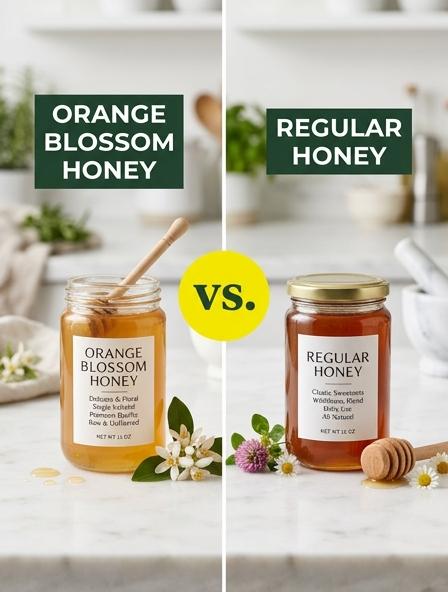
The culinary distinction between orange blossom honey and regular honey lies in their aromatic complexity. Regular honey, typically sourced from clover or wildflowers, provides a consistent, mellow sweetness with subtle earthy notes, making it a reliable all-purpose sweetener. Orange blossom honey, however, is prized for its distinct citrus-floral perfume and a light, zesty finish that adds a layer of sophistication to recipes.
- Regular Honey: Best for high-heat baking, thick marinades, and sweetening coffee without altering the bean's flavor.
- Orange Blossom Honey: Excellent for fresh dressings, fruit-based desserts, and delicate white meats like poultry or fish.
While regular honey acts as a foundational sweetener for everyday oats, many enthusiasts prefer drizzling orange blossom honey over a warm piece of herb-crusted goat cheese to let its bright, floral notes truly shine.
Nutritional Density and Antioxidant Content Comparison
While all raw honey provides a natural source of energy, orange blossom honey offers a distinct micronutrient profile compared to standard regular honey. Regular honey, often a multifloral blend, provides a generic range of minerals. In contrast, orange blossom honey is specifically recognized for its higher concentrations of potassium, zinc, and magnesium.
- Antioxidant Levels: Orange blossom honey contains high levels of phenolic acids and quercetin, which are potent antioxidants that help combat oxidative stress.
- Mineral Trace: It serves as a superior source of trace minerals that support metabolic function.
- Phytochemicals: The unique citrus nectar source provides specific bioflavonoids not typically found in clover or wildflower varieties.
Fitness enthusiasts often reach for orange blossom honey to stir into a post-workout smoothie, favoring its specific mineral density and refreshing citrus notes to help replenish the body naturally.
Baking Performance and Moisture Retention Characteristics
Both orange blossom and regular honey act as natural humectants, meaning they actively draw moisture from the atmosphere to prevent baked goods from becoming dry or stale. However, orange blossom honey typically possesses a higher fructose-to-glucose ratio than many standard wildflower blends. This unique chemical composition accelerates the Maillard reaction, resulting in a richer, golden-brown crust and a more tender crumb structure in breads and sponges.
When analyzing their functional impact on recipes, consider the following traits:
- Hygroscopic Properties: Both varieties retain moisture far more effectively than granulated sugar.
- Acidity Levels: The specific pH of orange blossom honey can react differently with baking soda, often providing a better lift.
- Flavor Volatility: While regular honey provides generic sweetness, the citrus esters in orange blossom honey remain surprisingly stable under moderate heat.
You might choose the delicate, floral essence of orange blossom honey when crafting a moist lemon-almond tea cake to provide a sophisticated aromatic finish that regular honey simply cannot match.
Aromatic Strength and Its Influence on Palate Perception
The sensory profile of honey is governed by volatile organic compounds that dictate how our taste buds perceive sweetness. Orange blossom honey is characterized by high levels of methyl anthranilate, providing a potent, floral perfume that regular honey lacks. While regular honey-often a multifloral blend-offers a neutral, sugary profile, the aromatic intensity of citrus-sourced nectar creates a more complex "bright" flavor.
This difference in aromatic strength changes the culinary application of each variety:
- Orange Blossom Honey: High aromaticity; notes of citrus zest and white flowers.
- Regular Honey: Low aromaticity; consistent, mild sweetness with earthy undertones.
Because aroma accounts for a significant portion of flavor, the citrus-infused volatiles in orange blossom varieties trigger a multi-sensory experience. Many gourmet cooks prefer drizzling this honey over warm goat cheese or yogurt, where the heat releases a fragrant bouquet that mimics the scent of a blooming citrus grove in springtime.
Consistency and Viscosity in Sauces and Dressings
The physical properties of honey significantly influence the texture and stability of culinary emulsions. While regular honey-often sourced from clover or wildflowers-provides a standard, dependable thickness, orange blossom honey is distinguished by its silky, medium-bodied viscosity. Due to its higher fructose content, orange blossom honey resists crystallization longer than many mass-market varieties, ensuring a smooth pour even after storage.
- Emulsification: The refined texture of orange blossom honey helps bind oil and vinegar more effectively than thicker, crystallized regular honey.
- Flow Rate: Its fluid nature allows for even distribution in cold applications, such as chilled marinades.
- Gloss: It provides a superior translucent sheen to reductions and glazes.
Home cooks particularly love whisking orange blossom honey into a bright citrus vinaigrette to achieve a perfectly smooth, clingy consistency that coats delicate baby greens without weighing them down.
Heat Stability and Browning During Roasting
When subjected to high temperatures, both orange blossom honey and regular honey undergo caramelization and the Maillard reaction, creating a rich, savory crust. However, orange blossom honey contains specific floral volatile oils and a slightly different sugar-to-acid ratio compared to standard wildflower or clover honey.
During the roasting process, these differences manifest in several ways:
- Browning Rate: Orange blossom honey tends to caramelize into a deep golden hue rapidly due to its natural enzyme profile.
- Aroma Release: Heat activates the citrus precursors in orange blossom honey, releasing a fragrant bouquet that regular honey lacks.
- Glaze Consistency: Regular honey often provides a more neutral, sticky finish, whereas the essential oils in orange blossom honey can result in a more complex, crisp glaze.
Home cooks love brushing orange blossom honey over a roasting chicken in the final fifteen minutes to achieve a crackling, amber skin with a hint of Mediterranean citrus aroma.
Enzyme Activity and Bioactive Health Properties
The primary distinction between orange blossom honey and regular honey lies in their specific bioactive profiles. While all raw honey contains essential enzymes like diastase and glucose oxidase-which contribute to natural antibacterial properties-orange blossom honey is particularly rich in unique phenolic compounds derived from citrus nectar.
- Hesperetin: A potent flavonoid found in citrus-source honey known for its antioxidant effects.
- Glucose Oxidase: An enzyme that produces hydrogen peroxide, acting as a natural preservative and antimicrobial agent.
- Kafferic Acid: A bioactive compound often found in higher concentrations in monofloral citrus varieties compared to multi-flower blends.
In contrast, "regular" honey offers a broad but less specialized range of antioxidants depending on its floral source. Health-conscious foodies often drizzle orange blossom honey over fresh ricotta or Greek yogurt specifically to pair its high hesperetin content with a bright, floral flavor profile that regular honey simply cannot match.
Visual Aesthetic and Color Grading in Food Presentation
Honey selection significantly impacts the visual narrative of a dish. While "regular" honey encompasses a broad spectrum of wildflower blends, orange blossom honey is specifically celebrated for its light, radiant color grading. Professionals often evaluate these differences using the Pfund scale to ensure consistency in food styling and photography.
- Orange Blossom Honey: Characterized by an extra light amber hue and exceptional clarity.
- Regular Honey: Typically ranges from light to dark amber with a more opaque, earthy appearance.
The luminous transparency of orange blossom honey allows it to catch ambient light, creating a "liquid gold" effect that does not mask the colors of underlying ingredients. This clarity is essential when plating delicate desserts or vibrant fruit arrangements where visual purity is the priority. You might prefer drizzling the pale, sun-drenched tones of orange blossom honey over a fresh ricotta toast to achieve that high-end, bright aesthetic favored by modern food stylists.
Storage Longevity and Crystallization Patterns
While both orange blossom and regular honey boast an indefinite shelf life when sealed correctly, their crystallization behaviors diverge due to their unique chemical compositions. Crystallization is a natural process influenced by the ratio of fructose to glucose. Regular honey, such as clover or wildflower, often contains higher glucose levels, leading to a faster transition from liquid to a firm, gritty solid.
Orange blossom honey typically features a higher fructose-to-glucose ratio, allowing it to remain liquid for much longer periods. When it does eventually solidify, it tends to form much finer, creamier crystals compared to the jagged, coarse texture of standard varieties.
- Regular Honey: Quick crystallization; results in a coarse, sandy texture.
- Orange Blossom Honey: Slow crystallization; results in a smooth, buttery consistency.
You will appreciate the slow-setting nature of orange blossom honey if you enjoy a consistently smooth drizzle over your morning crepes without having to frequently warm the jar to melt stubborn crystals.
Mineral Density and Natural Sugar Composition Differences
The primary distinction between Orange Blossom honey and regular polyfloral honey lies in their specific micronutrient concentrations and carbohydrate ratios. Orange Blossom honey typically boasts a more specialized mineral density, featuring higher levels of potassium, zinc, and magnesium derived from citrus nectar. In contrast, regular wildflower honey offers a broader but less predictable nutrient profile depending on its diverse botanical sources.
Regarding sugar composition, while both varieties consist primarily of fructose and glucose, Orange Blossom honey often maintains a higher fructose-to-glucose ratio. This unique balance results in a more intense floral sweetness and a much slower crystallization process compared to regular honey.
- Orange Blossom Honey: High in antioxidants and trace minerals like zinc; slow to crystallize.
- Regular Honey: Variable enzyme content; standard glucose levels that lead to faster solidifying.
Home chefs often prefer drizzling Orange Blossom honey over warm goat cheese crostinis to highlight its distinct citrus notes and smooth, liquid texture.
Orange Blossom Honey vs Regular Honey source and external links
- Orange Blossom Honey is a light, citrus-scented variety produced by bees that collect nectar from the blossoms of orange trees.
- Commonly found in grocery stores, Regular Honey is typically a blend of nectars from various wildflowers used as a versatile natural sweetener.