
Navy Bean vs Cannellini Bean: Comparing Texture, Nutrition, and Culinary Performance Differences
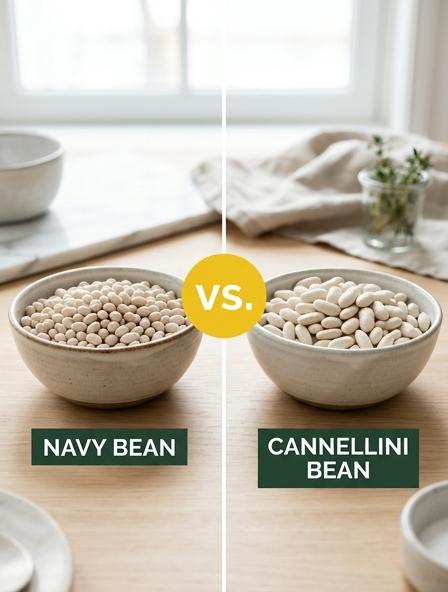
Texture and Cooking Time Differences Between Navy and Cannellini Beans
Understanding the structural differences between these white beans is essential for achieving the right dish consistency. Navy beans are small and delicate with thin skins, causing them to break down quickly into a creamy puree. In contrast, Cannellini beans-often called White Kidney beans-are larger and fleshier, possessing a sturdier skin that maintains its integrity even through extended simmering.
| Feature | Navy Bean | Cannellini Bean |
|---|---|---|
| Average Cooking Time | 45–60 Minutes | 60–90 Minutes |
| Cooked Texture | Soft and Velvety | Firm and Meaty |
Home cooks often choose Navy beans to create a rich, self-thickening base for traditional Boston baked beans, whereas foodies prefer Cannellini beans for their satisfying, nutty bite in a rustic Italian pasta e fagioli.
Nutritional Profiles and Health Impact of Navy and Cannellini Beans
Navy and Cannellini beans are nutritional powerhouses, both offering high dietary fiber and plant-based protein. While they share a similar caloric density, their micronutrient profiles offer distinct benefits. Navy beans are particularly rich in folate and manganese, which support DNA synthesis and bone health. Cannellini beans, or White Kidney beans, often provide slightly higher concentrations of iron and magnesium, essential for oxygen transport and muscle function.
- Navy Beans: Exceptional fiber content for digestive regularity and cholesterol management.
- Cannellini Beans: High in phosphatidylserine, which may support cognitive health and stress recovery.
Both legumes have a low glycemic index, making them excellent for blood sugar stabilization and long-term satiety. Their high antioxidant content helps combat oxidative stress, reducing the risk of chronic cardiovascular diseases. You might prefer the small, quick-cooking Navy beans for a thick, traditional navy bean soup, whereas the larger, creamier Cannellini beans are what people love most in a robust Mediterranean tuna salad or a smooth, garlicky hummus alternative.
Culinary Performance of Navy and Cannellini Beans in Stews and Salads
Choosing between navy and cannellini beans depends largely on the desired texture of your final dish. Navy beans are small, oval, and possess a delicate skin that breaks down during long cooking periods. This makes them the superior choice for thickening savory stews and creating creamy purees. In contrast, cannellini beans-often called white kidney beans-are larger and meatier, retaining their distinct shape even after simmering.
- Navy Beans: Best for velvety textures, thickening broths, and traditional slow-cooked Boston baked beans.
- Cannellini Beans: Best for structural integrity, nutty flavor profiles, and rustic Italian Minestrone.
While navy beans excel at melting into a rich ham and bean soup, home cooks often prefer tossing firm, chilled cannellini beans into a bright Mediterranean salad to provide a satisfying, meaty bite against crisp greens and vinaigrette.
Shape Retention and Heat Stability of Navy and Cannellini Beans
Understanding the structural integrity of these legumes is essential for achieving the perfect culinary texture. While both are popular white beans, their reaction to prolonged heat differs significantly due to their size and skin density.
- Navy Beans: These small, oval-shaped beans have relatively thin skins. They are prone to breaking down during long simmering processes, which allows them to release starches that naturally thicken liquid bases.
- Cannellini Beans: Often called White Kidney beans, these are larger and more robust. Their thicker skins provide excellent heat stability, ensuring they maintain their distinct shape and "meaty" bite even in high-pressure cooking or slow-simmered broths.
In summary, Navy beans are prized for their ability to dissolve into a creamy consistency, while Cannellini beans are favored for their structural resilience and presentation.
You might prefer Cannellini beans for a rustic pasta e fagioli where visual definition is key, or reach for Navy beans to craft a thick, velvety pot of traditional slow-cooked baked beans.
Mouthfeel and Skin Thickness in Navy and Cannellini Bean Comparison
When comparing navy beans and cannellini beans, the primary distinction lies in their structural integrity and sensory profile. Navy beans are characterized by their thin, delicate skins and a soft, uniform texture. Because their exterior is so fine, they tend to break down during the cooking process, releasing starches that create a smooth, creamy consistency.
In contrast, cannellini beans (White Kidney beans) are larger and possess a noticeably thicker skin. This robust exterior provides a satisfying "pop" when bitten into, protecting a dense, velvety interior. While navy beans offer a mild, mashed-potato-like mouthfeel, cannellini beans maintain an al dente bite even after long simmering periods.
- Navy Beans: Delicate skin, quick to dissolve, ideal for thickening.
- Cannellini Beans: Thicker skin, meaty texture, holds shape in high heat.
Home cooks love using navy beans to create a rich, velvety base for classic Boston baked beans, while opting for cannellini beans when they want a hearty, visible presence in a Mediterranean tuna salad.
Caloric Values and Fiber Content in Navy and Cannellini Beans
Navy and Cannellini beans are nutritional powerhouses, offering dense concentrations of fiber and plant-based protein with nearly identical caloric footprints. While their sizes differ, their impact on satiety and digestive health is equally significant. A 100-gram serving of cooked beans provides a stable energy source while promoting gut health through complex carbohydrates.
| Nutrient (per 100g) | Navy Beans | Cannellini Beans |
|---|---|---|
| Calories | ~140 kcal | ~140 kcal |
| Dietary Fiber | ~10.5g | ~9.0g |
Both legumes rank low on the glycemic index, making them excellent choices for sustained energy and heart health. Their high soluble fiber content aids in lowering cholesterol and managing blood sugar levels. You might reach for the small navy bean to create a thick, fiber-packed Boston baked bean dish, or choose the larger cannellini bean when you want a creamy, protein-heavy addition to a Tuscan minestrone.
Flavor Profile and Broth Absorption of Navy and Cannellini Beans
While both are popular white beans, their culinary behavior depends on texture and flavor intensity. Navy beans are prized for their mild, delicate taste and thin skins, which allow them to break down easily. This makes them exceptional at thickening broths into a creamy consistency. In contrast, Cannellini beans, also known as White Kidney beans, offer a more robust, nutty flavor and a meatier texture that retains its shape under high heat.
- Navy Beans: Absorb liquid quickly, creating a velvety, porridge-like mouthfeel.
- Cannellini Beans: Maintain structural integrity while soaking up herbs and aromatics.
Home cooks typically reach for Navy beans when thickening a classic ham and bean soup, whereas foodies prefer Cannellini beans for a rustic Tuscan minestrone where a distinct, firm bite is essential alongside hearty vegetables.
Digestive Properties and Protein Content in Navy and Cannellini Beans
Both navy and cannellini beans are nutritional powerhouses, offering dense plant-based protein and essential fiber. While they share a similar profile, their impact on digestion and satiety varies slightly due to their density and skin thickness.
| Feature | Navy Beans | Cannellini Beans |
|---|---|---|
| Protein (per cup) | ~15g | ~17g |
| Fiber (per cup) | ~19g | ~11g |
| Digestibility | Thinner skin; easier mash | Thicker skin; stays intact |
Navy beans are renowned for their exceptional fiber, which aids long-term gut health but may require a gradual introduction to prevent bloating. Cannellini beans provide a slightly higher protein-to-calorie ratio, making them a favorite for those focusing on muscle maintenance. To improve digestibility, soaking both varieties helps break down the complex sugars that often cause gas.
Imagine you are simmering a rustic Italian minestrone; most home cooks prefer cannellini beans because they retain a meaty bite, whereas navy beans are the go-to choice for creating the velvety, thick texture found in classic "Senate" bean soup.
Visual Appearance and Size Variations of Navy and Cannellini Beans
Distinguishing between navy and cannellini beans starts with their physical profiles. Navy beans are the smallest of the common white bean family, featuring a compact, oval shape often compared to a pea. Their skin is smooth and ivory-white. In contrast, cannellini beans-frequently called "white kidney beans"-are significantly larger and more robust, possessing a traditional curved kidney shape and a creamier hue.
| Feature | Navy Bean | Cannellini Bean |
|---|---|---|
| Size | Small, pea-sized | Large, substantial |
| Shape | Oval and uniform | Kidney-shaped |
You might reach for the petite navy bean when slow-cooking a classic Boston baked bean dish for a smooth consistency, while preferring the hearty, meaty presence of cannellini beans when tossing a robust Mediterranean tuna salad.
Performance of Navy and Cannellini Beans in Purees and Hearty Dishes
Choosing between Navy and Cannellini beans depends largely on the desired texture of your dish. Navy beans are prized for their small size and delicate skins, which break down easily during cooking. This makes them the ultimate natural thickener for creamy purees and velvety white bean dips.
In contrast, Cannellini beans-often called White Kidney beans-are larger and meatier, retaining their distinct shape even after long simmering. Their earthy, nutty flavor and robust structure shine in rustic preparations where the bean is meant to be a focal point. Consider these specific culinary applications:
- Navy Beans: Smooth chowders, classic Boston baked beans, and blended soup bases.
- Cannellini Beans: Italian Minestrone, hearty vegetable stews, and marinated bean salads.
Home cooks often reach for Navy beans to create a silky base for white chili, while chefs prefer Cannellini beans for a traditional Tuscan kale soup that requires a hearty, visible bean presence.
Navy Bean vs Cannellini Bean source and external links
- The Navy Bean is a small, white, oval-shaped legume that is a staple ingredient in classic dishes like commercial canned baked beans.
- Commonly used in Italian cuisine, the Cannellini Bean is a large white kidney bean known for its creamy texture and ability to hold its shape in stews and salads.
In the culinary world, choosing between navy beans and cannellini beans often comes down to size and texture rather than nutrition, as both legumes offer impressive amounts of plant-based protein, fiber, and essential minerals like iron. Small, oval navy beans are prized for their ability to break down slightly, creating a naturally creamy consistency perfect for thick stews and classic baked beans. Conversely, larger cannellini beans-often called white kidney beans-boast a silkier texture and a mild, nutty flavor that maintains its structural integrity in salads and Italian minestrone. While they are often used interchangeably in recipes, understanding these subtle differences in culinary performance ensures the best gastronomic results. Ultimately, both white bean varieties serve as nutritional powerhouses, providing versatile foundations for healthy, fiber-rich meals across diverse global cuisines.