
Muenster Cheese vs Swiss: Are They The Same? Melting Performance, Flavor Profiles, and Nutritional Breakdown.
Melting Point Variations in Hot Oven Dishes
Understanding the thermal behavior of Muenster versus Swiss is essential for achieving the perfect texture in baked recipes. Muenster is a high-moisture cheese, which contributes to a significantly lower melting point. It transitions quickly into a smooth, velvety liquid, making it ideal for dishes requiring full surface coverage. Conversely, Swiss cheese has a lower moisture content and a firmer protein matrix, requiring higher oven temperatures to reach a pliable, elastic state.
- Muenster: Rapid liquefaction; creates a buttery, gooey consistency that integrates well with other ingredients.
- Swiss: Gradual melt; maintains more structural integrity and develops a characteristic "stretch" or "pull."
While Swiss cheese offers a nutty complexity to slow-baked casseroles, many enthusiasts prefer Muenster for a classic grilled cheese sandwich to ensure a quick, effortless ooze the moment the bread hits the pan.
Comparison of Flavor Profiles and Nutty Notes
Muenster and Swiss cheeses offer distinct sensory experiences rooted in their specific aging processes. Swiss cheese is globally recognized for its bold, nutty flavor profile and slightly sweet, tangy undertones. These complex notes are a result of propionic acid fermentation, which also creates the cheese's iconic "eyes." In contrast, American Muenster provides a much milder, buttery character with a smooth, savory finish and very little acidity.
- Swiss: High intensity of nuttiness, firm texture, and a distinct, sweet tang.
- Muenster: Low intensity, creamier mouthfeel, and a subtle, mellow saltiness.
While Swiss dominates in complexity, Muenster excels in versatility due to its understated profile that complements rather than overpowers other ingredients. You might reach for Muenster when you want a silky, mild melt on a sourdough grilled cheese, or choose the robust nuttiness of Swiss to stand up to the salty, cured flavors of a classic Reuben sandwich.
Stretch and Elasticity Performance Under High Heat
When comparing Muenster and Swiss cheese under high thermal conditions, their structural responses differ significantly based on moisture content and protein density. Muenster is a semi-soft cheese that transitions into a fluid, highly elastic state quickly, offering a superior "cheese pull." In contrast, Swiss cheese features a firmer protein matrix and lower moisture, resulting in a more structured melt with significantly less elongation.
| Feature | Muenster Cheese | Swiss Cheese |
|---|---|---|
| Elasticity | High (Gooey) | Moderate (Firm) |
| Melting Point | Low to Medium | Medium to High |
For those crafting the perfect gourmet grilled cheese, Muenster is the preferred choice when you want those iconic, long ribbons of golden cheese that pull apart effortlessly to create an Instagram-worthy stretch.
Nutritional Breakdown and Sodium Content for Healthy Diets
When comparing Muenster and Swiss cheese, the nutritional profile often dictates which is better for your specific wellness goals. Swiss cheese is a standout for heart-healthy diets because it is naturally one of the lowest-sodium cheeses available. In contrast, Muenster provides a rich, buttery texture but typically carries a higher salt content, which is a key consideration for those managing hypertension.
| Nutrient (per oz) | Swiss Cheese | Muenster Cheese |
|---|---|---|
| Sodium | ~50-60 mg | ~180-200 mg |
| Protein | ~8 g | ~7 g |
| Calcium | ~22% DV | ~15% DV |
While both offer excellent protein and bone-building calcium, Swiss leads in density for both categories. You might reach for a thin slice of Swiss to add a nutty flavor to your morning protein wrap without overdoing the salt, or choose Muenster when you want a mild, creamy melt for a comforting weekend treat.
Texture and Slicing Integrity for Cold Appetizer Trays
When assembling a cold appetizer tray, the structural integrity of your cheese is paramount. Muenster is a semi-soft cheese with a supple, high-moisture profile. While it offers a buttery mouthfeel, its slight stickiness can make achieving clean, uniform slices challenging without a chilled blade. In contrast, Swiss cheese is classified as semi-hard, featuring a firm, elastic texture that holds its shape exceptionally well under various temperatures.
- Muenster: Best served in thicker cubes or shingles to prevent tearing.
- Swiss: Ideal for paper-thin slicing, folding, or decorative rolling.
The choice often comes down to the desired aesthetic; Swiss provides a rigid, architectural element to the platter, whereas Muenster contributes a softer, more delicate bite. You will prefer Swiss cheese when crafting elegant meat and cheese rosettes that require a flexible yet sturdy foundation to stay upright throughout the event.
Moisture Impact on Bread and Sandwich Quality
The moisture content in cheese significantly dictates the structural integrity of a sandwich. Muenster is a semi-soft cheese with high moisture, resulting in a buttery, rapid melt that can saturate bread fibers if heated excessively or left to sit. In contrast, Swiss cheese is a semi-hard variety with lower water activity. This lower moisture level prevents liquid migration, ensuring the bread remains crisp and dry even during extended storage.
| Cheese Variety | Moisture Profile | Sandwich Outcome |
|---|---|---|
| Muenster | High / Semi-soft | Gooey melt; higher sogginess risk |
| Swiss | Low / Semi-hard | Structural bite; preserves bread texture |
For a packed picnic lunch, many people prefer Swiss because its dry nature keeps the marble rye firm until noon, whereas Muenster is the top choice for an immediate, oozing grilled cheese experience straight from the pan.
Aroma Intensity During Melting and Baking
When comparing Muenster and Swiss cheese under heat, the olfactory impact varies significantly. Swiss cheese is famous for its pungent, nutty, and slightly sweet aroma, which intensifies during the baking process due to the release of volatile compounds from its specific bacterial cultures. In contrast, Muenster is much more subtle; it develops a mild, buttery scent that lacks the sharp, lingering qualities of its Swiss counterpart.
- Swiss Cheese: High intensity; releases a distinct, sharp fragrance that can dominate a room.
- Muenster Cheese: Low to moderate intensity; provides a gentle, savory smell that complements other ingredients.
If you are hosting a dinner party and want a sophisticated, "stinky" gourmet vibe, choose a melted Swiss, but for a cozy family movie night, people love Muenster because it creates a perfectly gooey grilled cheese without leaving a heavy, lingering scent in the kitchen.
Compatibility with Various Deli Meats and Bread Types
When selecting between Muenster and Swiss, the flavor profile of your deli meat and the texture of your bread are key. Muenster is prized for its mild, buttery essence and superior meltability, making it a favorite for soft breads and lean proteins. Swiss cheese, with its iconic nutty and slightly sweet tang, offers a structural and flavorful bite that stands up to heavy, spiced meats.
| Cheese | Ideal Deli Meats | Best Bread Pairings |
|---|---|---|
| Muenster | Turkey, Honey Ham, Roast Beef | Pumpernickel, Sourdough, White |
| Swiss | Pastrami, Corned Beef, Salami | Rye, Marbled Rye, Multigrain |
Many sandwich enthusiasts prefer Swiss layered on thick rye for a robust Reuben, whereas those seeking a creamy, kid-friendly grilled cheese often opt for Muenster melted over thin-sliced turkey on a soft sourdough roll.
Visual Appearance and Rind Characteristics in Food Styling
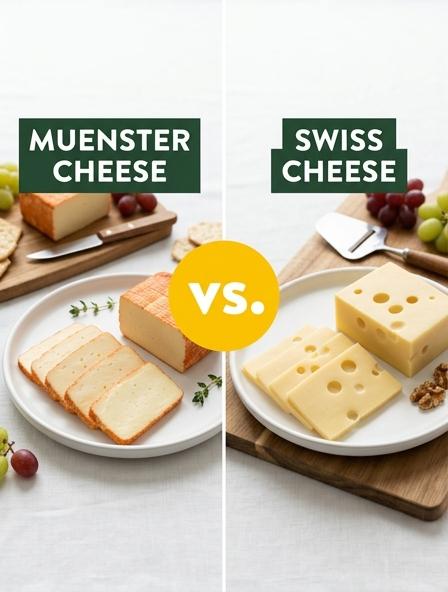
In the realm of food photography, Muenster and Swiss cheeses offer distinct aesthetic profiles. Muenster is easily identified by its smooth, pale-yellow interior and its signature bright orange-red rind, which is typically colored with annatto or paprika. This provides a high-contrast border that pops against neutral backgrounds. Conversely, Swiss cheese is celebrated for its pale ivory complexion and "eyes"-the iconic holes formed by CO2 during fermentation-which add structural interest and a sense of depth to a shot.
- Muenster: Vibrant orange exterior, semi-soft sheen, and a uniform, creamy center.
- Swiss: Matte finish, firm texture, and rhythmic patterns of circular voids.
Food stylists often choose thin ribbons of Muenster to add a splash of warm color to a charcuterie board, while a thick slice of Swiss is the go-to for creating that classic, "holey" look that instantly signals quality in a gourmet deli sandwich advertisement.
Consistency for Creating Smooth and Creamy Homemade Sauces
When comparing Muenster and Swiss for liquid applications, melting behavior is the primary differentiator. Muenster is a semi-soft cheese with a high moisture content, which allows it to break down quickly into a velvety, uniform consistency. In contrast, Swiss cheese has a firmer protein structure and lower moisture, making it prone to becoming stringy or "oiling out" if the heat is not carefully managed.
| Characteristic | Muenster Cheese | Swiss Cheese |
|---|---|---|
| Melting Profile | Smooth and buttery | Elastic and gooey |
| Sauce Texture | Homogeneous/Liquid | Thick/Aromatic |
While Swiss provides a complex, nutty depth, Muenster's mild profile and superior solubility make it a foolproof base for beginners. You might reach for Muenster when whisking up a quick, glossy cheese sauce for steamed broccoli, ensuring a lump-free finish that coats every piece evenly.
Muenster Cheese vs Swiss source and external links
- Muenster cheese is a mild, semi-soft cow's milk cheese from the United States recognized by its smooth texture and signature orange rind.
- Swiss cheese is a popular variety famous for its distinctive holes, or eyes, and its savory, nutty flavor profile.