
Muenster Cheese vs American Cheese: Comparing Nutritional Profiles, Melting Performance, and Flavor Differences
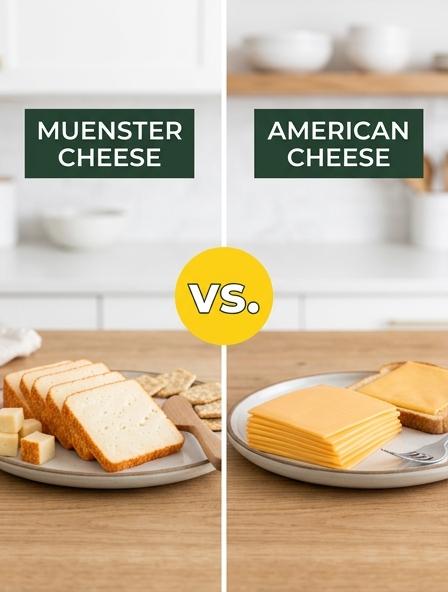
Melting Performance of Muenster and American Cheese in Hot Sandwiches
Choosing between Muenster and American cheese for hot sandwiches depends on your preference for texture and melt consistency. American cheese is a processed favorite specifically engineered for a low melting point. It transforms into a perfectly smooth, liquid-gold consistency without separating or becoming oily. Muenster, a semi-soft natural cheese, offers a superior "cheese pull" with a buttery, elastic melt that feels more substantial on the palate.
- American Cheese: Best for a velvety, uniform coating that bonds ingredients together.
- Muenster Cheese: Ideal for a gooey, stretchy texture with mild, creamy flavor profiles.
While American cheese dominates the classic diner patty melt, food enthusiasts often choose Muenster for a gourmet sourdough grilled cheese to achieve those iconic, long golden threads of cheese that stretch beautifully with every bite.
Sodium Content and Heart Health Impacts of Muenster and American Cheese
When comparing Muenster and American cheese for heart health, the primary differentiator is the level of processing. American cheese is a "cheese product" containing emulsifying salts, such as sodium phosphate, which significantly drive up sodium levels. High sodium intake is a leading contributor to hypertension and cardiovascular strain.
Muenster, a natural semi-soft cheese, generally offers a more heart-friendly profile due to its lower salt density and lack of artificial additives. Below is a typical sodium comparison per one-ounce serving:
- Muenster Cheese: Approximately 170–190 mg of sodium.
- American Cheese: Approximately 400–470 mg of sodium.
While both contain saturated fats, Muenster provides a cleaner ingredient list for those managing blood pressure. You might choose a slice of Muenster for your child's afternoon sandwich to provide that signature mild flavor while significantly reducing their daily sodium intake compared to processed alternatives.
Texture Differences Between Muenster and American Cheese in Baked Dishes
Muenster and American cheese behave uniquely when exposed to the high heat of an oven. Muenster is a semi-soft cheese known for its smooth, buttery melt. It retains a slight elasticity and body, providing a rich mouthfeel that remains cohesive. Conversely, American cheese is a processed product specifically engineered for a low melting point, resulting in a velvety, uniform consistency that often mimics a sauce.
- Muenster: Offers a creamy, stretchy texture with moderate oil release and a mild crust when browned.
- American: Delivers a gooey, silk-like flow that integrates seamlessly into liquid-heavy recipes.
Home cooks often choose Muenster for a sophisticated, stretchy layer atop a breakfast casserole, while American cheese remains the gold standard for those seeking that classic, drippy "melt" in a traditional baked macaroni and cheese.
Caloric Density and Saturated Fat in Muenster and American Cheese Slices
Muenster and American cheese offer distinct nutritional profiles based on their production methods. Muenster is a natural, semi-soft cheese, while American is a processed variety. Consequently, Muenster generally carries a higher caloric density and more saturated fat per serving compared to its processed counterpart.
| Nutrient (per 1 oz slice) | Muenster Cheese | American Cheese |
|---|---|---|
| Total Calories | ~100 kcal | ~60–90 kcal |
| Saturated Fat | ~6g | ~3–5g |
While Muenster provides a richer fat content derived directly from cow's milk, American cheese often incorporates milk solids and emulsifiers, which can reduce the total fat ratio per slice. You might choose Muenster to add a buttery richness to a gourmet sourdough melt, whereas American cheese is often the go-to for achieving that perfectly smooth, nostalgic consistency on a classic backyard cheeseburger.
Protein and Calcium Levels in Muenster and American Cheese Varieties
When comparing the nutritional profiles of Muenster and American cheese, protein and calcium density serve as primary differentiators. Muenster is a traditional semi-soft cheese that typically offers a higher concentration of natural protein per ounce. In contrast, American cheese is a processed product that often contains emulsifiers, which can alter its mineral composition.
| Nutrient (per 1 oz) | Muenster Cheese | American Cheese |
|---|---|---|
| Protein | Approx. 6.6g | Approx. 4.4g |
| Calcium | Approx. 191mg | Approx. 280mg |
While Muenster leads in protein quality, American cheese frequently provides higher calcium levels due to fortification during manufacturing. You might reach for Muenster to add a savory protein boost to your keto snack plate, or opt for American cheese when you want that nostalgic, ultra-creamy melt on a calcium-rich grilled cheese sandwich.
Melting Consistency of Muenster and American Cheese in Homemade Sauces
When comparing the melting consistency of Muenster and American cheese for sauces, the primary difference lies in their chemical composition. American cheese is a processed product containing emulsifiers that prevent proteins from clumping, resulting in an ultra-smooth, velvety liquid that never separates. Muenster, a natural semi-soft cheese, offers a buttery and elastic melt. While it flows well, it retains more body and a slight "stretch" compared to the liquid-like flow of American cheese.
- American Cheese: Provides a glossier finish and remains stable at higher temperatures without becoming oily.
- Muenster Cheese: Delivers a richer, natural mouthfeel with a mild flavor profile that complements white sauces and gratins.
You might whisk American slices into a quick stovetop dip for a foolproof, creamy party snack, while others prefer folding shredded Muenster into a baked Mornay sauce for a sophisticated, buttery stretch that elevates a weekend brunch.
Flavor Intensity of Muenster and American Cheese in Cold Meal Preparations
When evaluating flavor intensity in cold applications, Muenster and American cheese offer distinct sensory profiles. Muenster is a semi-soft cow's milk cheese characterized by a mild, buttery, and slightly nutty flavor. It provides a subtle savory depth that is more nuanced than processed varieties. American cheese, by contrast, is engineered for consistency, offering a salty, mild, and creamy profile that acts as a neutral palate balancer rather than a standout ingredient.
- Muenster: Subtle complexity with an edible orange rind; best for adding a "real cheese" texture to cold cuts.
- American: High saltiness and uniform creaminess; ideal for those who prefer a familiar, mild background note.
In chilled dishes like party platters or deli sandwiches, Muenster provides a sophisticated mouthfeel, whereas American cheese offers a nostalgic, smooth saltiness. You might choose sliced Muenster for a cold roast beef sandwich to add a buttery richness, while you will likely reach for American cheese when building a simple ham wrap for a quick, kid-friendly lunch.
Artificial Additives and Processing in American Cheese Versus Muenster
The core difference between Muenster and American cheese lies in their manufacturing standards. Muenster is a traditional semi-soft cheese made from pasteurized cow's milk with minimal intervention. Its signature orange rind is typically achieved using annatto, a natural plant-based dye. In contrast, American cheese is often labeled as a "processed cheese product," meaning it is a blend of cheeses combined with non-dairy ingredients.
- Muenster: Contains simple ingredients like milk, cultures, salt, and enzymes.
- American Cheese: Utilizes emulsifiers, such as sodium phosphate, and vegetable oils to ensure a uniform texture and high meltability.
While Muenster offers a cleaner label for those avoiding synthetic preservatives, American cheese is engineered to prevent oil separation when exposed to heat. You might prefer a slice of Muenster for a natural snack, but when you are building a classic grilled cheese and want that perfectly smooth, nostalgic melt, American cheese remains the gold standard.
Storage Life and Freshness Stability of Muenster and American Cheese
The primary difference in shelf life between these two cheeses stems from their production methods. American cheese is a processed product designed for maximum stability; its inclusion of emulsifiers and preservatives allows it to remain fresh in the refrigerator for several months. In contrast, Muenster is a natural semi-soft cheese with higher moisture levels and no artificial stabilizers, making it more prone to mold if not consumed quickly.
- American Cheese: Can last 5–6 months unopened and roughly 2 months after opening.
- Muenster Cheese: Best consumed within 2–3 weeks of opening to maintain its mild flavor and creamy texture.
Proper storage for Muenster requires tight wrapping in parchment or wax paper to allow the cheese to breathe without drying out. You will likely prefer the reliable longevity of individually wrapped American slices for quick weekday sandwiches, whereas Muenster is the perfect choice for a fresh, melt-in-your-mouth experience on a weekend grilled cheese.
Heat Reaction and Oil Separation of Muenster and American Cheese during Cooking
When exposed to heat, Muenster and American cheese exhibit distinct behaviors due to their structural differences. Muenster is a semi-soft natural cheese that melts into a creamy, elastic consistency. However, because it lacks industrial emulsifiers, excessive heat can cause the milk fats to separate, occasionally resulting in a slightly oily surface.
| Feature | Muenster Cheese | American Cheese |
|---|---|---|
| Melting Texture | Creamy and stretchy | Silky and liquid-like |
| Oil Separation | Possible if overheated | Highly resistant |
In contrast, American cheese is engineered for a flawless melt. It contains emulsifying salts that keep fats and moisture tightly bound, creating a glossy texture that remains stable even under high temperatures. Home cooks often reach for American cheese to achieve a perfectly smooth burger melt, whereas Muenster is preferred for a gourmet grilled cheese with a rich, buttery stretch.
Muenster Cheese vs American Cheese source and external links
- Muenster cheese is a mild, semi-soft cow's milk cheese recognized for its smooth texture and signature orange rind.
- American cheese is a processed cheese product made from a blend of cheeses and other ingredients, favored for its smooth melting properties.