
Meyer Lemon vs Regular Lemon: Are They The Same? Acidity, Sugar Content, and Juice Yield.
Comparative acidity in citrus varieties
Understanding the chemical profiles of Meyer and regular lemons is essential for culinary precision. While both belong to the Citrus genus, their acidity levels differ significantly due to their genetic lineage. Regular lemons, such as the Eureka or Lisbon varieties, possess a high concentration of citric acid, providing a sharp, mouth-puckering tartness. In contrast, the Meyer lemon is a hybrid between a traditional lemon and a mandarin orange, resulting in a more balanced pH level.
- Regular Lemons: High acidity, intense tartness, and a thick, oil-rich zest.
- Meyer Lemons: Lower acidity, floral aroma, and a noticeably sweeter juice profile.
This disparity in acidity influences how the juice interacts with other ingredients, particularly in baking and emulsifications. Home bakers often prefer the Meyer lemon when crafting delicate lemon tarts to ensure a smooth, floral finish without the aggressive acidic bite found in traditional supermarket citrus.
Natural sugar levels in fruit-based baking
When balancing flavors in citrus desserts, the choice between a Meyer lemon and a regular lemon significantly impacts the final sugar profile. Meyer lemons are a hybrid of a traditional lemon and a mandarin orange, resulting in a much higher natural sugar content and lower acidity. In contrast, regular lemons (such as Eureka or Lisbon) are characterized by their high citric acid and lower brix rating, providing that classic, sharp tartness.
- Meyer Lemon: Sweeter, floral notes, and thin skin; requires less added sugar in recipes.
- Regular Lemon: Highly acidic, pungent, and thick-pith; needs more sweetener to balance the tang.
Because of these varying glucose and fructose levels, a direct substitution can alter the moisture and sweetness of your bake. Home bakers often choose Meyer lemons when making a delicate glazed pound cake to achieve a sophisticated, mellow sweetness that doesn't overpower the buttery crumb.
Rind Thickness and Zesting Performance
The physical structure of the peel is the most significant differentiator between these two citrus varieties. Regular lemons, such as the Eureka or Lisbon, feature a thick, pebbly, and oil-rich rind. This robustness makes them the gold standard for zesting, as the outer layer is easy to shave off without hitting the bitter white pith. Conversely, Meyer lemons possess a remarkably thin, smooth skin that is far more fragile and lacks the protective "cushion" of a standard lemon.
- Regular Lemons: Thick rind provides high-volume zest and sturdy structural integrity for decorative twists.
- Meyer Lemons: Paper-thin skin offers a floral, spicy aroma but requires a very gentle hand to avoid tearing the fruit.
Professional pastry chefs often reach for a regular lemon when they need those long, vibrant curls of zest to perfectly crown a toasted lemon meringue pie.
Scent profiles and aromatic kitchen impact
The olfactory distinction between a Meyer lemon and a regular lemon-typically the Eureka or Lisbon variety-is immediately apparent upon zesting. Regular lemons emit a sharp, bracing, and high-pitched citrus scent that is synonymous with pungent freshness. Conversely, Meyer lemons possess a more complex, floral bouquet, often carrying subtle undertones of bergamot, honey, and even thyme.
- Regular Lemon: Pungent, acidic, and bright; ideal for neutralizing heavy cooking odors.
- Meyer Lemon: Deeply aromatic, sweet, and perfume-like; much less aggressive on the nose.
This difference significantly impacts the sensory experience in the kitchen. While a regular lemon provides a sharp zesty punch, the Meyer lemon's essential oils are more delicate and sophisticated. Home bakers often prefer zesting Meyer lemons into a spring tart because the released fragrance fills the room with an intoxicating, floral aroma that lingers beautifully long after the dessert is served.
Daily nutritional value and antioxidant content
Both Meyer and regular lemons are nutritional powerhouses, primarily valued for their high Vitamin C content. A single fruit typically provides about 30% to 50% of your daily recommended intake. While regular lemons contain higher acidity levels, Meyer lemons-a cross between a lemon and a mandarin orange-offer a unique profile of phytochemicals and antioxidants.
- Vitamin C: Essential for immune support and skin elasticity.
- Flavonoids: Meyer lemons boast high levels of limonene, known for its anti-inflammatory properties.
- Citric Acid: Found in higher concentrations in regular lemons, aiding in digestion and kidney stone prevention.
Regular lemons are the gold standard for a sharp, alkalizing morning tonic, but home chefs often reach for Meyer lemons when crafting a delicate summer tart where the fruit's natural sweetness and floral aroma can shine without the need for excessive sugar.
Liquid Yield for Juice-Based Recipes
When measuring liquid output for culinary applications, Meyer lemons consistently outperform regular varieties like Eureka or Lisbon. The primary difference lies in the anatomy of the fruit; Meyer lemons possess significantly thinner skins and less bitter white pith, allowing for maximum juice extraction per fruit despite their often smaller size.
| Lemon Variety | Approximate Juice Yield |
|---|---|
| Regular (Eureka/Lisbon) | 2 to 3 tablespoons |
| Meyer Lemon | 3 to 4+ tablespoons |
Home cooks often prefer using Meyer lemons for large-batch recipes like fresh lemonade or citrus tarts where a higher volume of sweeter, less acidic liquid is desired without the labor of squeezing dozens of fruits.
Effects on Dairy and Fat-based Sauces
The primary difference between Meyer lemons and regular lemons in sauces lies in their pH levels. Regular lemons (Eureka or Lisbon) have a high acid content, which is effective for "cutting through" heavy fats, but can cause instant curdling in cream-based recipes if added too quickly.
Meyer lemons are significantly less acidic and possess a sweeter, floral profile. This lower acidity makes them more stable when combined with dairy, reducing the risk of protein clumping and allowing for smoother emulsions. When balancing fat-based sauces, consider these properties:
- Regular Lemons: Provide a sharp, bright "zip" that balances heavy butter or oil-heavy vinaigrettes.
- Meyer Lemons: Offer a mellow, aromatic integration that preserves the velvety texture of delicate dairy sauces.
Home cooks often prefer whisking Meyer lemon juice into a warm beurre blanc to achieve a silky, floral finish that enhances rather than overpowers pan-seared scallops.
Storage Duration and Fruit Shelf Life
The primary difference in longevity between Meyer lemons and regular lemons lies in their rind structure. Meyer lemons are hybrids with much thinner skins and lower acidity, making them significantly more fragile. While a standard Eureka or Lisbon lemon is built for long-distance transport and extended storage, the Meyer variety is highly perishable and prone to bruising or mold if not handled carefully.
| Lemon Type | Countertop Life | Refrigerated Life |
|---|---|---|
| Meyer Lemon | 3–5 Days | 1–2 Weeks |
| Regular Lemon | 1–2 Weeks | 4–6 Weeks |
To maximize freshness, standard lemons should be kept in the crisper drawer, but Meyer lemons are best used immediately for specialty desserts like a curd or tart before their delicate skins begin to soften.
Visual Color Variations for Plate Presentation
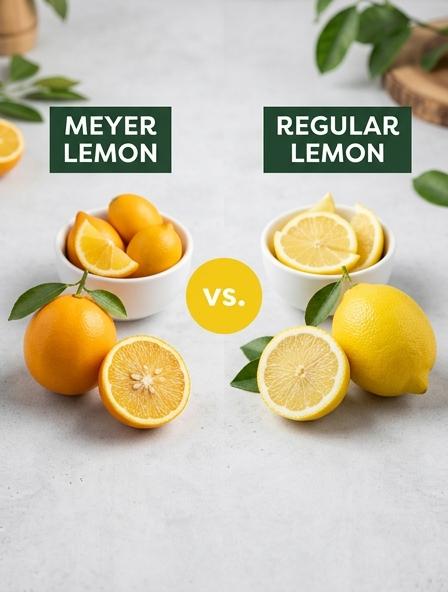
When choosing between these two citrus varieties for garnishing, color saturation plays a vital role in the dish's final aesthetic. Regular lemons, such as the Eureka or Lisbon varieties, offer a classic, bright canary yellow. Their skin is typically thick and textured, providing a bold, matte contrast against dark plates or green herbs. Meyer lemons, however, present a deeper, more sophisticated hue.
- Regular Lemon: Vibrant neon yellow with a thick, pebbled rind.
- Meyer Lemon: Deep golden-yellow to subtle orange with a smooth, glossy skin.
The Meyer lemon's thinner zest and orange undertones suggest a more ripened, floral profile, making it the preferred visual choice for high-end plating. Professional chefs often utilize the rich, sunset-toned slices of a Meyer lemon to provide a warm pop of color atop a delicate seafood crudo or a white chocolate panna cotta.
Budget considerations and seasonal availability
Understanding the cost and timing of these citrus fruits is essential for meal planning. Regular lemons, such as the Eureka or Lisbon varieties, are mass-produced and available year-round at stable, budget-friendly prices. Meyer lemons, however, are a seasonal specialty peaking between December and May. Due to their thinner skins and susceptibility to bruising, they require careful handling and often carry a higher price tag at grocery stores.
| Lemon Type | Peak Season | Relative Cost |
|---|---|---|
| Regular | Year-round | Low |
| Meyer | Winter/Spring | Moderate to High |
You might stick with standard lemons for your daily morning detox water to save money, but reach for the aromatic Meyer lemon during the holidays when you want to impress guests with a naturally sweeter, gourmet lemon curd.
Meyer Lemon vs Regular Lemon source and external links
- The Meyer lemon is a hybrid citrus fruit known for being sweeter and less acidic than traditional varieties.
- A Regular Lemon is a staple citrus fruit prized for its high acidity and bright, tart flavor profile.