
Meyer Lemon vs Improved Meyer Lemon: The Differences in Flavor Profiles, Culinary Performance, and Botanical Resilience.
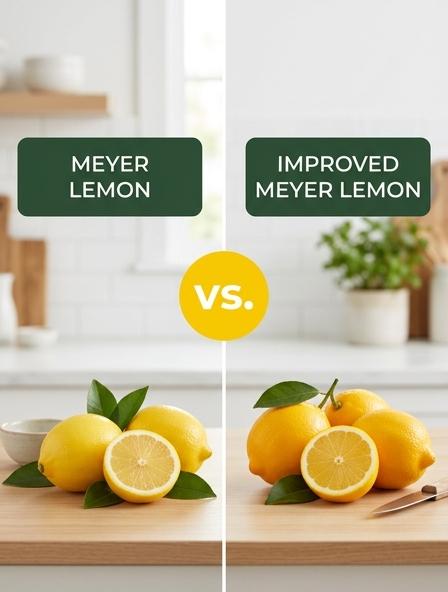
Acidity Levels and Flavor Profiles in Classic and Enhanced Citrus
The distinction between the Meyer lemon and the Improved Meyer lemon is primarily horticultural. While the "Improved" version was developed to be virus-free and disease-resistant, the flavor profile remains consistent across both. These lemons are a hybrid of a citron and a mandarin/pomelo, resulting in a significantly lower acidity level compared to standard Eureka lemons. Their juice is sweeter, and the zest carries a complex, floral aroma often likened to bergamot or thyme.
| Feature | Improved Meyer Lemon | Standard Lemon |
|---|---|---|
| Flavor | Sweet, Floral, Mellow | Tart, Sharp, Acidic |
| Rind | Thin, Edible, Fragrant | Thick, Bitter Pith |
You might prefer the Improved Meyer lemon when crafting a delicate summer granita or a refined lemon tart where a subtle, honey-like citrus sweetness is desired over a sharp, mouth-puckering bite.
Baking Performance and Heat Response of Thin Skinned Hybrid Fruits
Meyer Lemons and the widely cultivated Improved Meyer Lemon behave differently under heat compared to standard acidic varieties. As a hybrid between a lemon and a mandarin orange, these fruits feature a significantly thinner rind and a lack of bitter white pith. This structural difference impacts how they respond to high oven temperatures and sugar-based infusions.
- Caramelization: Their higher natural sugar content allows the zest to brown more quickly than Eureka lemons.
- Texture: The delicate skin softens rapidly, making them ideal for recipes where the peel is consumed.
- Aroma: Heat releases complex floral notes and bergamot-like scents that are lost in high-acid lemons.
Professional pastry chefs prefer using Improved Meyer Lemons for whole-fruit citrus cakes, where the heat transforms the entire sliced fruit into a jammy, edible garnish without the aggressive bitterness found in traditional lemons.
Vitamin Density and Health Impact of Virus Resistant Cultivars
The transition from the original Meyer lemon to the "Improved" version was primarily a botanical intervention to eliminate the Citrus Tristeza Virus. Nutritionally, the Improved Meyer lemon maintains the high vitamin density of its predecessor, offering a potent source of immune-boosting compounds. These lemons are particularly rich in Vitamin C, bioflavonoids, and antioxidants that help neutralize free radicals.
- Vitamin C: Crucial for skin health and collagen production.
- Limonoids: Phytochemicals that may support long-term cellular health.
- Lower Acidity: Makes the nutrients more palatable for those with sensitive stomachs.
Because the "Improved" cultivar is resistant to systemic viruses, the trees produce more consistent, nutrient-dense fruit over a longer lifespan. This ensures that the health-promoting properties, such as its alkalizing effect on the body, remain stable across harvests. You might prefer squeezing an Improved Meyer into your morning tea for a gentle, vitamin-rich energy boost that lacks the harsh acidic bite of a standard lemon.
Zesting Results and Aromatic Strength in Specialty Citrus
The culinary transition from the original Meyer lemon to the Improved Meyer Lemon preserved the fruit's legendary aromatic complexity while enhancing tree resilience. When comparing zesting results, both varieties outperform standard lemons due to their high concentration of volatile oils, specifically linalool, which provides a signature floral, bergamot-like scent.
- Original Meyer: Known for a slightly thicker, oilier rind but higher susceptibility to viruses.
- Improved Meyer: Features a smoother, thinner skin that yields a delicate, herbal zest with less bitterness.
- Aromatic Impact: Both deliver a bouquet that blends traditional acidity with sweet mandarin notes.
Because the Improved Meyer has a significantly thinner pith, the zest provides a cleaner flavor profile without the astringency found in common Eureka lemons. You can elevate a simple lemon curd or a sophisticated seafood garnish by using this zest to provide a bright, jasmine-like fragrance that guests always notice.
Juice Volume and Pulp Consistency for Home Recipes
The Meyer and Improved Meyer lemon are culinary favorites due to their exceptional juice yield. Unlike standard grocery store lemons, these varieties feature incredibly thin skins and minimal pith, resulting in a significantly higher juice-to-weight ratio. The pulp consistency is notably softer and less fibrous, allowing for effortless squeezing and maximum liquid extraction.
- Juice Volume: Often produces 20-30% more juice than standard Eureka varieties.
- Pulp Texture: Fine-grained and tender, blending seamlessly into dressings.
- Membrane: Delicate internal walls that release juice with very light pressure.
Because the "Improved" version was bred for disease resistance without sacrificing fruit quality, bakers find the juice equally sweet and floral in both types. Home chefs love using this abundant juice for weekend batches of Meyer lemon bars, where the low-acid profile provides a silky, custard-like finish that feels more sophisticated than standard citrus desserts.
Shelf Life and Storage Sensitivity in the Home Kitchen
Both the original Meyer and the Improved Meyer lemon are prized for their incredibly thin, edible rinds. However, this characteristic makes them significantly more delicate than standard Eureka lemons. Without a thick, protective pith, these hybrids lose moisture quickly and are highly susceptible to bruising and mold if left in warm, humid environments.
To maximize their freshness, follow these storage guidelines:
- Refrigeration: Store in a sealed bag in the crisper drawer to extend life up to three weeks.
- Countertop: Only keep them at room temperature if you plan to use them within five days.
- Handling: Avoid stacking them heavily, as the weight can rupture the oil glands in the skin.
You can simply tuck these fragrant fruits into your refrigerator's humidity-controlled drawer to ensure you always have a burst of floral acidity ready for a spontaneous batch of lemon curd or a bright seafood garnish.
Rind Composition and Bitterness in Traditional and Modified Varieties
The primary difference between the original and the Improved Meyer lemon focuses on viral resistance, yet their rind composition remains a culinary standout. Both varieties feature a remarkably thin skin and a sparse albedo-the white, bitter layer-making them far less astringent than standard Eureka or Lisbon lemons.
- Fragrant Zest: Rich in thymene, providing distinct herbal and floral notes.
- Reduced Bitterness: A thinner pith ensures the skin is sweet enough to eat raw.
- Oil Concentration: High levels of aromatic oils without the sharp acidic bite.
While the "Improved" variety was specifically bred to be virus-free, it successfully retains the signature sweet, spice-like aroma that defines the species. Because of this lack of bitterness, home bakers often zest the entire fruit directly into shortbread crusts or preserve them whole in salt to elevate the savory depth of Mediterranean tagines.
Impact of Botanical Resilience on Fruit Quality and Texture
The transition from the original Meyer lemon to the "Improved" variety was driven by a need for botanical resilience. While the standard Meyer was highly susceptible to the Citrus Tristeza Virus, the Improved Meyer is a virus-free clone that offers superior tree health. This genetic robustness directly stabilizes fruit quality; a healthy, disease-resistant tree can better allocate nutrients to the fruit, resulting in a more consistent texture and flavor profile.
- Skin Thickness: Both feature a characteristically thin, edible rind, but the Improved variety maintains better structural integrity.
- Juice Content: Enhanced resilience prevents the fruit from becoming pithy or dry due to environmental stress.
- Aromatics: The lack of viral load allows the fruit to develop its signature floral-citrus scent fully.
You will appreciate the Improved Meyer when hosting a summer brunch, where its exceptionally thin skin and high juice yield make it the perfect choice for muddling into artisanal cocktails or garnishing delicate pastries.
Fragrance Retention and Peel Quality in Sweet Citrus Applications
The primary distinction between the vintage Meyer and the Improved Meyer Lemon lies in virus resistance, yet both share a unique peel chemistry that excels in confectionery. Unlike the thick, bitter rinds of Eureka lemons, the Improved Meyer features a thin, oil-rich flavedo with minimal pith. This structural difference ensures that essential oils-responsible for the signature floral and herbal notes-are more accessible during processing.
- Aromatic Profile: High concentrations of linalool provide a tea-like fragrance.
- Texture: A soft, edible skin that breaks down easily in sugar-based syrups.
- Zest Yield: Dense oil glands release potent scents even with minimal mechanical zest extraction.
In sweet applications, the Improved Meyer is favored for its ability to maintain its "spiced mandarin" bouquet even after light pasteurization. Home bakers love folding the finely grated zest into a warm lemon curd or botanical shortbread to capture a complex perfume that standard commercial lemons often lack.
Comparative Ph Balance and Digestive Impact of Hybrid Cultivars
The Improved Meyer lemon was developed to offer the same culinary benefits as the original hybrid while providing resistance to the Citrus Tristeza virus. From a biochemical perspective, both cultivars exhibit a lower citric acid concentration than standard supermarket lemons. This results in a higher pH level, usually ranging from 2.4 to 3.0, which contributes to their signature mild flavor and reduced tartness.
- Chemical Profile: Lower citric acid and higher fructose content compared to Eureka or Lisbon varieties.
- Gastrointestinal Impact: Reduced acidity levels decrease the potential for enamel erosion and common acid reflux triggers.
- Metabolic Transition: Maintains alkaline-forming properties post-digestion similar to other citrus, but with less initial gastric irritation.
Because of this lower acidity, these lemons are a preferred choice for individuals with sensitive stomachs or chronic heartburn. You will find that the Improved Meyer is the perfect ingredient when baking a delicate lemon tart, as its gentle pH ensures a smooth curd that won't irritate your palate or your digestion.
Meyer Lemon vs Improved Meyer Lemon source and external links
- The Meyer lemon is a hybrid citrus fruit native to China that is prized for its thin skin and sweeter, less acidic flavor compared to standard lemons.
- Developed in the 1970s to be resistant to the tristeza virus, the Improved Meyer lemon is the variety now most commonly found in nurseries and home gardens.