
Manufacturing Cream vs Heavy Cream : Comparing Fat Content, Culinary Stability, and Performance Differences
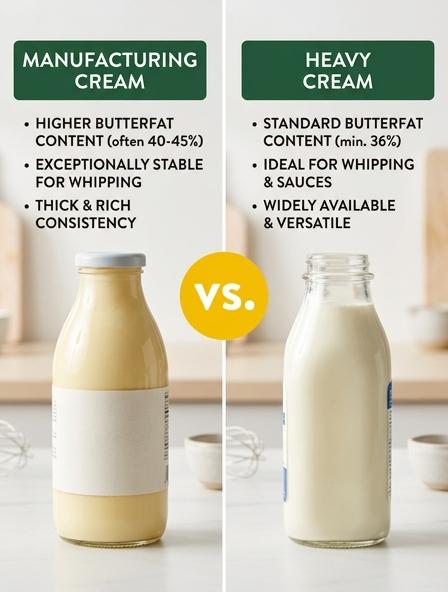
Comparison of Fat Percentages and Sauce Texture
The primary distinction between these dairy products lies in their lipid concentration, which dictates how they behave under heat. While heavy cream is a kitchen staple, manufacturing cream offers a higher fat-to-water ratio that significantly alters culinary outcomes.
| Cream Type | Fat Content | Texture Profile |
|---|---|---|
| Heavy Cream | 36% – 40% | Smooth, requires reduction to thicken. |
| Manufacturing Cream | 40% – 45%+ | Ultra-rich, instant coating, high stability. |
Manufacturing cream's elevated fat content provides superior emulsification. It resists "breaking" or curdling when exposed to high temperatures or acidic ingredients like lemon juice and wine. Because it contains less water, sauces achieve a velvety thickness much faster than they would with standard heavy cream, saving time in high-volume environments.
You will appreciate the luxurious, velvet-like mouthfeel manufacturing cream provides when crafting a rich fettuccine Alfredo that stays perfectly emulsified until the very last bite.
Response to High Heat and Reduction Times
The primary technical difference between manufacturing cream and heavy cream lies in their stability under thermal stress. Manufacturing cream is specifically engineered for high-volume environments, often containing stabilizers like carrageenan that prevent the dairy from "breaking" or curdling at a rolling boil. Because it typically features a higher fat content (40% or more) and lower water volume, it reduces into a thick, glossy coating much faster than standard heavy cream.
- Manufacturing Cream: Rapid reduction; maintains emulsion at high temperatures.
- Heavy Cream: Slower reduction; requires careful temperature control to avoid separation.
Professional chefs prefer manufacturing cream when preparing a high-speed vodka sauce, as it allows them to toss pasta in a searing hot pan without the sauce ever losing its creamy, emulsified texture.
Stability of Whipped Peaks and Volume Retention
The primary difference in stability between manufacturing cream and heavy cream lies in their butterfat concentration. Manufacturing cream typically contains 40% to 45% milkfat, providing a more robust structural matrix than standard heavy cream, which ranges from 36% to 40%. This increased fat content results in a denser network of globules that encapsulate air bubbles, leading to superior volume retention and resistance to syneresis (weeping).
- Manufacturing Cream: Designed for high-volume commercial use, it maintains stiff peaks for up to 48 hours and resists collapsing under ambient temperatures.
- Heavy Cream: While excellent for immediate consumption, its lower fat density may lead to softer peaks and faster moisture loss over time.
You will appreciate the rigid, professional finish manufacturing cream provides when piping intricate decorative borders on a multi-tiered wedding cake that must stand perfectly for hours in a warm reception hall.
Nutritional Differences and Calorie Counts
The primary distinction between manufacturing cream and heavy cream lies in their butterfat concentration, which directly impacts their caloric density. While heavy cream typically contains between 36% and 40% milk fat, manufacturing cream often exceeds 40%, reaching levels that provide superior stability and thickness.
| Cream Type | Fat Content | Approx. Calories (per tbsp) |
|---|---|---|
| Heavy Cream | 36% – 40% | 50–52 kcal |
| Manufacturing Cream | 40%+ | 55–60 kcal |
Because of this higher fat ratio, manufacturing cream is slightly more calorie-dense but offers a richer mouthfeel and greater heat resistance. Professional pastry chefs often choose manufacturing cream when they need a whipped topping that maintains its structure for hours without weeping or losing its shape during a high-volume dinner service.
Evaluation of Stabilizers and Additive Lists
The primary distinction between manufacturing cream and heavy cream lies in their chemical stability and ingredient profiles. While both contain high butterfat levels, manufacturing cream is specifically formulated for industrial resilience. It frequently incorporates a complex list of additives designed to prevent syneresis (weeping) and fat separation during high-heat processing or long-term storage.
Typical additives evaluated in these dairy products include:
- Carrageenan: A stabilizer that maintains a uniform emulsion.
- Mono- and Diglycerides: Emulsifiers that ensure a smooth, consistent texture.
- Polysorbate 80: An agent used to improve whipping volume and peak retention.
Standard heavy cream usually features a cleaner label, whereas manufacturing cream relies on these stabilizers for functional performance. Professional pastry chefs often choose manufacturing cream when piping intricate borders on heavy tiered cakes, as the added stabilizers ensure the whipped peaks remain firm and defined throughout a long wedding reception.
Binding Capabilities in Complex Emulsions
In industrial culinary applications, the distinction between manufacturing cream and heavy cream centers on lipid concentration and structural integrity. While heavy cream typically contains 36% to 40% milkfat, manufacturing cream often exceeds 40%, providing a more robust matrix for complex emulsions. This higher fat content acts as a superior binding agent, preventing syneresis-the separation of liquids-when subjected to high heat or acidic ingredients.
- Fat Globule Density: Higher concentrations in manufacturing cream ensure a more stable suspension in sauces.
- Thermal Resistance: Reduces the risk of "breaking" during prolonged reduction processes.
- Viscosity Control: Achieves a coating consistency faster than standard heavy cream.
Professional sauciers prefer manufacturing cream when crafting ultra-stable, velvety peppercorn reductions that must maintain their glossy emulsion under the intense heat of a commercial service line.
Impact on Mouthfeel and Dish Richness
The primary difference between manufacturing cream and heavy cream lies in their butterfat concentration, which directly dictates the sensory experience of a dish. While heavy cream typically contains 36% to 40% fat, manufacturing cream often exceeds 40%, sometimes reaching 45%. This higher lipid content results in a superior, velvety viscosity and a luxurious mouthfeel that remains stable even under high heat or acidic conditions.
- Manufacturing Cream: Delivers an intense, coating richness and high emulsion stability.
- Heavy Cream: Provides a lighter, more aerated texture suitable for standard culinary needs.
Because manufacturing cream has fewer milk solids and more fat, it creates a denser, more decadent finish in sauces and soups without the risk of breaking. Professional chefs often choose manufacturing cream when crafting a signature peppercorn sauce to ensure a glossy, glass-like coating that stays perfectly emulsified from the kitchen to the guest's table.
Expected Shelf Life and Cold Storage Needs
Both manufacturing cream and heavy cream are highly perishable dairy products that require consistent refrigeration below 40°F (4°C) to prevent bacterial growth and enzymatic spoilage. While they share similar storage requirements, their longevity is often dictated by their stabilization and pasteurization levels.
- Heavy Cream: Usually ultra-pasteurized for retail longevity, offering a shelf life of 15 to 30 days unopened.
- Manufacturing Cream: Often features fewer stabilizers and may be minimally processed for industrial use, typically lasting 10 to 20 days depending on the supplier.
To preserve quality, keep containers tightly sealed and avoid storing them in the refrigerator door where temperature fluctuations are most common. Because manufacturing cream is often sold in larger bulk quantities, it is more susceptible to "weeping" if not handled in a temperature-controlled professional environment.
You will likely reach for manufacturing cream when scaling up production for a bakery, ensuring your frostings maintain a rich, natural consistency that retail heavy cream cannot always replicate.
Suitability for Professional Pastry Construction
In professional pastry construction, the primary difference between manufacturing cream and heavy cream is fat content and structural stability. Manufacturing cream typically contains over 40% milkfat, providing the necessary rigidity for intricate piping and multi-layered gateaux. Standard heavy cream, while versatile, usually ranges between 36% and 40% fat, which may lead to "weeping" or collapsing under the weight of dense sponges.
Professional chefs prioritize manufacturing cream for its superior aeration properties and resistance to over-beating. Key benefits include:
- Enhanced structural integrity for tiered cakes
- Longer hold times in refrigerated display cases
- Denser foam structure for precise decorative borders
When a pastry chef is tasked with creating a high-definition Chantilly lace design for a summer wedding cake, they rely on the extra-stable peaks of manufacturing cream to ensure the delicate details remain sharp and firm despite the humidity of the reception venue.
Industrial Grade Performance in Traditional Home Cooking
The distinction between manufacturing cream and standard heavy cream lies primarily in fat concentration and stability. While heavy cream typically contains 36% to 40% milkfat, manufacturing cream-often called "heavy manufacturing cream"-is an industrial-grade product designed to withstand the rigors of commercial food production.
- Fat Content: Manufacturing cream often exceeds 40% butterfat, offering a richer mouthfeel.
- Heat Stability: It contains specific stabilizers to prevent curdling or "breaking" during high-heat reduction.
- Performance: It provides a superior yield and firmer peaks when used for high-volume whipping.
For the home chef, choosing the right variant depends on the complexity of the dish. While standard heavy cream is perfect for daily coffee or light garnishes, the industrial version is engineered for technical precision. You will appreciate the resilience of manufacturing cream when simmering a large-batch creamy tomato bisque, as its stabilized structure ensures a glossy, restaurant-quality emulsion that never separates.
Manufacturing Cream vs Heavy Cream source and external links
- Manufacturing cream is a high-fat dairy product primarily used in industrial food processing for making butter and various commercial baked goods. Manufacturing Cream
- Heavy cream consists of at least 36% milk fat, making it the ideal choice for creating stable whipped toppings and thickening rich sauces. Heavy Cream